|
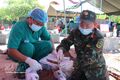
| DNA samples are collected from relatives of fallen soldiers in Lao Cai during the province's peak campaign from July 13–17, 2026, to support the identification of unidentified war martyrs' remains__Photo: VNA |
As part of the nationwide 500-day campaign to intensify the search for, recovery and identification of fallen soldiers' remains, the northern province of Lao Cai has completed the collection of biological samples from unidentified graves and launched a large-scale drive to obtain DNA samples from more than 3,400 relatives of martyrs whose identities have yet to be confirmed.
Each DNA sample represents a renewed hope and another step towards reuniting the nation's fallen heroes with their families and hometowns.
A half-century of longing
Beginning on July 13, Lao Cai launched a province-wide campaign to collect DNA samples from relatives of unidentified war martyrs to support efforts to identify their remains.
Sampling is being carried out at seven collection centres across the communes and wards of Lao Cai, Yen Bai, Nghia Lo, Van Ban, Bao Yen, Dong Cuong and Khanh Hoa.
Among those attending the collection site in Lao Cai ward were elderly relatives, disabled veterans and family members from a wide range of backgrounds. Despite their differing circumstances, they all shared the same hope – to finally discover the resting place of their loved ones.
"Ever since we received my brother's death notification in 1973, our family has longed to bring him home to be buried in his native village. It was also my parents' final wish," said Dao Van Dung, a 65-year-old resident, recalling his only elder brother, who was killed in the southern battlefield in 1970.
He expressed his hope that the DNA collection campaign will help not only his own family but thousands of others finally identify their fallen relatives, allowing them to be properly honoured and enabling future generations to find peace.
Despite her advanced age and limited mobility, Che Thi Hue from Bao Thang commune arrived early to provide a DNA sample in the hope of finding the grave of her elder brother, Che Cong Vuoc.
Fighting back tears, she recalled that he enlisted in 1967 and was killed a year later during the Route 9 – Khe Sanh campaign. For 58 years, the family has searched without success.
"Now that science has advanced so much, we hope we can finally find his grave and bring him home," she said.
Nguyen Thi Tiep from Lao Cai ward shared the same hope as she spoke of her only brother, Nguyen Van Chieu, who enlisted in 1950 and laid down his life in Lai Chau in 1953.
"There were no personal belongings left behind, and no grave to visit," she said through tears.
Decades after the war ended, many Vietnamese families are still searching for the final resting places of their loved ones. Each biological sample collected during the campaign not only supports DNA analysis but also carries the hope that long-unidentified martyrs may finally be named.
Renewed hope for families left behind
According to provincial authorities, DNA samples will be collected between July 13 and 17 from around 3,434 surviving maternal relatives of unidentified martyrs.
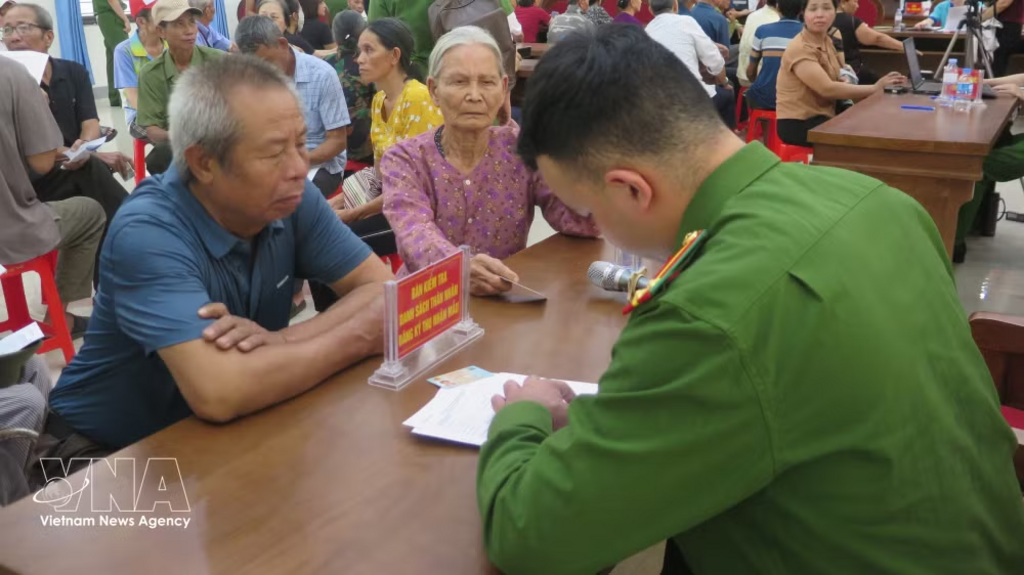 |
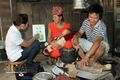
| Activities supporting the collection of DNA samples from relatives of fallen soldiers in Lao Cai are carried out in accordance with established procedures__Photo: VNA |
In addition to operating fixed collection centres, Lao Cai police have deployed mobile teams to visit elderly, frail or housebound relatives, ensuring they can participate without having to travel.
All procedures are carried out in accordance with professional standards to ensure the accuracy of the samples while making the process as convenient as possible for families.
Senior Lieutenant Colonel Le Tien Manh, deputy head of the police division for administrative management of social order under the provincial Department of Public Security, said the entire process, from registration and identity verification using citizens' identification cards to blood sample collection, takes around 10 minutes per person.
On July 14, the Lao Cai Military Command announced that DNA sampling from unidentified graves across the province had been completed. Biological samples were successfully collected from the remains in 821 unidentified graves, providing the basis for DNA analysis and comparison with relatives' samples to establish the identities of fallen soldiers whose names remain unknown.- (VNA/VLLF)