 |
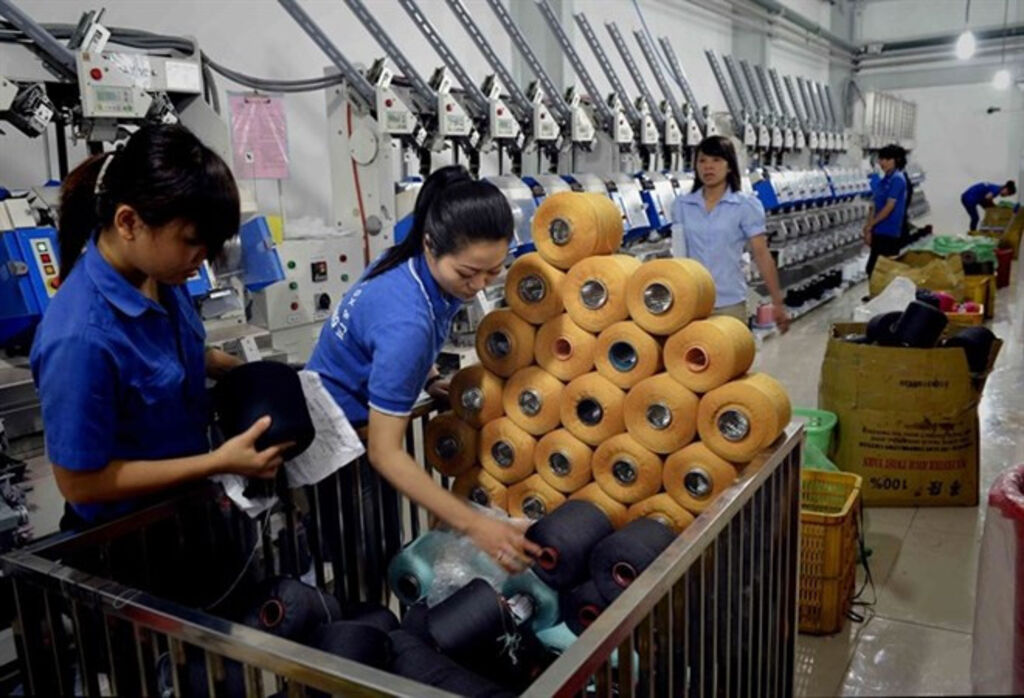
| Workers at Trung Dung Co Ltd, a manufacturer of elastic threads and yarn in Hanoi__Photo: VNA |
Amid rising costs and growing legal compliance demands, small- and medium-sized enterprises (SMEs), household businesses and cooperatives remain the most affected groups.
Against the backdrop, free legal aid packages and an increasingly comprehensive legal information system are considered as useful tools to help promptly remove obstacles and open pathways for more sustainable development of enterprises, especially under the pressure of digital transformation and fiercer competition.
According to the survey carried out by the Vietnam Chamber of Commerce and Industry (VCCI), so far, only one quarter of total SMEs have received legal aid, even though the national legal aid program for SMEs has been in place for more than a decade.
Therefore, ministries and sectors have recently organized hundreds of training sessions and dialogues and issued numerous publications on taxation, e-invoices, environmental protection, land regulations, food safety, e-commerce and intellectual property to ensure that enterprises properly comply with law. Many of these materials have been standardized into videos, infographics and legal handbooks which are more accessible to enterprises.
Notably, the Ministry of Justice (MOJ) has intensified the digital application through various schemes such as formulation of a large legal database, application of artificial intelligence (AI) for drafting and reviewing legal documents, and development of the Vietnam Law Digital Platform. Worthy of note, the MOJ-managed National Law Portal, since its operation commencement in May 2025, recorded more than 1.13 million visits by the end of November, while its AI system processed hundreds of thousands of inquiries, offering fast, accurate and user-friendly access to legal information to both citizens and enterprises.
Thanks to these actions, the number of enterprises receiving legal aid increased sharply in 2025, particularly among household and family-run businesses. However, enterprises continue to call for more industry-specific materials and guidance and more direct dialogues with competent agencies.
These recommendations are being incorporated into the next phase of the inter-disciplinary legal aid program for SMEs, focusing on the development of a national digital platform that collects sector-based legal data, and provides a specialized Q&A bank and digital training materials, said Ngo Quynh Hoa, Deputy Director of the MOJ’s Department of Law Dissemination and Education, in a recent seminar.
According to Hoa, the upcoming 2026-31 program will preserve previous documents, expanding its scope of application to cover household businesses and cooperatives and shifting from mass legal dissemination to target- and need-based support. A new decree replacing Decree 55 of 2019 will be enacted to broaden the governed subjects to household businesses and cooperatives that lack access to systematic legal aid. Meanwhile, financial mechanisms for legal consulting services will be revised in a new circular of the Ministry of Finance in order to attract more qualified legal experts.- (VLLF)