 |
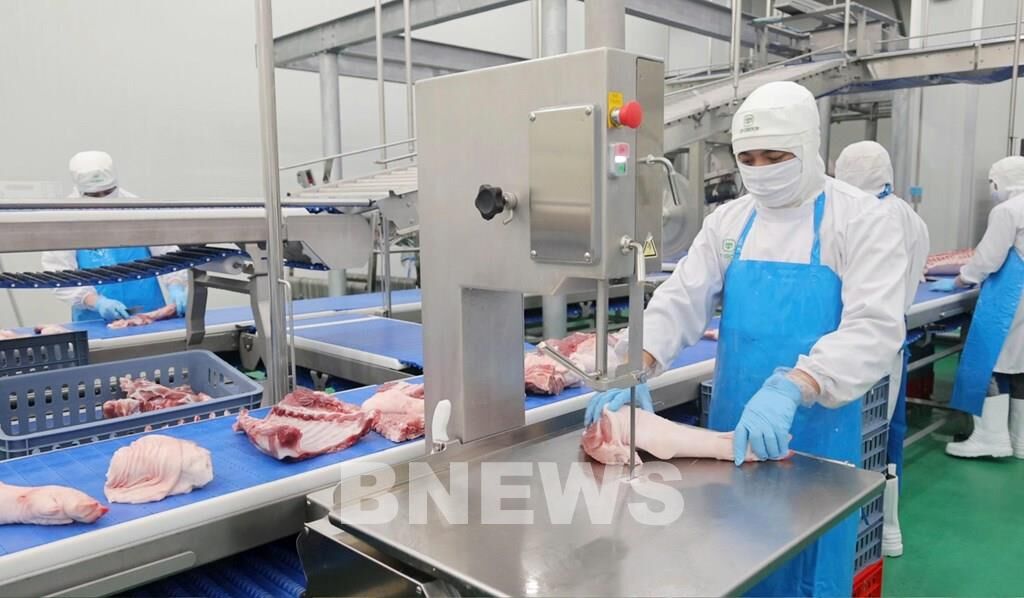
| Pork deboning and cutting line at C.P. Vietnam - a subsidiary of Thailand’s Charoen Pokphand Foods Public Company Limited (C.P. Foods)__Photo: Bich Hong/VNA |
The Ministry of Industry and Trade (MoIT) has issued Decision 400/QD-BCT, promulgating a plan to develop, operate and manage a centralised food traceability system under its authority.
Effective from March 6, the plan aims to establish a unified, synchronised and centralised traceability system within the ministry’s product and goods management system. This aims to serve the state management of all product groups under the MoIT’s jurisdiction, ensuring seamless supervision throughout the entire supply chain, from importation, production and processing to packaging, circulation, distribution and consumption.
In its initial phase, the plan will focus on building and piloting the food traceability system to meet urgent requirements in food safety management, market control and consumer protection. It will subsequently be expanded to other commodity groups, including tobacco, textiles, footwear, paper products, automotive components and other sectors subject to specialised management.
By the end of 2026, the centralised food traceability system is expected to be officially launched and integrated into the MoIT’s industrial product management system. During this stage, traceability will be piloted for selected key food categories, particularly high-risk products and those distributed through modern retail channels, e-commerce platforms and import-export activities.
By the end of 2027, mandatory traceability requirements will be extended to all food groups managed by the MoIT. At the same time, data analysis and early warning tools will be incorporated to monitor market risks and support inspection and product tracking activities.
In the 2028-30 period, once the system operates in a stable manner, traceability will be gradually expanded to other industrial sectors such as textiles, footwear and automotive spare parts. A shared traceability database will also be developed and connected with national specialised databases, forming a foundation for policy formulation and market development.
Looking ahead to 2030 and 2035, the MoIT aims to complete the technical infrastructure of its overall product management system, with food traceability as a core component. A comprehensive traceability chain covering the entire product lifecycle will be established, maintaining continuous connectivity with the national product and goods traceability portal.- (VLLF)