 |
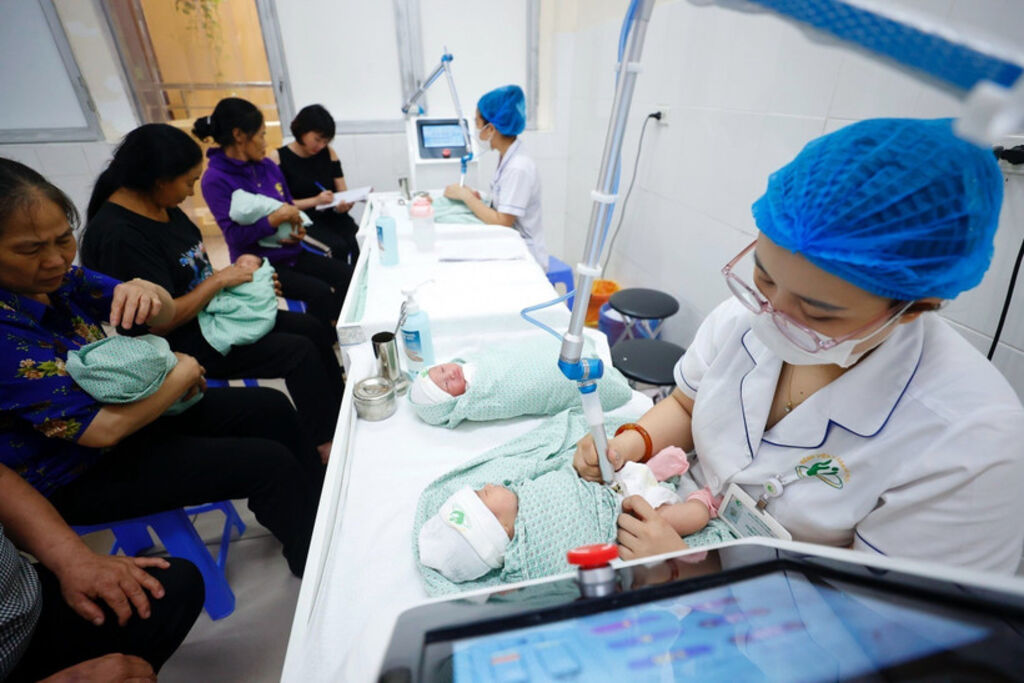
| Caring for newborn babies at Hanoi Obstetrics and Gynecology Hospital__Photo: Vietnam+ |
Decision 291/QD-TTg, that took effect on the date of its signing (February 13), says that the Programme is intended to increase the domestic birth rate to achieve and maintain the replacement fertility level nationwide with the aim of meeting the human resource demand, thus contributing to the success of the Vietnam Population Strategy through 2030 and facilitating rapid and sustainable national development.
Under the programme, by 2030, the domestic total fertility rate will record an annual average increase of 2 per cent. More than 95 per cent of couples and individuals of the reproductive age will be provided with information on marriage and childbirth to maintain the replacement fertility level nationwide. All provinces and cities will implement policies to support couples and individuals in childbirth and child-rearing activities.
To realize the targets, the programme outlines specific solutions, including intensifying behaviour change communication, finalizing and promulgating encouragement and support policies, and expanding access to reproductive health, family planning, and other services.
With regard to support and encouragement policies, the programme will review and propose amendments to existing regulations that are inconsistent with the goal of maintaining the replacement fertility rate, specifically those on handling of violations of the current population policies.
Based on socio-economic conditions and budget-balancing capacity, provinces and cities will implement support policies towards couples and individuals in childbirth and child-rearing activities, with priority given to localities with fertility rates below the replacement level and the very small ethnic minority groups.
The programme will introduce new policies to encourage couples to have at least two children and women to complete their second birth before the age of 35. These policies will be based on impact assessments regarding labour, employment, housing, social welfare, education and healthcare.
In remote, deep-lying, mountainous and ethnic minority areas, the programme will provide appropriate services and health consultations and screenings in order to prevent risk factors leading to congenital disabilities or diseases that affect the population quality.-(VLLF)