 |
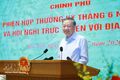
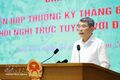
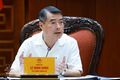
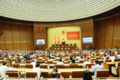
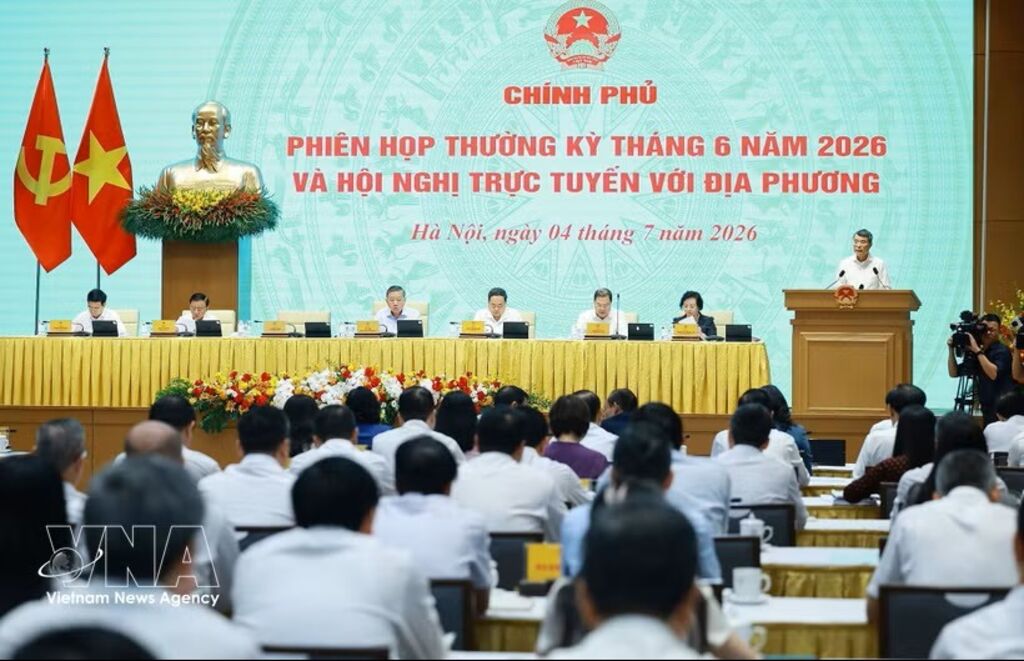
| Prime Minister Le Minh Hung speaks at the Government's regular meeting for June and a nationwide teleconference with local authorities on July 4, 2026 __Photo: VNA |
Prime Minister Le Minh Hung on July 4 reaffirmed the Government's determination to achieve double-digit economic growth in 2026 and throughout the 2026–2030 period while maintaining macroeconomic stability, keeping inflation under control and safeguarding the economy's major balances.
Speaking at the Government's regular monthly meeting for June and a nationwide teleconference with local authorities, the PM said the Government has updated its growth scenario and policy roadmap to support the ambitious target.
Strategic tasks take priority
PM Hung instructed ministries, sectors and localities to thoroughly grasp and decisively implement the Resolution of the 14th National Party Congress, resolutions of the Party Central Committee, directives of the Politburo, particularly its 10 strategic resolutions, and Conclusion 18 of the second plenum of the 14th Party Central Committee, with the goal of fulfilling all key tasks in 2026. He also urged agencies to promptly complete legislative dossiers for draft laws and resolutions to be submitted to the National Assembly.
Ministries and local authorities were asked to translate the directives of Party General Secretary and State President To Lam into concrete breakthrough measures with clear responsibilities and implementation timelines. Localities recording slower growth were asked to review their development scenarios and step up efforts to meet targets, while those that have already met or exceeded their goals were encouraged to strive for even stronger performance.
The Government leader called for faster public investment disbursement, prioritising key infrastructure projects in transport, energy and agriculture, as well as facilities serving APEC 2027. He also urged the early implementation of large-scale rental housing projects for workers.
Ministries and localities with slow disbursement rates will face cuts in public investment allocations, with implementation performance serving as a criterion for evaluating and appointing officials. He also stressed the need to remove bottlenecks and resolve long-delayed projects and outstanding cases.
To facilitate new growth drivers, the PM directed stronger efforts in science – technology development, innovation and digital transformation. He called for the prompt issuance of the national digital architecture framework, the completion of the development, standardisation and integration of national and sectoral databases with the National Data Centre, and the accelerated development of strategic technologies and technological products, with tangible results to be delivered this year.
He stressed that successfully implementing these focal tasks will not only determine Vietnam's growth performance in 2026 but also lay the cornerstone for strong economic restructuring and a new development model in the years ahead.
Provincial and municipal leaders were requested to directly work with the educational sector to seriously and effectively carry out Politburo Resolution 71 on breakthroughs in education – training development, and directives from the Party General Secretary and State President regarding preparations for the 2026–2027 academic year. Substantive improvements in teacher quality, school infrastructure and education standards must be ensured, he said.
The PM also demanded intensifying the implementation of the 500-day campaign to search for, recover and identify the remains of fallen soldiers, expanding free medical check-up programmes, putting the second campus of the Viet Duc Hospital into use before July 10, and efficiently operating the second campus of the Bach Mai Hospital.
He further emphasised maintaining political and social stability, strengthening national defence and security safeguarding, staying proactive in diplomacy and international integration, fruitfully implementing international commitments and agreements, and enhancing public communication to reinforces social consensus and inspire the aspiration for national development.
Strong socio-economic performance in first half
Reports delivered at the meeting show that despite growing global uncertainties, including geopolitical conflicts, policy shifts in major economies and the pressure to sustain high growth, Vietnam has achieved broadly positive socio-economic results in the first half of 2026 through decisive and coordinated policy measures under the leadership of the Party Central Committee, the Politburo, and the Secretariat, headed by Party General Secretary and State President To Lam.
Vietnam's gross domestic product (GDP) expanded 8.39 per cent in the second quarter, bringing first-half growth to 8.18 per cent, the highest rate since 2011. Industry, construction and services contributed more than 88 per cent of overall growth, while nine localities posted double-digit expansion. Hanoi and Ho Chi Minh City also recorded stronger growth compared to May.
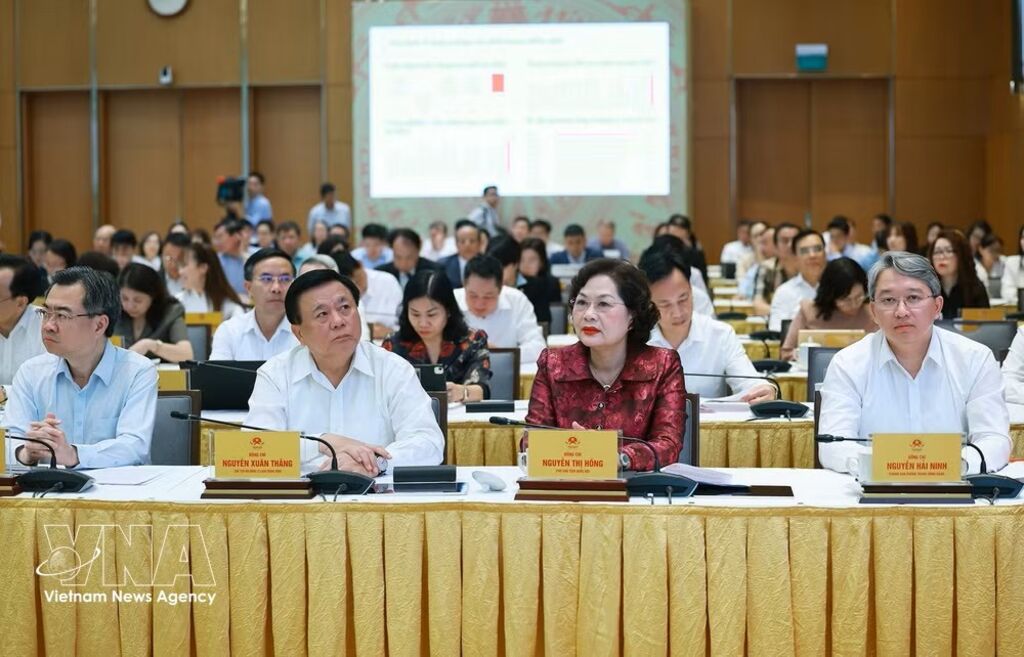 |
| Prime Minister Le Minh Hung speaks at the Government's regular meeting for June and a nationwide teleconference with local authorities on July 4, 2026__Photo: VNA |
Industry remained the most important growth engine, with industrial value added rising 9.86 per cent, including a 10.23 per cent increase in manufacturing and processing. Tourism continued to recover strongly, welcoming a record 12.25 million international visitors, up 14.9 per cent year-on-year. Total investment across society reached approximately VND 1.8 quadrillion (over USD 68.4 billion), an increase of nearly 13 per cent.
State budget revenue accounted for around 62 per cent of the annual target, up 17.2 per cent from a year earlier. Total import – export turnover exceeded USD 550 billion, rising 27.1 per cent year-on-year. Foreign direct investment (FDI) registered during the first half totalled USD 34.65 billion, soaring 61 per cent, while disbursed FDI reached USD 13.03 billion, up 11.2 per cent and also the highest level in five years. Newly established and resumed businesses continued to outnumber market exits, reflecting growing confidence among businesses and investors.
While the consumer price index (CPI) fell 0.39 per cent in June from the previous month, the figure for the first six months stood at 4.38 per cent and core inflation rose 4.12 per cent, indicating that macroeconomic fundamentals remained stable.
Infrastructure development gained momentum with the launch of many strategic projects. New housing policies, including those on rental housing, commercial housing and social housing, were advanced. Long-delayed projects and outstanding cases continued to be addressed.Institutional reforms, administrative simplification and efforts to remove bottlenecks also accelerated, cutting administrative processing time by an estimated 53 per cent and compliance costs by 55 per cent.
Science – technology, innovation and digital transformation continued to advance, particularly through the development of digital infrastructure, data systems, strategic technologies and digital economic sectors. The National Data Centre became operational, while Project 06 was implemented strongly, improving both the availability and quality of online public services.
Progress was also made in culture and social aspects, national defence and security were strengthened, and political stability maintained. Foreign affairs continued to play a proactive role in preserving a peaceful and stable environment and mobilising external resources for development.The meeting nevertheless acknowledged several challenges.
Economic growth has yet to reach the Government's target and remains uneven across localities. Public investment disbursement is still slow, the implementation of strategic infrastructure projects and national target programmes have fallen behind schedule, while improvements in the business environment have yet to sufficiently reduce administrative procedures, costs and compliance burdens.- (VNA/VLLF)