Vu Van Anh
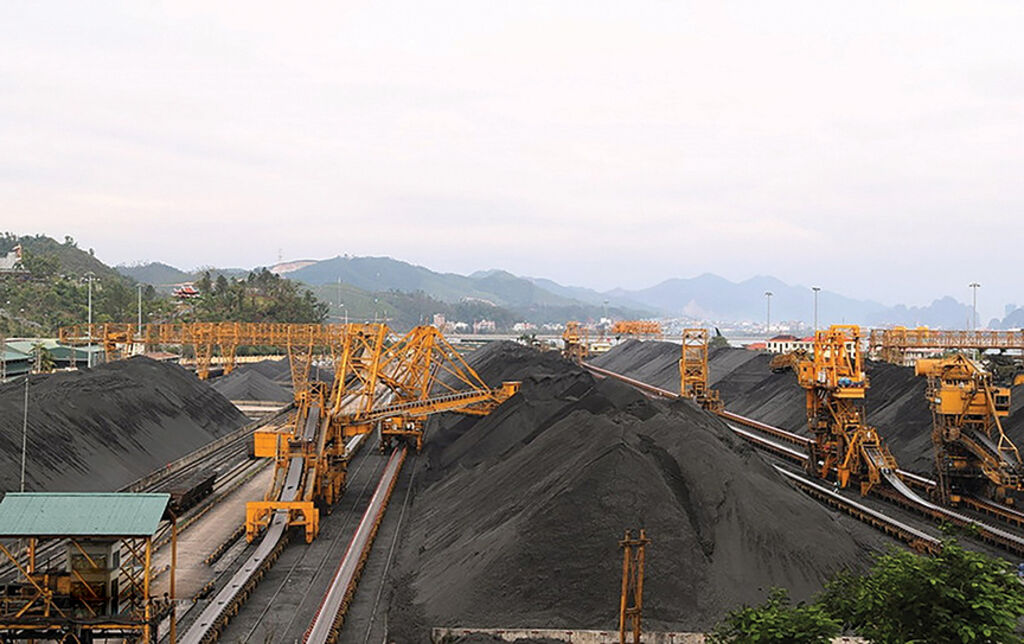 |
| Coal production and processing operations at Vinacomin - Cuaong Coal Preparation Company Photo: Quoc Khanh/VNA |
After many years of maintaining macroeconomic stability and ensuring major economic balances, the state economic sector is entering a new phase of development that is aimed at paving the way for leading and facilitating growth. With the adoption of Politburo Resolution 79-NQ/TW on January 6, the mindset regarding the role of the state economy, particularly state-owned enterprises (SOEs), has undergone a breakthrough change, expected to create a new development impetus for Vietnam’s economy in the five years ahead.
Leading role in national economy
In Resolution 79, the Politburo affirms: “The state economy plays the leading role in the socialist-oriented market economy, ensuring macroeconomic stability and the major balances of the economy, setting strategic development orientations, maintaining national defence and security; contributing to promoting cultural values, social progress, equity and welfare; serving as an important resource for the State to make prompt directions and interventions in response to arising urgent requirements. The state economy is equal before law with other economic sectors, coexisting for long-term development, cooperation and fair competition; accessing resources, markets and development opportunities in a fair, open and transparent manner; and, together with other domestic economic sectors, building an autonomous, self-reliant and resilient economy, ensuring economic security and promoting substantive, effective and deeper international integration.”
The overarching spirit of Resolution 79 is to affirm that the leading role of the state economy is performed not through administrative orders, but through its leadership capacity, governance efficiency, and ability to create markets. When SOEs operate according to international standards, transparently and efficiently, this economic sector will become a crucial “locomotive”, building trust for the private sector, attracting investment, and driving innovation in the entire economy.
Unlike previous perspectives that primarily viewed SOEs as a “pillar” of stability, Resolution 79 sets a higher requirement: SOEs must become a pioneering force, leading key sectors and fields of the economy.
Accordingly, SOEs must be not only large in scale but also strong in technology, governance and international competitiveness. With the emphasized “leading” role, state economic groups and corporations are expected to guide domestic enterprises to participate more deeply in global production and supply chains, especially in strategic fields such as energy, telecommunications and digital infrastructure, manufacturing, finance-banking, logistics, and resource and data management.
The specific targets are that Vietnam will have one to three SOEs among the world’s 500 largest enterprises by 2030 and five by 2045. This reflects the ambition to elevate the position of Vietnamese enterprises on the global economic map.
Expanding the state economy’s development into the digital space
One of the fundamental novel provisions of Resolution 79 is the broadened approach to the state economy. Previously, the state economy was often equated solely with the SOE sector; it is now viewed in a broader and more systemic sense, encompassing all national strategic resources such as land, natural resources, the state budget, national reserves, digital space, underground space and airspace.
This approach shows an increasingly clear recognition that the strength of the state economy lies not only in the quantity or scale of enterprises, but in the quality of management, utilisation and preservation of capital and national resources.
Within this structure, SOEs remain the core force, but they no longer operate in isolation; instead, they play the role of a linking hub and an effective tool for deploying national resources. This shift is particularly significant as Vietnam is entering a development phase relying more on innovation, technology and modern governance, rather than solely on natural resource extraction or cheap labour.
The development space of the state economy, which, in the past, mainly revolved around traditional sectors, is now expanded into the digital space, underground space, and hi-tech fields. Natural resources are no longer seen merely as “inputs for extraction,” but as “natural capital” and “data capital” that need to be managed, allocated and utilised efficiently.
In the context of national digital transformation, SOEs are expected to play a pioneering role in building digital infrastructure, ensuring data security, developing core technology platforms, and promoting the innovation ecosystem. This is the foundation for Vietnam’s economy to make a breakthrough in the 2026-30 period, as traditional growth rooms narrow.
In the next five years, if the breakthrough orientations of Resolution 79 are institutionalised and implemented consistently, the state economy, with SOEs as the core, will not be a force for stability merely but will truly become a growth driver, contributing to ushering Vietnam into a period of faster, greener and more sustainable development.
Enhancing governance capacity
In the new development phase, the state economy cannot fulfil its leading role merely by expanding its scale. More importantly, it must upgrade its governance capacity and operate in adherence to the principles of modern governance, with efficiency, transparency and accountability as its pillars.
The foundational breakthrough point of Resolution 79 is the requirement to shift from administrative management to modern corporate governance. For the first time, a quantitative target is set: by 2030, all state economic groups and corporations must apply governance principles according to OECD standards. That means granting substantive autonomy to the Member Councils; permitting the pilot application of new governance models such as hiring chief executive officers (CEOs) with specific conditions; permitting the formation of venture capital funds so that SOEs can lead new, breakthrough technology sectors; applying new methods such as “green accounting”, fully incorporating environmental and natural resource costs in performance reports.
Particularly, Resolution 79 regards combating loss and waste of resources as a criterion for evaluating the governance quality. Resource waste, whether in investment, asset management or apparatus operation, directly diminishes the developmental capacity of the economy.
Applying OECD standards is not about meeting a technical requirement but a crucial step to link economic growth with sustainable development in line with global trends and Vietnam’s international commitments for local businesses to enter into the global paying field and enhance their competitiveness.
Improving the legal framework
Resolution 79 points to the necessity to urgently concretise its contents through laws, decrees and circulars, especially revising the Law on Management and Use of State Capital in Enterprises, aiming to reduce administrative intervention and increase enterprise autonomy. The guiding documents must clearly distinguish between the State’s function as the owner and the enterprise’s business administration function. This helps abolish the outdated mechanisms that used to exist as barriers to modern governance.
With the renewal of governance approach from “pre-licensing inspection” to “post-licensing supervision”, and granting real autonomy to enterprises, the performance of enterprises is no longer evaluated mainly by scale or form of capital preservation, but by productivity, profitability, and spillover effects on the economy.
It can be said that, Resolution 79 will, if implemented properly, significantly promote the role of the state economy, contributing to realizing the goal of turning Vietnam into a developing country with modern industry and upper-middle income by 2030, and a developed country with high income by 2045.-