 |
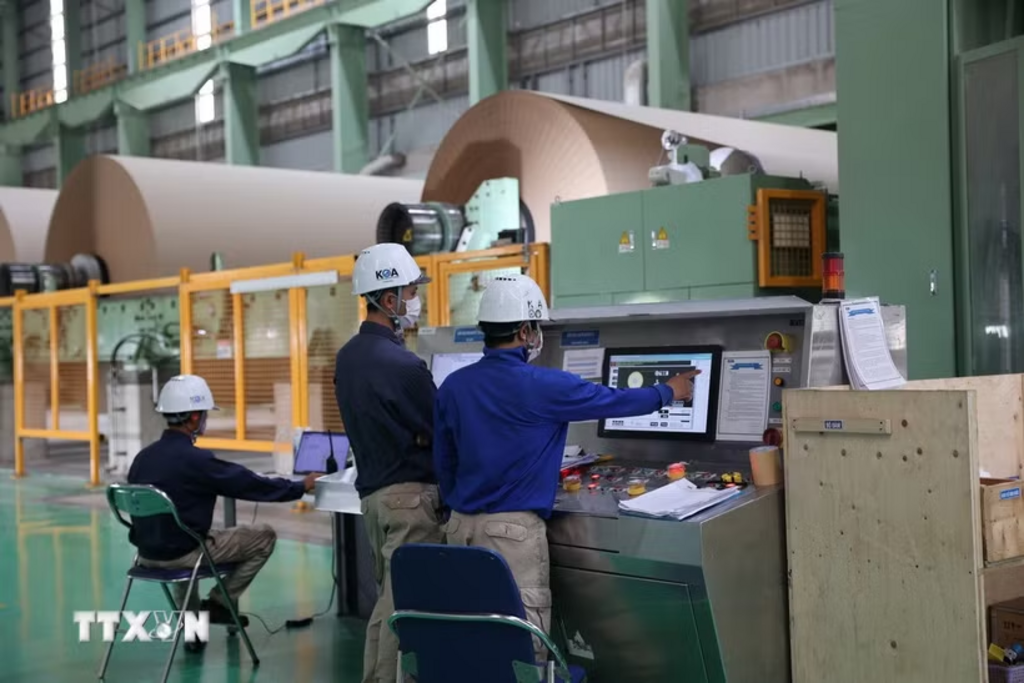
| The Kraft of Asia Paperboard & Packaging Co., Ltd - a pioneering enterprise in adopting clean technology and green production in manufacturing carton packages__Photo: Vietnam+ |
A new business support programme was approved under Government Decision 926/QD-TTg dated May 25, 2026, aiming to support 25,000 enterprises, business households and cooperatives and develop at least 20 sustainable business models by 2030.
Designed to promote sustainable growth in the private sector, the programme seeks to encourage business models that combine economic efficiency with social responsibility and environmental protection. It is therefore expected to contribute to Vietnam’s implementation of the 17 Sustainable Development Goals by 2030 and its net-zero emissions target by 2050.
Beyond providing direct support to individual businesses, the programme aims to build a broader ecosystem for sustainable business practices. It will focus on enterprises, business households and cooperatives, while also targeting officials, consultants and agencies involved in this field.
Under the programme, enterprises, business households and cooperatives may receive support if they meet one of the set five conditions. They must possess international, national or provincial awards or ISO certifications relating to green transition, circular economy, environmental, social, and governance (ESG) or corporate social responsibility (CSR); qualify as social enterprises under law; have ongoing green projects or circular economy initiatives or applying ESG frameworks; meet the sustainable business criteria published on the National Small- and Medium-Sized Enterprise Support Portal; or comply with the framework criteria for evaluation of sustainable business models.
The programme identifies three main types of sustainable business models: circular economy models, inclusive business models and models applying ESG frameworks. Other models may also be supported if they satisfy the programme’s requirements.
The programme will focus on three main areas.
The first area is ecosystem development. The programme will support the building of expert networks, the development of digital platforms, and the organisation of annual forums and seminars on sustainable business. It will also promote connections in green finance and investment in order to generate social and environmental impacts, while encouraging financial and credit institutions to introduce products and services that support sustainable business practices.
The second area is direct support for eligible entities, covering consultancy on development strategies, corporate governance, investment capital mobilisation, and training on sustainable business models at home and overseas.
Eligible entities may also receive assistance for technological modernisation, including technology transfer, quality testing, intellectual property management, digital transformation and the application of artificial intelligence solutions.
Support will also be provided for communications and trade promotion activities, including funds for registering and maintaining accounts on domestic and international e-commerce platforms and for participating in international trade fairs.
The third area is implementation, monitoring and evaluation, which is intended to ensure that the programme is carried out effectively and produces measurable results. To this end, the programme will provide implementation manuals and monitoring and evaluation frameworks and organise regular and ad-hoc reviews of implementation progress. Independent mid-term and final evaluations will also be carried out to assess its outcomes and impacts and to make timely adjustments where necessary.
Through these measures, the programme is expected to help create jobs, improve living conditions for low-income and vulnerable groups, strengthen climate resilience and support environmental protection.- (VLLF)