 |
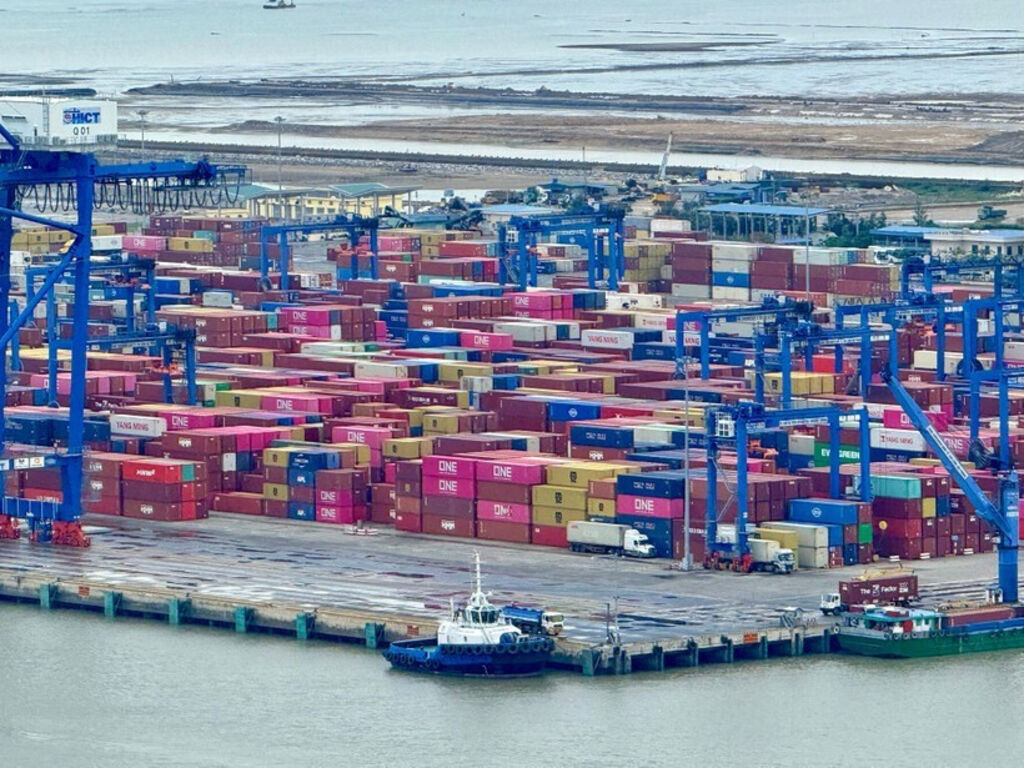
| Vietnam has nearly 6,500 inland waterway ports, about 1,800 companies operating in the inland waterway transport sector, with more than 270,000 vessels__Photo: VNA |
Vietnam’s logistics sector has not yet reached its full potential, affecting the country’s transportation capacity and competitiveness of local goods in the international market. This is a key finding in a recent report by the Private Economic Development Research Board (Board IV) under the Prime Minister’s Administrative Reform Advisory Council submitted to the PM.
In an update to the media on December 10, Board IV highlighted that Vietnam is still in a "logistics trade deficit" position, with its ports primarily focused on cargo handling, which covers only about 20 percent of the functions of an international maritime hub by global standards. Most value-added services such as shipbuilding, repairs, finance, maritime insurance, and digital technology services are outside the port area and rely heavily on foreign businesses.
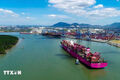
Despite these challenges, Vietnam has several advantages, such as its strategic geographical location on the international maritime route, accounting for 65 percent of global trade; its position among the top 17 largest trading nations; 17 signed Free Trade Agreements (FTAs) covering over 60 markets and 90 percent of global GDP; and the presence of the Cai Mep - Thi Vai port complex, capable of handling some of the world’s largest vessels (24,000-25,000 TEU). These factors present an opportunity for Vietnam to become a new maritime-logistics and production hub in Asia.
The report also points out that inland waterway transport has not been developed in proportion to its potential, leading to inefficiencies in the transportation of goods. Vietnam has one of the world’s densest river networks, with 2,360 rivers and channels spanning over 42,000 km, of which about 17,000 km (41 percent) are navigable. This system covers key economic regions, especially the Red River Delta, Mekong Delta, and Southeast region, forming a natural, low-cost, high-capacity, low-emission, and energy-efficient transport network.
The country has nearly 6,500 inland waterway ports, about 1,800 companies operating in the inland waterway transport sector, with more than 270,000 vessels, ensuring the transportation of about 20 percent of the total goods of Vietnam - far higher than the 5-7 percent average in the region. Around 70 percent of inland waterway cargo is concentrated in the southern region, where the river and canal networks are closely linked with industrial centers and deep-water ports such as Cai Mep - Thi Vai, Ho Chi Minh City, and Dong Nai.
However, public investment in this sector only accounted for about 2 percent of total investment in the transportation sector from 2001-2020, with a slight increase since 2021 but still far below the actual contribution of inland waterway transport to goods circulation, regional connectivity, and emission reduction. Meanwhile, 82 percent of investment in this sector comes from private sources, indicating significant potential for private sector involvement if supported by appropriate policies.
Based on feedback from the business community, Board IV recommended that the Prime Minister direct relevant ministries to continue reviewing and reforming administrative procedures, especially in areas of high priority such as attracting investment, industrial park development, logistics, and enhancing export-import facilitation.
It proposed the PM direct the development of new approaches based on strong public-private collaboration to build strategic and "practical" programs aimed at increasing the competitiveness of Vietnam's maritime and logistics sectors.
On December 9, the Government Office issued Document 12131/VPCP-DMDN, instructing ministries and local authorities to consider and act on these proposals. These actions aim to optimize Vietnam's logistics and export capabilities, ensuring a more competitive business environment.- (VNA/VLLF)