 |
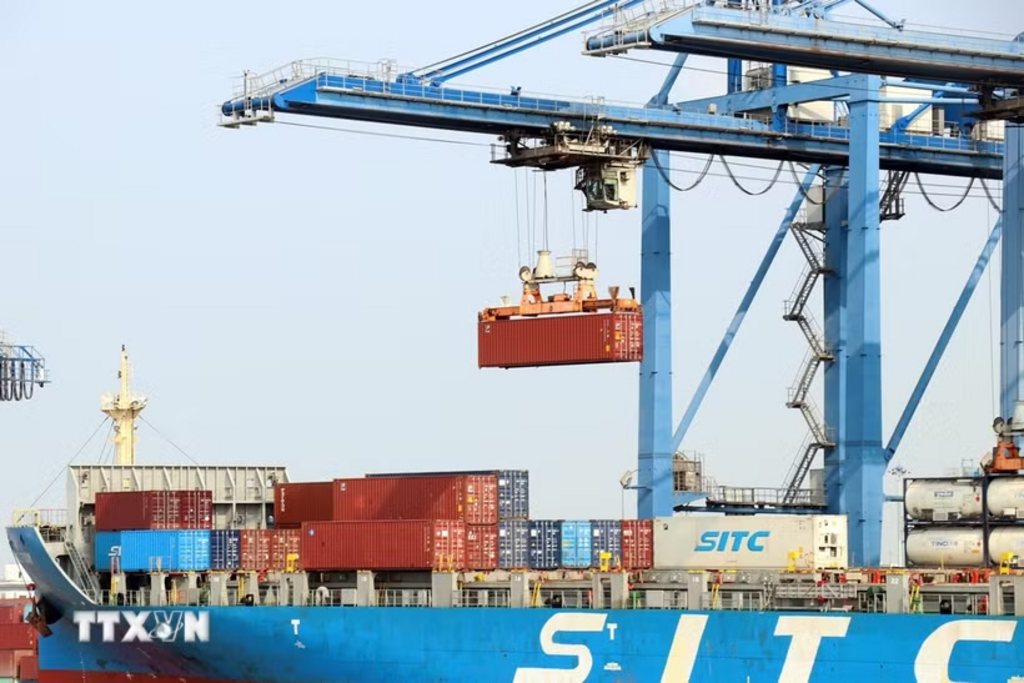
| Ports across Ho Chi Minh City remain busy with ships loading and unloading cargo__Photo: Tien Luc/VNA |
Permanent Deputy Prime Minister Pham Gia Tuc has, on behalf of the Government, signed Decision No. 2089/QD-TTg introducing a plan to establish key maritime and marine engineering industrial centres and clusters closely integrated with seaports, inland waterways, logistics services and supporting industries.
The decision, dated November 3, sets out 10 groups of key tasks and solutions designed to address bottlenecks in regulatory mechanisms, access to capital, technological capacity and market expansion, laying the groundwork for a national programme on the development of maritime and marine engineering industries through 2035, with a vision to 2050.
Alongside shipbuilding, the plan promotes the development of modern ship repair, conversion, dismantling and recycling facilities operating under circular economy models. These operations must employ advanced technologies aimed at reducing emissions and comply with international safety, labour and environmental standards.
Recognising the capital-intensive nature and long production cycles of shipbuilding contracts, the Government has called for targeted financial, credit, guarantee and insurance mechanisms. Relevant agencies are tasked with formulating transparent support policies aligned with international commitments, linking assistance to enterprise capabilities, project efficiency and domestic value addition.
Investment will draw on state budget allocations, commercial credit, capital markets and public-private partnerships, with priority given to projects capable of mastering core technologies, increasing domestic value added and promoting supporting industries. Financial institutions and insurers are also encouraged to develop tailored products that accommodate the maritime sector’s specific risk profiles.
Complementing infrastructure and financial reforms, the plan calls for a comprehensive nationwide assessment of existing maritime industrial capabilities, covering ship design, shipbuilding and repair, marine engineering and supporting industries.
A national maritime industry database will be developed alongside standardised assessment criteria to support the restructuring, upgrading and consolidation of production facilities. Through stronger international cooperation, greater technological self-reliance and the development of dual-use defence and civilian capabilities, the plan aims to enhance the global competitiveness of Vietnamese maritime enterprises and foster a sustainable maritime industrial ecosystem.- (VLLF)