 |
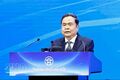
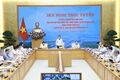
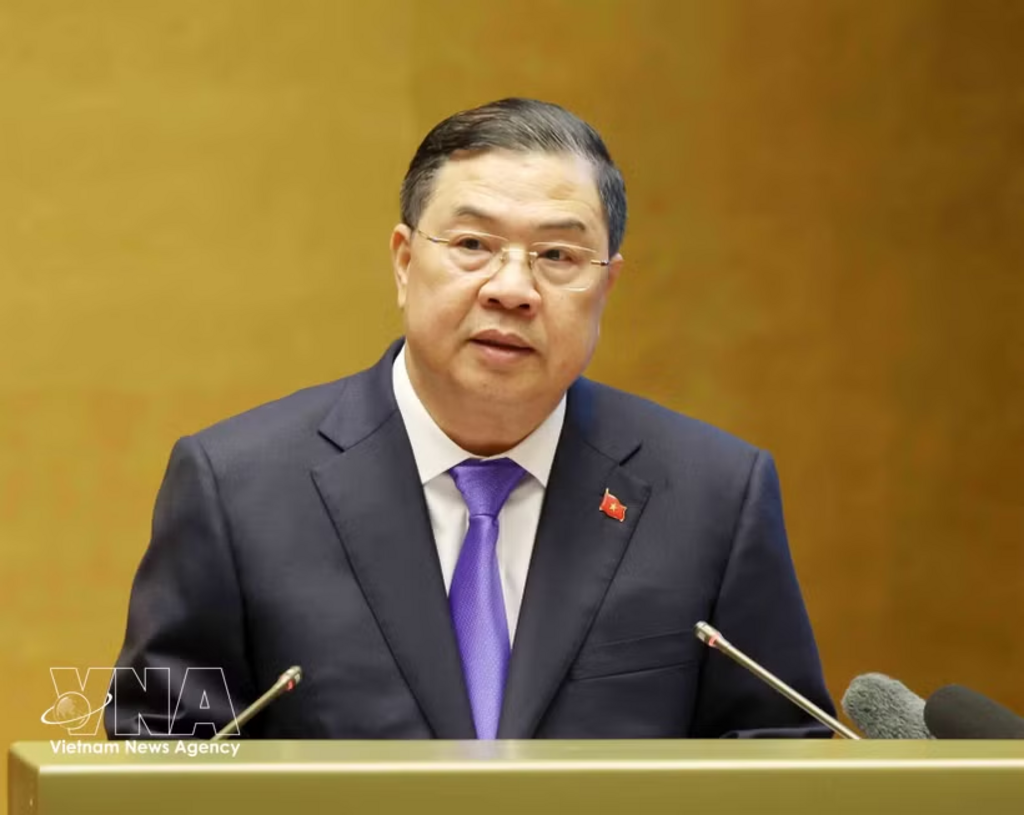
| Permanent Deputy Prime Minister Pham Gia Tuc speaks at the hybrid conference on studying and implementing the Politburo’s Resolution 10-NQ/TW on developing the foreign-invested economic sector on June 30__Photo: VNA |
Vietnam is recalibrating its foreign direct investment (FDI) attraction strategy towards higher quality and greater efficiency, shifting from a focus on attracting capital to effectively leveraging international resources in combination with domestic strengths to drive new growth momentum, heard a national conference on June 30.
The message was delivered at the hybrid conference on studying and implementing the Politburo’s Resolution 10-NQ/TW on developing the foreign-invested economic sector, where delegates also viewed a documentary on four decades of FDI attraction in Vietnam before hearing a presentation by Permanent Deputy Prime Minister Pham Gia Tuc.
New development mindset
Tuc said Vietnam’s approach is undergoing a fundamental transformation. While attracting international resources was the central priority over the past nearly four decades, the next phase will focus on enhancing the effectiveness of those resources in synergy with domestic capacities to strengthen development capabilities, economic resilience and national competitiveness.
The resolution sets out guiding principles that underpin a major shift in development mindset. Rather than focusing solely on attracting FDI, it adopts a broader approach to developing the foreign-invested economic sector, covering direct and indirect investment, capital markets and international financial institutions, while treating the foreign-invested sector as an integral part of the national economy.
It also shifts the emphasis from the scale of investment to its quality, efficiency and added value, prioritising projects using advanced technologies, innovation, modern governance and stronger spillover effects.
Investment incentives will move from input-based to performance-based policies, linked to commitments on technology transfer, research and development, workforce training, domestic business linkages, green transition and sustainable development.
Another key change is integrating various international capital flows, including FDI, portfolio investment, capital markets, international financial centres and new development models such as free trade zones, to improve resource mobilisation and allocation, Tuc said.
The resolution also calls for transforming the State's role from investment management to creating a favourable investment and development environment through institutional reform, better governance, improved infrastructure, high-quality human resources and a stronger innovation ecosystem, to facilitate both domestic and international resources to thrive.
It further seeks to replace competition among localities for investment with stronger national-level coordination, enhanced regional connectivity and closer links between foreign-invested and domestic enterprises, and greater leverage of growth poles and innovation hubs to enhance the national economy's development efficiency.
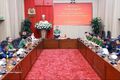
Party General Secretary and State President To Lam, and other delegates attend the hybrid conference on studying and implementing the Politburo’s Resolution 10-NQ/TW on developing the foreign-invested economic sector on June 30__Photo: VNA
Targets and breakthroughs
The resolution sets the overarching goal of making Vietnam a competitive destination for high-quality medium- and long-term foreign investment, while ensuring that foreign capital contributes more effectively to technology transfer, workforce development, stronger linkages with domestic economic areas, and deeper integration into global supply chains. It also seeks to help establish a new growth model driven by science, technology, innovation, and digital transformation, while enhancing national competitiveness, strengthening strategic self-reliance, and elevating the country's position and prestige.
By 2030, Vietnam targets USD 200-300 billion in newly registered FDI, including USD 150-200 billion in disbursed capital. Around 75 per cent of newly registered investment is expected to come from developed economies with strengths in technology, capital and modern governance. The average localisation rate in key industries is targeted at 45-50 per cent, with around 10,000 Vietnamese firms joining supply chains of foreign-invested enterprises. The country also aims to upgrade its stock market to emerging market status before 2030.
By 2045, the foreign-invested sector is expected to develop efficiently and sustainably, with strong linkages to the state-owned and private sectors, accounting for about 25 per cent of total social investment and contributing around 30 per cent of GDP. Vietnam aims to become a regional hub for manufacturing, services, innovation, and corporate management for multinational corporations, thereby strengthening its position in global value chains.
To achieve these goals, the resolution outlines breakthrough areas, including reforming development mindset, improving institutions, developing human resources and infrastructure, attracting next-generation investment, strengthening linkages with domestic businesses, promoting innovation, developing capital markets, and modernising national governance.
Tuc stressed that these priorities form a unified action programme in which institutional reform serves as the key breakthrough, while high-quality human resources, infrastructure and modern governance provide the foundation for successful implementation.
He called on Party committees, government agencies, ministries, localities, the business community and socio-political organisations to translate the resolution into concrete action plans, ensuring coordinated implementation to usher in a new stage of high-quality and sustainable development for Vietnam's foreign-invested economic sector.- (VNA/VLLF)