 |
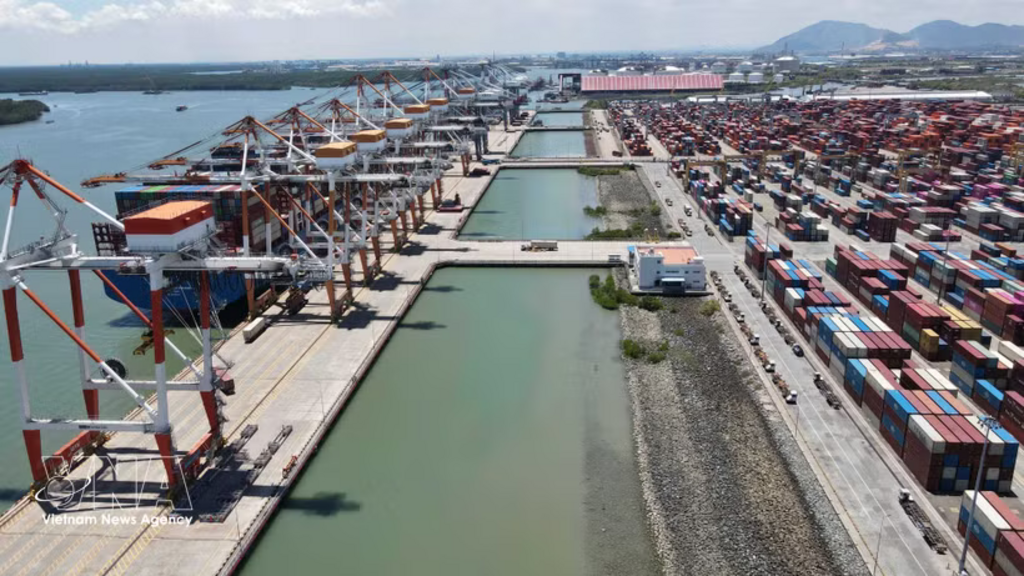
| The Vietnamese economy has shown notable resilience amid rising cost pressures and global volatility__Photo: VNA |
Despite signs of moderating growth, Vietnam’s economy continues to demonstrate considerable resilience in the face of rising cost pressures and an increasingly uncertain external environment, according to the Q3 2026 economic outlook report released on June 12 by Singapore-based United Overseas Bank (UOB).
Short-term outlook presents both opportunities and challenges
UOB noted that while Vietnam has maintained relatively strong growth momentum, recent economic indicators suggest a mixed short-term outlook, with positive developments tempered by mounting challenges. In particular, higher energy costs are beginning to weigh on manufacturing activity and macroeconomic stability.
Manufacturing improved notably in May, with the Purchasing Managers’ Index (PMI) rising to 52.8 from 50.5 in April and 49.8 a year earlier. The output index also climbed sharply to 55.6, reflecting continued improvement in new order demand.
Inflation, however, remains a key concern. Consumer price index rose by 5.6 per cent year-on-year in May, marking the third consecutive monthly increase and the highest level in six years. Meanwhile, industrial production growth eased to 9 per cent from 10 per cent in April, bringing average growth in the second quarter to 9.5 per cent, significantly lower than the 11 per cent recorded in the first quarter.
Trade activities have also begun to cool down. Exports expanded by 18 per cent in May, down from 21 per cent in the previous month, while imports continued to surge by 33.8 per cent. As a result, Vietnam’s trade balance posted a deficit of USD 12.7 billion in the first five months of the year, compared with a surplus of around USD 5 billion in 2025, marking the largest deficit in nearly three decades.
According to UOB, Vietnam’s balance of payments is likely to remain under pressure as imports of machinery and equipment for major infrastructure projects continue to increase, alongside higher energy costs driven by elevated oil prices.
Over the medium term, UOB observed that Vietnam remains committed to ambitious development goals, including achieving average annual GDP growth of at least 10 per cent during the 2026-30 period. By 2030, the country aims to attain upper-middle-income status, develop a modern industrial base, rank among the world’s 30 largest economies and raise per capita GDP to approximately USD 8,500.
While some international institutions remain more cautious in their projections, UOB believes Vietnam’s external demand remains relatively robust, partly supported by continued global investment in artificial intelligence (AI). The bank therefore maintains its forecast of 7 per cent GDP growth for Vietnam in 2026, although growth could moderate to around 6.7 per cent during the second and third quarters.
Exchange rate outlook more stable, but risks remain
Inflation has become a key policy concern for the State Bank of Vietnam (SBV), with average inflation during the first five months of 2026 reached 4.3 per cent, nearing the Government’s target of 4.5 per cent, while full-year inflation is projected to rise to as high as 5.5 per cent.
Against this backdrop, UOB expects the central bank to keep policy rates unchanged as it balances inflation management with exchange-rate stability. At the same time, the SBV has encouraged commercial banks to lower lending rates to support businesses and borrowers, complemented by fiscal measures such as extending the 0 per cent tax rate on petrol and selected fuel products through the end of June.
The Singaporean bank further highlighted improving US-China relations following talks between US President Donald Trump and Chinese President Xi Jinping in mid-May as a positive factor for Vietnam’s export outlook. Reduced tensions between the world’s two largest economies could help limit the spread of tariff measures while reinforcing Vietnam’s position as a key destination in the ongoing global supply-chain diversification trend.
On that basis, UOB expects the Vietnamese dong to continue depreciating gradually in a controlled manner. It forecasts the USD/VND exchange rate at 26,500 in the third quarter of 2026, 26,400 in the fourth quarter, 26,300 in the first quarter of 2027 and 26,100 in the second quarter of 2027. The medium-term outlook for the currency remains supported by solid economic fundamentals, sustained FDI inflows and consistent macroeconomic policies, with a potential upgrade of Vietnam to emerging-market status in September 2026 expected to provide an additional boost to capital inflows.- (VNA/VLLF)