 |
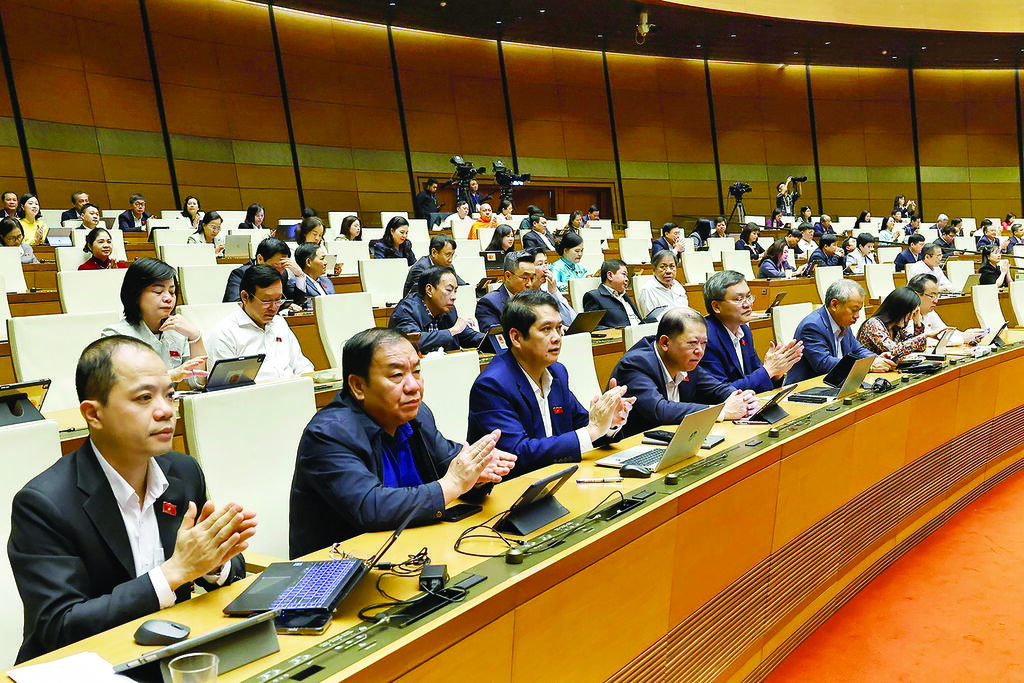
| On December 5, 2025, the National Assembly holds a plenary discussion on investment policy for the national target program on building a new-style countryside, sustainable poverty reduction and socio-economic development in ethnic minority and mountainous areas up to 2035__Photo: Doan Tan/VNA |
Lawmakers adopted 51 laws and 39 resolutions at the 10th session of the 15th National Assembly (NA) that lasted from October 20 to December 11.
In his closing remarks, NA Chairman Tran Thanh Man stressed that the session recorded substantial lawmaking work, making up nearly 30 percent of all laws and resolutions passed during the entire 15th tenure.
The adopted laws and resolutions not only address immediate practical requirements but also establish a legal framework for the new phase of development, he added.
According to the top legislator, during the 40-day session, NA deputies reviewed and decided on many strategic issues of great importance, including a comprehensive assessment of the 2021-26 tenure of state agencies, personnel matters and thorough discussions of draft documents to be submitted to the 14th National Party Congress.
Looking back on the 15th tenure, the NA leader said the legislature adopted the Resolution revising a number of articles of the Constitution, proactively innovating legislative mindset and promptly institutionalizing the Party’s guidelines into laws, asserting a pioneering role in institutional development.
The legislative body also promoted the application of digital technology, digital transformation and artificial intelligence and, for the first time, successfully organized two forums on lawmaking and oversight activities.
The NA leader stressed that meeting the country’s new tasks and requirements requires fully harnessing patriotism, unity and people’s strength, renewing mindsets, and effectively implementing strategic policies, thus ushering Vietnam into a new era of the nation’s rise toward building a prosperous, wealthy, civilized and happy Vietnam.
Legislative breakthroughs: 51 laws paving the way for modern development
Fifty-one laws passed at the session are divided into three groups. Group 1 consists of 15 new laws concerning digital transformation, population, extradition, disease prevention, thrift and waste combat, artificial intelligence, e-commerce, transfer of sentenced persons, mutual legal assistance in civil matters, mutual legal assistance in criminal matters, state of emergency, execution of custody, and the specialized court at the International Financial Center. Group 2 embraces 19 revised laws related to oversight activities, personal income tax, cybersecurity, high technology, press, state secret protection, higher education, vocational education, bankruptcy, and tax administration. Group 3 comprises laws amending a number of articles of 17 laws related to technology transfer, intellectual property, education, criminal records, treaties, urban and rural planning, public debt management, and insurance business.
In Group 1, the Law on Disease Prevention, the Law on Mutual Legal Assistance in Criminal Matters and the Law on Thrift and Waste Combat will take effect on July 1, 2026.
With 46 articles, the Law on Disease Prevention specifies incentive policies for grassroots health workers and preventive health facilities, notably grant of scholarships for studies in preventive medicine and public health as well as financial support for students enrolled in health-related public education institutions.
Under the law, Vietnamese citizens will be guaranteed at least one free annual medical checkup or screening, in alignment with a phased implementation and priority groups. Funding sources include the state budget, resources from the private sector, and the national health insurance fund.
Meanwhile, the Law on Mutual Legal Assistance in Criminal Matters provides the principles, competence and procedures for providing mutual legal assistance in criminal matters between Vietnam and other countries as well as the responsibilities of Vietnamese authorities.
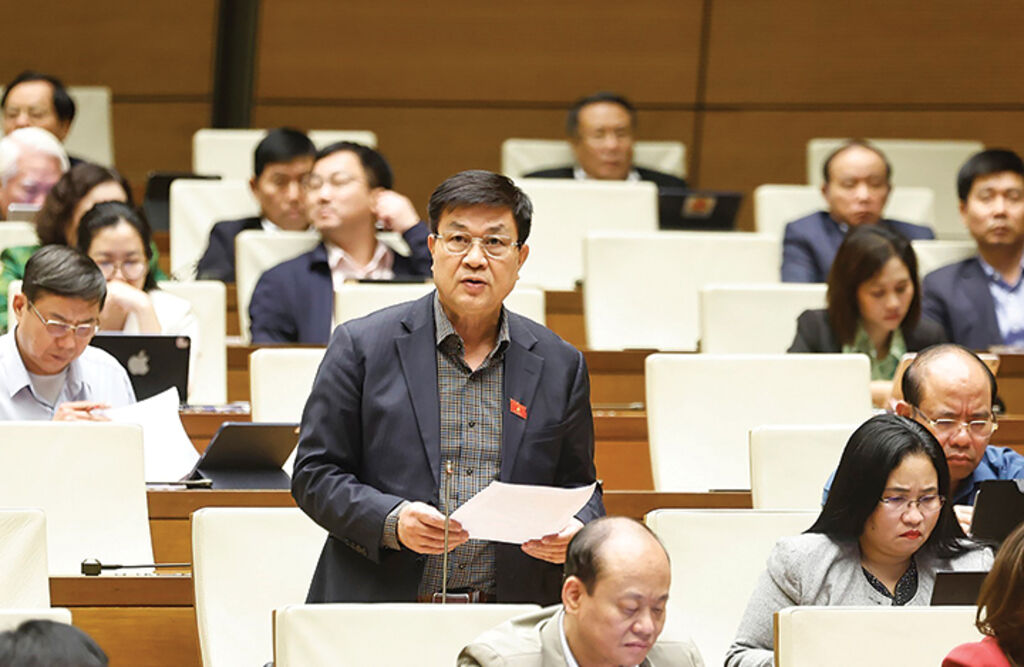 |
| National Assembly deputy Do Ngoc Thinh of Khanh Hoa province addresses during the 10th session of the 15th National Assembly__Photo: Doan Tan/VNA |
Mutual legal assistance in criminal matters must respect independence, sovereignty, territorial integrity, non-interference of each other’s internal affairs, equality and mutual benefit and comply with Vietnam’s Constitution and laws along with relevant treaties, or be based on reciprocity if no treaty exists and in adherence to Vietnam’s law and international law and practices.
The new Law on Thrift and Waste Combat, replacing the 2013 Law on Thrift Practice and Waste Combat expands and clarifies the definitions of “thrift” and “waste”. Thrift is not limited to using less than the law-prescribed norms but also covers “using resources in accordance with norms, standards and technical regulations while achieving higher-than-targeted results”. Waste covers acts that hinder socio-economic development and cause the country to miss development opportunities.
The law also institutionalizes the Party’s regulations and specifies wasteful acts in various areas such as public finance, public investment capital, natural resources and energy, and public assets. This helps clearly identify violations for handling.
In Group 2, the Law on Oversight Activities of the National Assembly and People’s Councils, the Law on Personal Income Tax and the Law on Tax Administration are the prominent ones.
The revised Law on Oversight Activities of the National Assembly and People’s Councils, with 45 articles and set to take effect on March 1, 2026, institutionalizes the principles, responsibilities and binding enforcement mechanisms for oversight activities.
In the meantime, the amended Law on Tax Administration tightens tax administration in e-commerce by requiring online platforms to pay taxes on behalf of sellers, one of the most important measures to prevent revenue loss in the digital era.
Notably, the 53-article law also changes the tax administration regime for household businesses. From January 1, 2026, instead of the previous presumptive tax regime, tax will be calculated based on actual revenue. This helps improve transparency in tax obligations and minimize risks for taxpayers.
In addition, the law broadens the categories of individuals subject to exit suspension to prevent tax evasion.
The amended Law on Personal Income Tax, which consists of 30 articles arranged in four chapters, raises the family circumstance-based deduction to VND 15.5 million (about USD 588) per month (from the current VND 11 million) for each taxpayer, while the deduction for each dependent increases to VND 6.2 million per month (from VND 4.4 million).
It also raises the tax-exempt revenue threshold from the current VND 100 million (and VND 200 million proposed in earlier drafts) to VND 500 million per year. Accordingly, household businesses earning VND 500 million or less annually will not be subject to personal income tax.
The law expands tax exemptions to encourage labor and innovation, including a 100-percent tax exemption on income from night work and overtime work (instead of only exempting the additional pay as previously); a five-year tax exemption on income from wages and salaries of high-quality digital technology and hi-tech industry personnel; and exemptions on income from first-time transfers of carbon credits and green bonds.
The law is scheduled to take effect on July 1, 2026. However, to allow people to benefit sooner from higher deductions and lower tax rates, provisions related to income from wages, salaries and business activities will be applied six months earlier, from January 1, 2026.
In Group 3, the Law Amending a Number of Articles of the Law on Criminal Records stands out the most.
It revises provisions concerning agencies and organizations that require access to an individual’s criminal record information. Such entities will be permitted to obtain this information directly via data-sharing mechanisms that link the criminal-record database with the national population database, thereby removing the requirement for individuals to produce a criminal record certificate in physical form.
Criminal record information displayed on the VNeID app will have the same legal validity as a traditional certificates and individuals will no longer need to apply for a certificate. Only a limited number of cases, such as foreigners or persons without a digital identity, may still apply for a certificate in person or via postal services. The time limit for issuing a criminal record certificate has been shortened to five working days (from the current 10 days) after the receipt of a valid application.
Strategic resolutions: driving socio-economic growth with specific mechanisms for major cities
During the session, the NA adopted several key resolutions, including a resolution reviewing the 2021-26 tenure of the legislature, the President, the Government, the Supreme People’s Court, the Supreme People’s Procuracy and the State Audit Office of Vietnam, a resolution on a number of special breakthrough mechanisms and policies for protecting, caring for and improving people’s health, and the resolution of the 10th session of the 15th Legislature. Notably, among the approved 39 resolutions, the key highlights include a resolution on Vietnam’s socio-economic development plan for 2026, a resolution on the state budget estimate for 2026, a resolution on the results of thematic oversight of the implementation of laws and policies on environmental protection, and resolutions on pilot special mechanisms applied in Hanoi, Da Nang City and Ho Chi Minh City.
The resolution on the socio-economic development plan for 2026 sets 15 major targets, including the gross domestic product (GDP) growth rate of 10 percent or higher, the GDP per capita reaching between USD 5,400 and USD 5,500, and the proportion of the processing and manufacturing industry accounting for about 24.96 percent of GDP. The average annual increase in the consumer price index is targeted to around 4.5 percent, while labor productivity is expected to grow by approximately 8.5 percent.
Other key targets include agricultural labor making up 25.3 percent of the workforce, 29.5 percent of workers possessing degrees or certificates, and keeping the urban unemployment rate below 4 percent. The multidimensional poverty household rate is expected to fall by 1-1.5 percentage points.
In terms of environmental management, the resolution targets a 95 percent rate of urban solid waste collection and treatment and a 95-percent rate of industrial parks and export processing zones equipped with wastewater treatment systems meeting environmental standards.
The NA urged the Government to continue prioritizing growth in tandem with maintaining macroeconomic stability, controlling inflation, and ensuring major balances of the economy, such as keeping public debt and budget deficit within the set limits.
The Government was also asked to accelerate institutional reform, strengthen law enforcement, and promote administrative simplification and digital transformation to improve the business climate and attract investment. Stronger efforts are also required to prevent corruption, waste and misconduct in all sectors.
The resolution highlights the importance of developing high-quality human resources for priority and emerging industries, and boosting scientific research, innovation and technology transfer. It also calls for further investment in cultural industries, social welfare, and improvements in living standards.
Under the resolution on the state budget estimate for 2026, the total state budget revenue for 2026 is projected at nearly VND 2.53 quadrillion (approximately USD 96 billion), including VND 1.22 quadrillion for the central budget and VND 1.3 quadrillion for local budgets.
Total state budget expenditure is estimated at almost VND 3.16 quadrillion, of which VND 1.8 quadrillion will be allocated to the central budget. The state budget deficit is estimated at VND 605.8 trillion, equivalent to 4.2 percent of the country’s GDP. The total borrowing demand of the state budget in 2026 is projected at VND 985.8 trillion.
The NA asked ministries, central agencies and local administrations to continue implementing measures to create funding sources for wage policy reform. In 2026, certain revenue items will still be excluded from local budget surplus calculations for wage reform. These items include land rental prepayments, proceeds from the sale of public assets, environmental protection charge on wastewater, and revenues from leasing or selling state-owned houses.
The NA also permitted an expanded use of central budget reserves for wage reform to adjust pensions, social insurance benefits, monthly allowances, and preferential treatment for people with meritorious services to the revolution, as well as to support personnel downsizing. Local budget reserves for wage reform may also be used to implement national social security policies and streamline local staffing structures.
The Government is assigned to review and utilize savings from recurrent expenditures, particularly from payroll and administrative cost reductions as a result of implementing the two-tier local administration model, to supplement local wage-reform funds.
From 2026 onward, the Government will be authorized to use accumulated wage-reform funds to ensure the implementation of salary, allowance and income policies in line with current regulations.
As stated in the resolution on the results of thematic oversight of the implementation of laws and policies on environmental protection, Hanoi needs to cut its annual particulate matter (PM2.5) levels by around 20 percent by 2030 compared to 2024, while nearby localities must hit at least a 10 percent drop. Localities are required to step up vehicle emission controls, restrict seriously polluting vehicles in certain zones, limit open burning and improve wastewater treatment. A nationwide environmental data system, including a real-time air quality map, must also be completed and made available to the public.
The resolution on pilot implementation of a number of special mechanisms and policies for implementing major and important projects in Hanoi provides special mechanisms and policies on investment, planning, urban development, architecture, construction, land and finance for implementing major, urgent projects in the Capital. It defines major and important projects as public investment, public-private partnership investment or investment projects requiring urgent implementation under directives of the Party Central Committee or municipal Party Committees; national important projects; and projects funded by the city’s budget or other lawful sources with investment of at least VND 30 trillion (USD 1.13 billion).
It also covers strategic-investor projects of VND 30 trillion or more; reconstruction of condominiums; and projects tackling congestion, flooding, pollution and urban order issues.
The resolution amending a number of articles of Resolution 98/2023/QH15 on pilot implementation of a number of special mechanisms and policies for development of Ho Chi Minh City introduces specific mechanisms and policies on investment management, finance and state budget; urban, natural resources and environmental management; lists of priority projects for attracting strategic investors; establishment and operation of the Ho Chi Minh City Free Trade Zone; science, technology and innovation management; and the municipal administration apparatus.
Amendments allow Ho Chi Minh City to use its budget for standalone public investment projects for compensation, support and resettlement of residents affected by urban design schemes, along with those affected by urban planning for the areas surrounding metro stations and intersections along Ring Road No. 3. This facilitates land recovery, urban redevelopment, resettlement, and creation of land areas for auctions or build-transfer (BT) contract payments.
Meanwhile, the resolution on amendments and supplementations to Resolution 136/2024/QH15 on urban administration and pilot special mechanisms and policies for Da Nang’s development adds land recovery cases apart from those referred to in Article 79 of the 2024 Land Law. Under the resolution, land recovery is applied to projects involving logistics centers serving seaports, airports and inland waterway ports with a scale of up to 50 hectares; related logistics services covering up to 50 hectares; exhibition centers covering less than 100 hectares each; and mineral extraction for use as building materials, aiming to meet Da Nang’s specific and urgent needs.- (VLLF)