 |
| Teaching vocational skills to students at Ninh Binh province-based Reformatory School No. 2__Photo: VNA |
Law on Justice for Minors (No. 59/2024/QH15)
The Law establishes a more humane and progressive framework for juvenile criminal justice.
Accordingly, the maximum prison sentence is reduced from 12 years to nine years for offenders aged from 14 to under 16, and from 18 to 15 years for those aged from 16 to under 18, except in cases involving particularly serious crimes, including murder, rape, rape of persons under 16, forcible sexual intercourse with victims aged from 13 to under 16, and illegal production of narcotics.
These provisions institutionalize the Party’s orientation toward refining criminal policy, ensuring an appropriate balance between leniency for juvenile offenders, strict enforcement of the law, and protection of public safety.
Law on Excise Tax (No. 66/2025/QH15)
The Law revises the scope of goods and services subject to special consumption tax.
In addition to retaining taxable items under the current law, the Law adds sugar-sweetened beverages, defined under national standards as containing more than 5g of sugar per 100 ml, to the list of excisable goods; redefines taxable air conditioners as those with a capacity of over 24,000 BTU up to 90,000 BTU; and revises the descriptions of certain taxed goods, including tobacco, alcoholic beverages, beer, automobiles, and aircraft, to ensure consistency with sector-specific legislation.
Law on Chemicals (No. 69/2025/QH15)
The Law strengthens the management of chemicals throughout their entire life cycle, from production to waste treatment.
To enhance the effectiveness of state management, chemicals are classified into prohibited chemicals, chemicals requiring special control, and chemicals subject to conditions, with corresponding levels of regulatory oversight.
Organizations and individuals engaged in the purchase and sale of chemicals requiring special control must prepare control forms and undergo data verification in line with a roadmap prescribed by the Government, while users of such chemicals must declare their intended purposes of use. These requirements are implemented through a sector-specific chemical database, enabling authorities to monitor the full “traceability chain” of chemicals, from manufacturers and importers to end users.
Law on the Digital Technology Industry (No. 71/2025/QH15)
The Law introduces a comprehensive policy framework to develop high-quality human resources for the digital technology industry.
Under the Law, high-quality digital technology professionals who are foreign nationals are eligible for five-year temporary residence cards, renewable in accordance with immigration regulations, and preferential personal income tax treatment. Such professionals may also be admitted to work on a fixed-term basis at state agencies or public service units, subject to agreement among relevant entities.
In addition, digital technology talents are entitled to special remuneration mechanisms, with salaries and bonuses competitive by international standards, priority in recruitment, employment, and appointment, as well as support in terms of working conditions, housing, transportation, participation in international cooperation activities, and financial resources for research and development in the digital technology sector.
Law on Teachers (No. 73/2025/QH15)
The Law sets out a comprehensive regime to improve benefits and strengthen the teaching workforce.
Under the Law, all teachers, regardless of whether they work in the public or non-public sector, are entitled to job- and location-based allowances, support for training and professional development, periodic and occupational health care, as well as official housing, collective accommodation, or rent subsidies when working in particularly disadvantaged areas.
The Law also introduces talent attraction and retention policies for highly qualified individuals, teachers working in disadvantaged regions, and those in key and essential fields, with the aim of ensuring more balanced teaching quality across regions.
Regarding retirement, early childhood teachers may opt for early retirement by up to five years compared to the statutory age without a reduction in pension benefits, provided they have at least 15 years of social insurance contributions. Meanwhile, professors, associate professors, PhD holders, and teachers in specialized fields may retire at a higher age.
Law on Employment (No. 74/2025/QH15)
The Law provides an updated legal framework for employment and labor market development. It applies to all Vietnamese citizens aged 15 and above who are capable of working and seeking employment, including workers with or without formal labor contracts as well as unemployed persons. It sets out policies on labor registration, labor market information systems, skills development, employment services, and state management of employment.
Key revisions include expanding unemployment insurance coverage in line with the 2024 Law on Social Insurance; introducing flexibility in contribution rates (capped at 1 percent of monthly wages); and simplifying conditions and administrative procedures to facilitate access to unemployment insurance benefits for both workers and employers.
Law Amending and Supplementing a Number of Articles of the Law on Advertising (No. 75/2025/QH15)
The Law introduces major reforms to modernize advertising regulation in line with economic integration and digital transformation. It not only addresses shortcomings of the current advertising legal framework but also comprehensively reforms administrative procedures, with enhanced decentralization and delegation of authority. It further introduces provisions on the management of online advertising, aiming to foster a transparent, fair, and enabling business environment.
The Law focuses on three major policy pillars: (i) refining regulations on advertising content and formats; (ii) strengthening regulation of advertising in the press, online environments, and cross-border advertising services; and (iii) improving the regulatory framework for outdoor advertising.
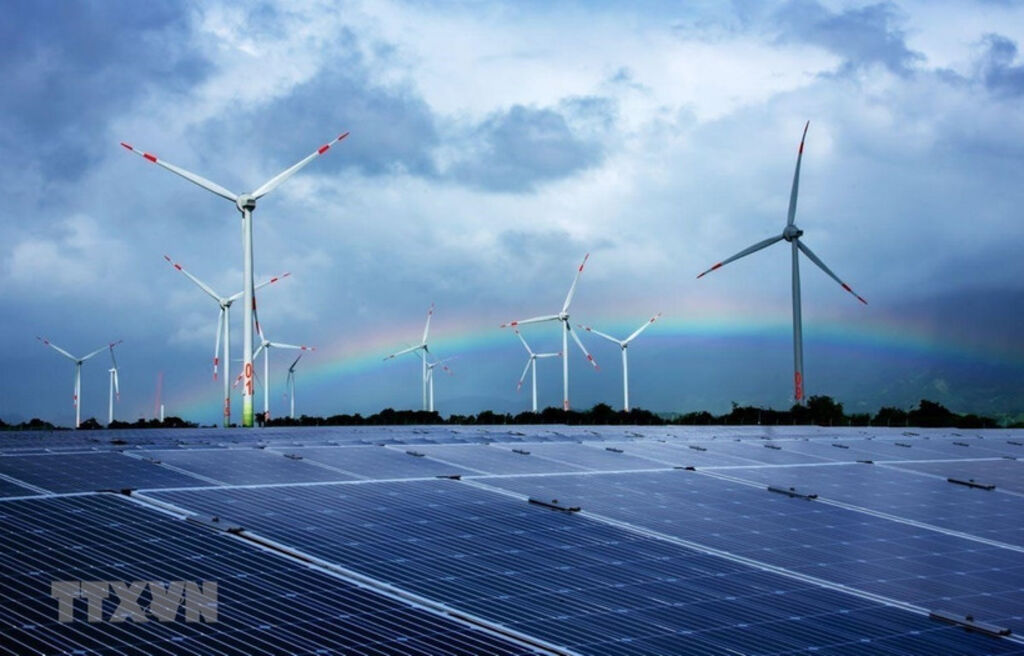 |
| The renewable energy complex invested by Trung Nam Group in Khanh Hoa province__Photo: VNA |
Law Amending and Supplementing a Number of Articles of the Law on Economical and Efficient Use of Energy (No. 77/2025/QH15)
The Law updates minimum energy performance standards to promote energy efficiency and environmental sustainability. It facilitates the phasing out of obsolete equipment and encourages the production and consumption of high-efficiency, environmentally friendly vehicles and devices.
The Law also cuts two out of four administrative procedures in the areas of energy labeling and energy auditing, abolishing procedures for energy labeling certification and energy audit certification, while retaining procedures for certification of energy managers and accreditation of energy performance testing laboratories.
Law Amending and Supplementing a Number of Articles of the Law on Product and Goods Quality (No. 78/2025/QH15)
The Law strengthens requirements on traceability and supply chain transparency for products and goods.
Under the Law, traceability must be implemented in a truthful and objective manner, ensuring authenticity and verifiability, consistency with regulations on customs, trade, taxation, trade remedies, and other relevant laws, while not impeding the circulation of goods.
For high-risk products and goods, traceability is mandatory, based on lists and implementation roadmaps determined by ministries and ministerial-level agencies. Other producers, exporters, importers, and distributors are encouraged and supported to adopt traceability systems in line with their scale and business conditions.
Law on the State Budget (No. 89/2025/QH15)
The Law further refines the framework for state budget decentralization. It reinforces the leading role of the central budget in financing national tasks and supporting fiscally imbalanced localities, while enhancing the autonomy of local budgets through clearer revenue and expenditure assignments.
The Law allows flexible arrangements, including inter-level budget support in emergency situations, use of local budget reserves to assist other localities, and allocation of local development investment funds to projects under higher-level spending responsibilities.
Notably, it raises the maximum budget reserve allocation from 4 percent to 5 percent of total expenditure at each budget level, strengthening flexibility and consistency in state budget management.
Law on Personal Data Protection (No. 91/2025/QH15)
The Law establishes a comprehensive legal framework to safeguard personal data in the digital age. It introduces several notable provisions, including a ban on trading in personal data; a requirement for enterprises to delete employees’ personal data after contract termination unless otherwise provided by law or agreement; and a prohibition on social media platforms requiring images or videos of identity documents for authentication.
Under Article 25.2, enterprises must comply with relevant laws, retain personal data only for legally prescribed or agreed periods, and delete or destroy such data upon contract termination.
Law on Participation in United Nations Peacekeeping Operations (No. 92/2025/QH15)
The Law provides a comprehensive legal basis for Vietnam’s participation in United Nations peacekeeping missions.
The Law provides for principles, forms, fields of participation, international cooperation, force development and deployment, resource assurance, policy regimes, and the responsibilities of relevant agencies, organizations, and individuals.
Vietnam’s peacekeeping force, as designated by the State, contributes to maintaining international peace and security while enhancing Vietnam’s role, position, and prestige in the international community and advancing an independent, self-reliant foreign policy of peace, cooperation, and development.
Law on Atomic Energy (No. 94/2025/QH15)
The Law places strong emphasis on nuclear safety and security. It dedicates Chapter III to radiation safety and protection, nuclear safety, and nuclear security, including provisions on the storage, treatment, and disposal of radioactive waste and spent nuclear fuel in accordance with national and sectoral planning.
With respect to nuclear power plants, the Law requires safety oversight and security assurance throughout the entire life cycle, ensuring coherence within the legal framework and alignment with international practices and IAEA guidelines.
Law on Railways (No. 95/2025/QH15)
The Law establishes a legal framework for railway operations and safety management. It strictly prohibits acts threatening railway safety, including damage to railway infrastructure and rolling stock, disruption of traffic order, encroachment on safety corridors, and unauthorized opening of level crossings.
The Law also bans tampering with or obscuring railway signals, unauthorized signaling or use of devices to stop trains, placing obstacles or flammable, explosive, or toxic substances within protected zones, and operating trains in excess of prescribed speed limits. Notably, railway staff on duty must not have alcohol in their blood or breath and must not use narcotics or other prohibited stimulants.- (VLLF)