 |
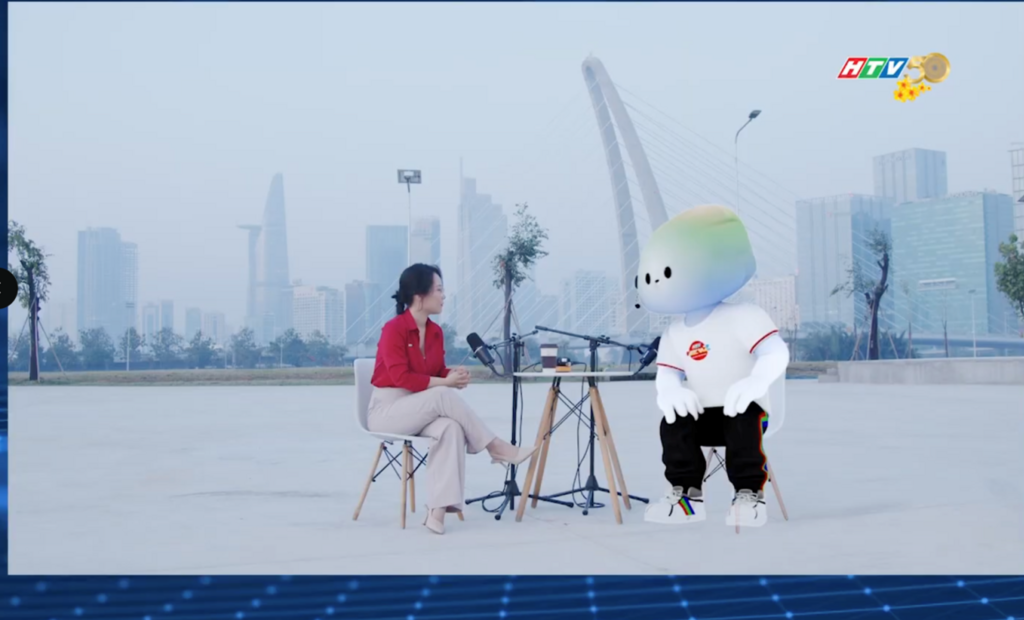
| A talk show between a human and an AI, produced by Ho Chi Minh City Radio and Television Station__Photo: Screenshot from htv.vn |
AI-generated or AI-edited press content that could mislead the public about real events or individuals must be clearly labelled under new regulations tightening the use of AI in press activities.
Under Government Decree 237/2026/ND-CP, which details the implementation of several articles of the 2025 Press Law, press agencies are encouraged to research and apply artificial intelligence (AI) in the collection, production, analysis and distribution of information to improve the effectiveness of press activities. They must, however, verify, review, and take responsibility for the authenticity and legality of, content generated by, or involving the use of, AI systems.
When using AI systems in news gathering, production, editing and distribution and other press activities, press agencies must comply with the laws on the press and artificial intelligence, as well as relevant regulations.
A key requirement is that press agencies must give notice and clearly label, in an easily recognisable position, any text, image, audio or video created or edited using AI systems that may cause confusion about the authenticity of events or individuals.
Press agencies are prohibited from using AI systems to create or disseminate fake, false, distorted or misleading content, or content that may harm national security, social order and safety, honour, dignity, or the lawful rights and interests of organisations and individuals.
The decree also requires press agencies to establish procedures for appraisal, editing and risk control, and to define individual accountability in the use of AI systems. They must retain activity logs and technical documents for inspection and examination by competent agencies.
In addition to the rules on AI use, Decree 237 strengthens the monitoring of press activities in cyberspace.
Accordingly, the Ministry of Culture, Sports and Tourism will develop and operate a digital tool to monitor press activities in cyberspace and support real-time tracking, data collection, analysis and assessment. The tool, which may take the form of an information technology system, software or service, is designed to assist state management agencies without interfering with press content.
In a related move, as part of efforts to build a professional, humanistic, modern and sustainable press sector, the Vietnam Journalists Association has announced a set of 10 rules for the use of AI in press activities.
First, AI is merely a tool and does not replace journalists. Journalists must bear ultimate responsibility for all press products.
Second, AI is not treated as a source. All facts, figures, quotations or assessments provided by AI must be checked against reliable sources before use.
Third, AI-generated content must be edited, corrected, contextualised and approved before publication.
Fourth, the use of AI to create or spread fake news, fake data, fake statements or fabricated persons is prohibited.
Fifth, the replication of a person’s voice, image or face without permission, or the use of such replication to deceive the public, is prohibited.
Sixth, press agencies may not upload confidential documents, unpublished drafts, source data, internal information or sensitive personal data to AI systems.
Seventh, the use of AI must not infringe copyright. Press agencies may not use AI to reproduce, rewrite or illegally exploit others’ works in order to circumvent copyright obligations.
Eighth, transparency must be ensured during the use of AI, with appropriate labelling or notification for content involving significant AI use.
Ninth, the use of AI for sensitive topics requires multi-layer verification.
Lastly, AI use must comply with the laws on the press, data protection, the digital technology industry, and intellectual property, as well as rules on professional ethics.- (VLLF)