 |
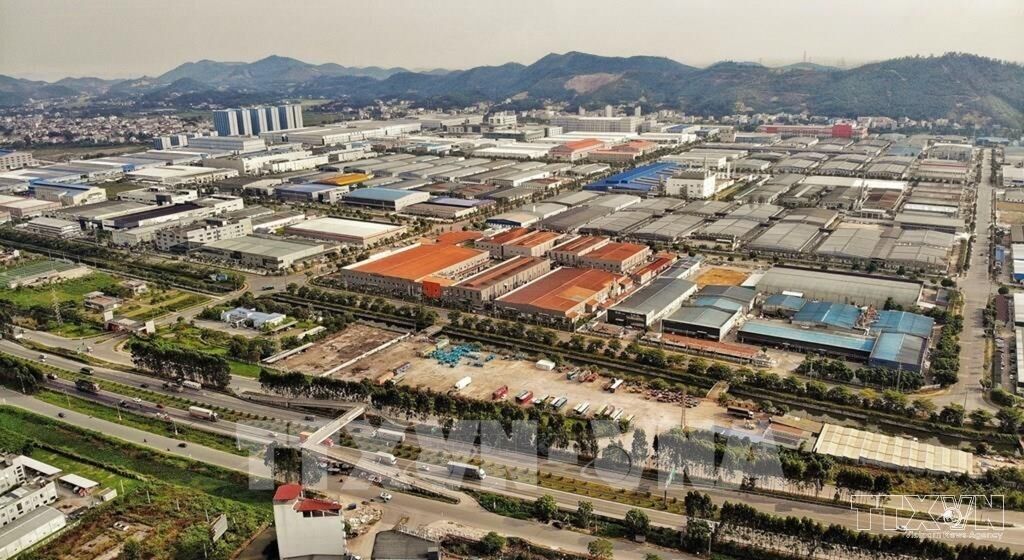
| A corner of Van Trung industrial park, Bac Ninh province __Photo: Danh Lam/VNA |
By 2030, all industrial clusters will have their wastewater treated to meet environmental technical regulations, according to a draft plan designed by the Ministry of Industry and Trade (MOIT) to implement Government Resolution 208/NQ-CP dated August 4 on environmental protection and proactive response to climate change in the new period.
The MOIT also plans to coordinate efforts to tighten the control of major sources of wastewater discharged from industrial plants, thermal power plants, chemical and mineral extraction facilities throughout the country, through automated, continuous monitoring systems.
In the energy sector, the draft sets a target for renewable energy to account for at least 26.1 per cent of total primary energy supply and for energy consumption per unit of GDP to fall by 1-1.5 per cent annually. Other priorities include improving energy efficiency, ensuring electricity supply resilient to disasters and climate change, and promoting the clean energy development.
The draft also proposes measures to boost the green transition and foster a circular, low-carbon economy in industrial production. It targets that eco-industrial parks would account for 10 per cent of total industrial parks, including converted existing parks and newly established ones, promoting the use of circular, recycled, reused and low-emission materials.
In addition, environmental standards, technical regulations and energy consumption norms for key industries would be reviewed and refined. Post-implementation inspections would also be strengthened based on compliance levels, while waste discharge monitoring data would be digitised.
To mobilise resources, the draft proposes combining financial incentives with funding from green bonds, official development assistance and concessional loans to attract investment in low-emission industrial projects, renewable energy and green logistics infrastructure. Private enterprises and household businesses would also have access to interest rate subsidies to develop circular economy activities and meet environmental, social and governance (ESG) standards.
The draft also calls for strengthening forecasting and analytical capacity and helping importers and exporters proactively conform to international standards and regulations and respond to technical barriers to trade concerning the environment and climate, including the Carbon Border Adjustment Mechanism (CBAM).
Associations and businesses would also be supported in handling trade remedy cases and trade disputes involving environmental standards and green transition. International cooperation would be fostered to attract climate finance, facilitate the transfer of green technology and develop the carbon market.- (VLLF)