 |
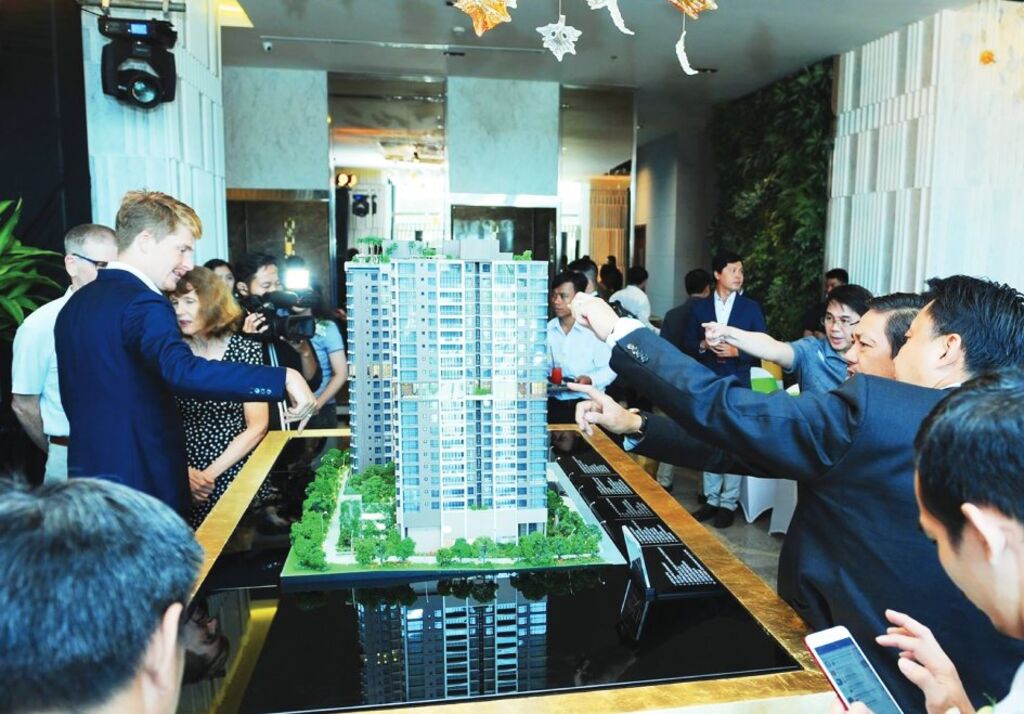
| Foreign organisations may own houses in Vietnam, including apartments and detached houses__Photo: Internet |
My company is a wholly foreign-owned enterprise. Is it allowed to purchase a house in Vietnam?
Yes. Under Article 17.1 of the 2023 Housing Law (the Law), foreign organisations are permitted to own houses in Vietnam. These include:
(1) Foreign-invested economic organisations implementing housing construction projects in Vietnam in accordance with the Law and relevant legislation; and,
(2) Foreign-invested economic organisations, branches and representative offices of foreign enterprises, foreign investment funds, and foreign bank branches currently operating in Vietnam.
However, such entities are not automatically entitled to house ownership. They must meet the conditions set out in Article 18 of the Law.
Specifically, entities under category (1) must be owners of housing construction projects and possess a valid investment registration certificate.
Meanwhile, those under category (2) must hold valid investment certificates, investment registration certificates, or other documents issued by competent Vietnamese authorities permitting their establishment or operation in Vietnam at the time of entering into housing transactions.
If permitted, can my company buy a street-front detached house?
Under Article 17.2 of the Law, foreign organisations may own houses in Vietnam, including apartments and detached houses, in the following forms:
- Entities under category (1) may own houses through implementing housing construction projects;
- Entities under category (2) may own houses by purchasing or lease-purchasing commercial housing from project developers, or by receiving donations or inheritance of commercial housing under housing development projects not located in areas subject to national defence and security requirements. In addition, they may also purchase or lease-purchase houses from other foreign organisations or individuals.
That means your company may only purchase detached houses that are part of commercial housing construction projects.
However, foreign house ownership is also subject to statutory caps.
- For apartments, foreign ownership must not exceed 30 per cent of the total units in a condominium building, regardless of whether it is a residential or mixed-use building. In case a building comprises multiple blocks sharing a basement, the 30 per cent cap applies to each block.
- For detached houses, the cap is 250 units within an area with a population of 10,000 if there is only one housing project in that area. Where multiple projects exist, the total number of houses owned by foreign entities across all projects must not exceed 250. Once the cap is reached, no further acquisition is permitted.
Regarding ownership duration, Article 20.2 of the Law provides that foreign organisations may own houses for a term stated in their investment certificates, including any extension thereof. The ownership period is counted from the issuance date of the investment certificate and must be clearly recorded therein.
If my company does not have real estate business functions, can it use the house as an office, or lease or sell it?
Your company may neither change the intended use of the house nor lease it out.
Under the 2023 Law on Real Estate Business, a house must be used strictly for residential purposes. Office use requires premises designated for office functions.
In addition, as your company does not have real estate business functions, it is not permitted to lease the property.
Where the company no longer needs to use the house, it may sell or donate it. Before the expiration of the ownership term, the company may itself or authorise another organisation or individual to transfer or donate the property to an eligible entity. If the ownership term expires and the house has not been transferred, it will become public property.
It should also be noted that if the company is required to terminate its operation in Vietnam due to violations relating to the use of houses, the property will be handled in accordance with decisions of competent Vietnamese authorities.- (VLLF)