 |
| Sun-drying palm leaves__Photo: https:// baoninhbinh.org.vn |
Located in Nghia Hung commune, Ninh Binh province (former Nghia Chau commune, Nghia Hung district, Nam Dinh province), Dao Khe village presents a familiar sight: elderly women patiently shaping conical hat frames, their hands moving with quiet precision. For the villagers, hat-making has been more than a livelihood; it is a cultural legacy deeply embedded in their identity.
According to local elders, the craft was introduced to Dao Khe by Chu Van Phan, a native of the village. After the 1945 August Revolution, Phan and two companions travelled to Chuong village in Thanh Oai, Hanoi, initially intending to buy conical hats for resale. Yet, seeing their essential role in everyday life and their wide market appeal, he soon realised the potential of the craft. This inspired him to bring the trade back to his village, and in 1946, he invited artisans from Chuong village to teach and pass on their skills.
At first, Dao Khe hats followed the Chuong design, with 20 bamboo rings tied using coarse fishtail palm fibre. Over time, villagers refined the technique, producing hats of various sizes, ranging from 16 rings to just two, while replacing traditional fibres with modern nylon thread for a finer finish.
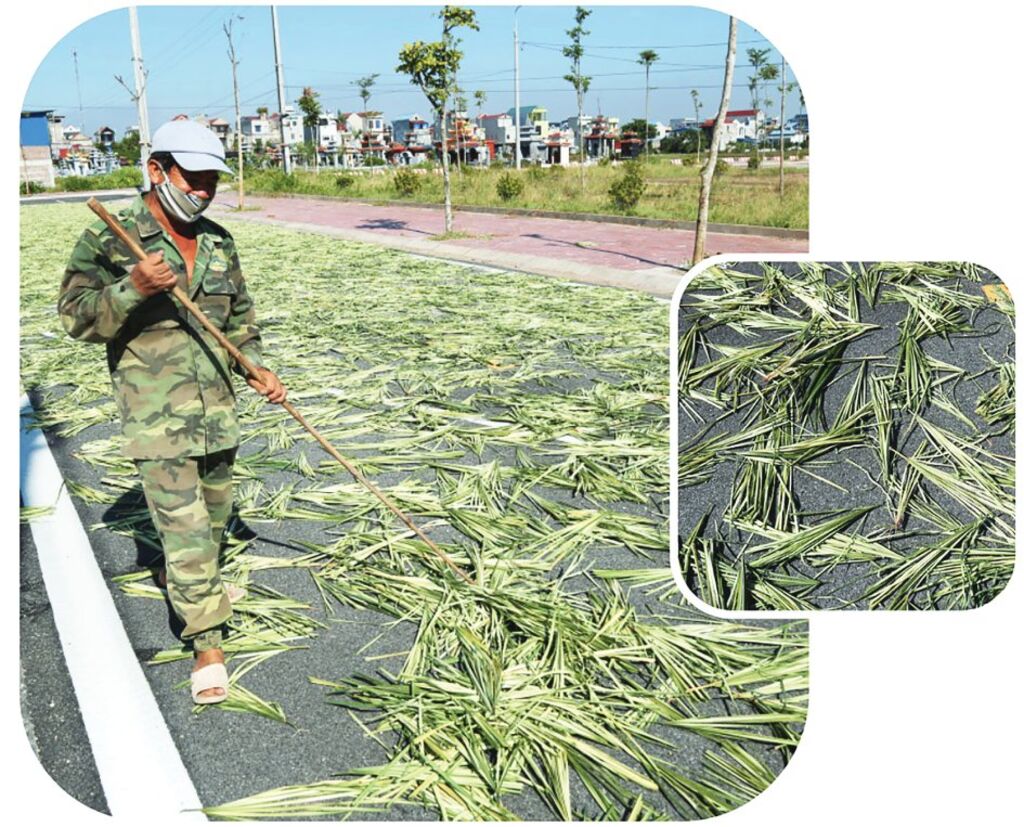 |
| Sun-drying palm leaves__Photo: https:// baoninhbinh.org.vn |
Crafting a standard conical hat involves 15 meticulous stages. The primary material, palm leaves, is sourced from central provinces such as Ha Tinh and Quang Binh. The leaves are sun-dried and treated with sulphur to achieve a clean ivory-white colour and prevent mould. They are then gently warmed over heat to soften, and smoothed with a cloth bundle until supple and flat - an essential step to prevent cracking during use.
The hat’s frame is constructed on a wooden mould, where 16 bamboo rings are arranged from top to bottom and supported by vertical ribs. Shaping these rings requires considerable skills, as each must be perfectly round, even and well-balanced.
Once the frame is complete, 24 to 35 palm leaves are layered onto it. A distinctive feature of Dao Khe hats is the insertion of a thin layer of bamboo inner sheaths between two layers of palm leaves, enhancing durability and waterproofing.
Stitching, the soul of the craft, requires patience and dexterity. Master artisan Vu Thi Duom notes that a high-quality hat takes four to six hours to complete. Each stitch must be uniform, with threads carefully concealed so that “a hundred stitches appear as one”. The surface must remain smooth and taut, free from wrinkles.
The final touch comes with a careful coating of pine resin, completing the hat and giving it both strength and a gentle sheen. Then coloured threads are attached to form decorative loops for the chin strap.
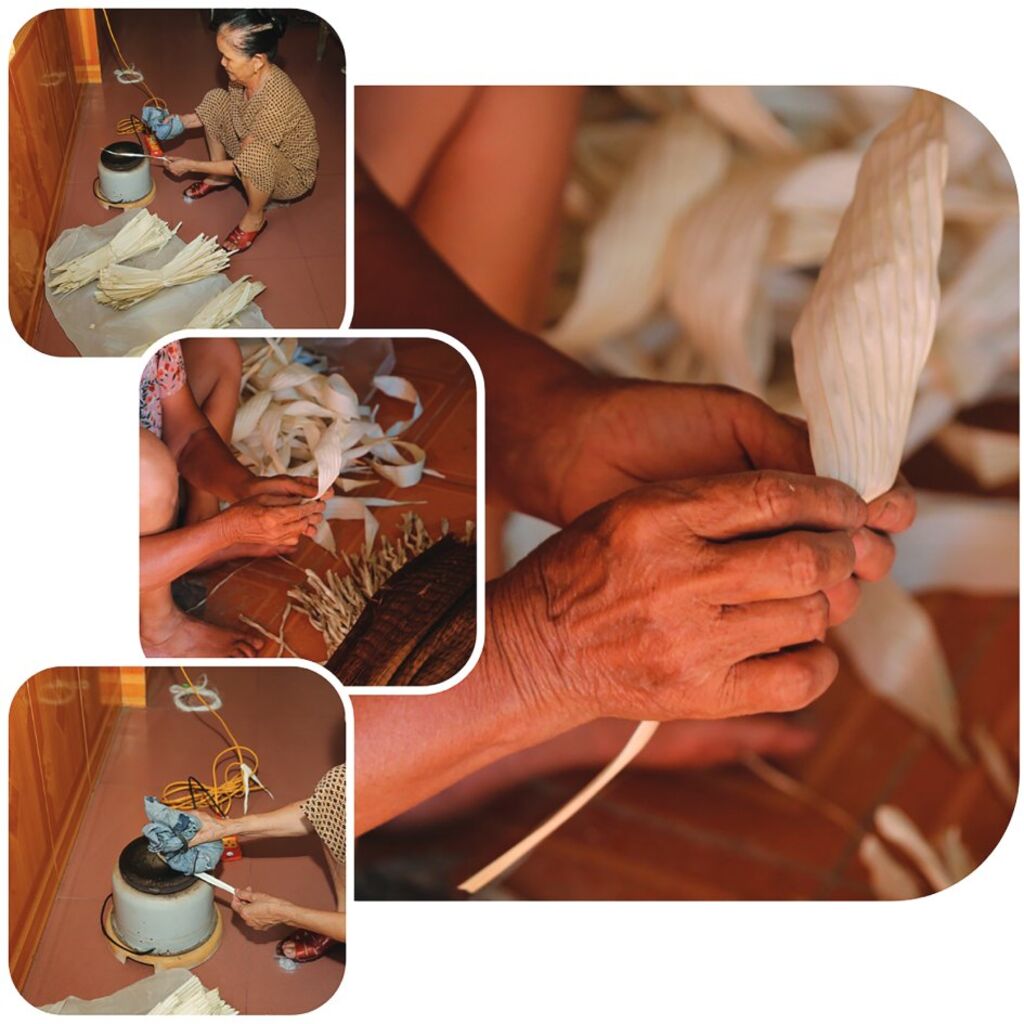 |
| Flattening palm leaves__Photo: https://baoninhbinh.org.vn |
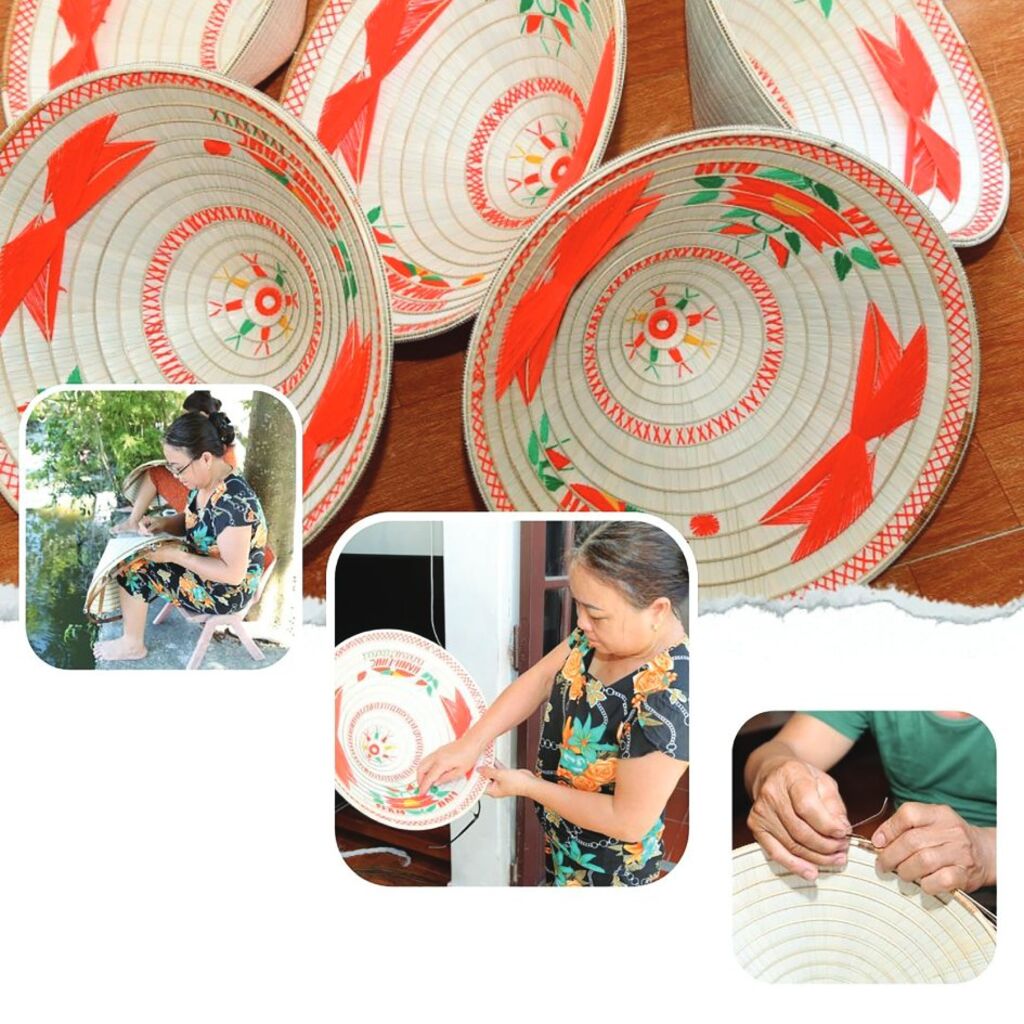
Beyond hats for daily use, Dao Khe is also known for its elaborately embroidered wedding hats. Made from the finest white leaves and decorated with doves or the couple’s names, these hats symbolise blessings for a happy marriage. In local tradition, the offering of a conical hat by the mother-in-law to the bride carries deep meaning: it represents the mother’s protection and wishes for a harmonious family life.
The vitality of Dao Khe is most vividly seen in its early-morning market. Opening as early as 3-4a.m., it buzzes under electric lights as artisans gather materials, from palm leaves to bamboo rings. The pace is brisk, allowing the villagers to return home quickly to resume their work.
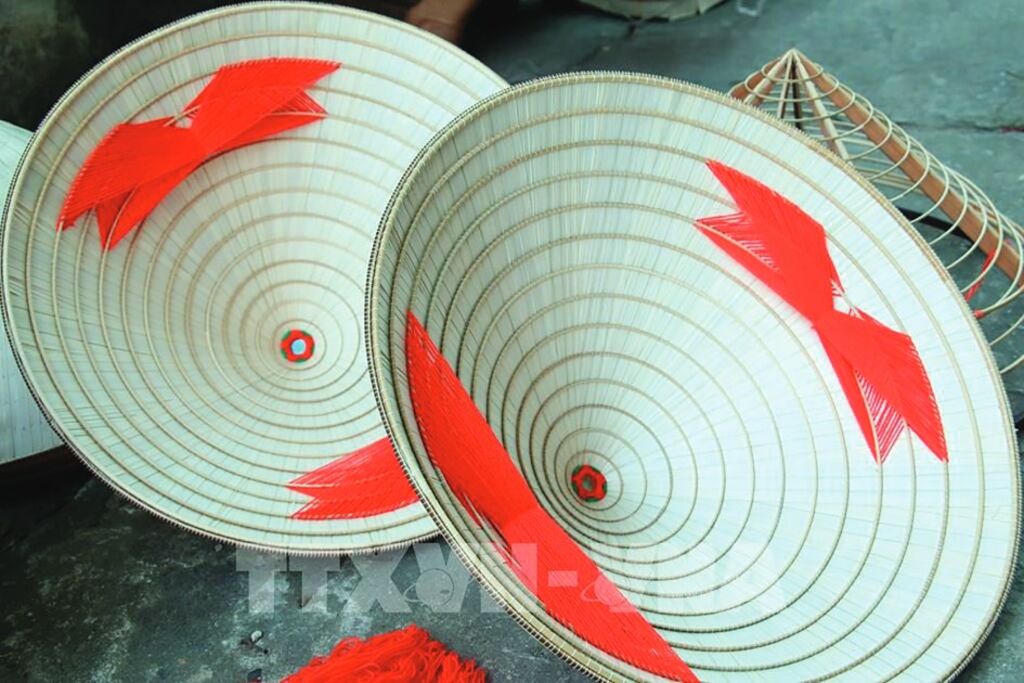 |
| Dao Khe conical hats__Photo: Nguyen Lanh/VNA |
Despite fluctuations since its peak in the 1980s, the craft endures thanks to local dedication and government support. Authorities have encouraged specialisation, forming groups focused on different stages of production to improve efficiency.
Though modern life has narrowed its market, the conical hat remains a timeless symbol of Vietnamese grace and simplicity. In Dao Khe village, each hat carries not only craftsmanship, but also the enduring spirit of a traditional craft community.- (VLLF)