 |
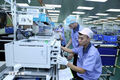
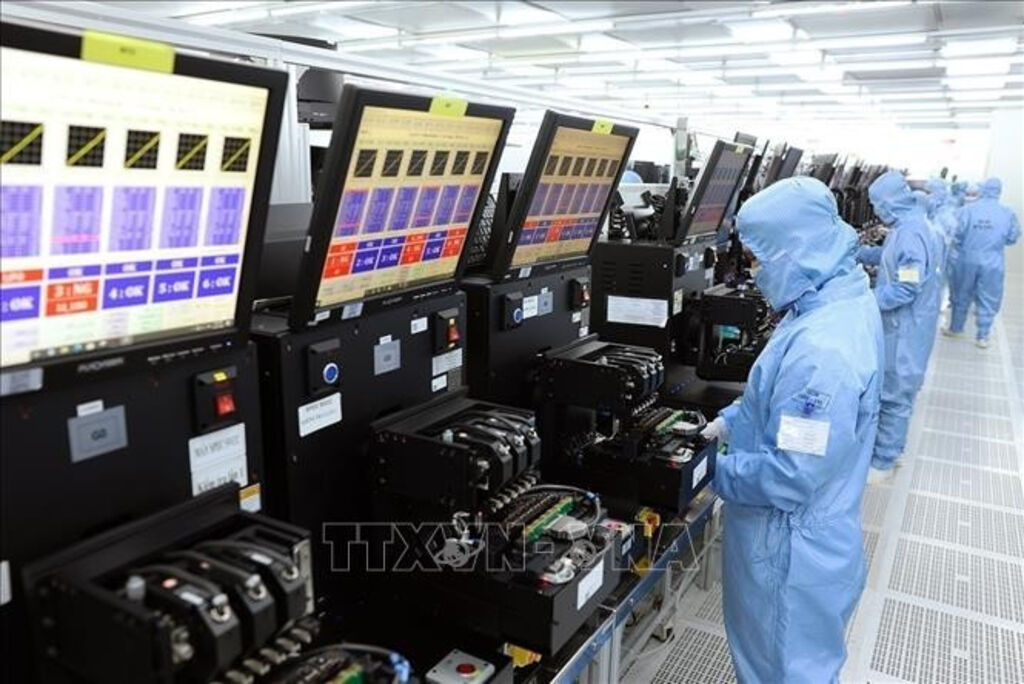
| A production line for camera modules and electronic components at the factory of MCNEX VINA Co. Ltd, a Republic of Korean-invested company in Phuc Son Industrial Park, Ninh Binh province__Photo: VNA |
Decree No. 354/2025/ND-CP provides detailed guidance on the implementation of a number of articles the Law on Digital Technology Industry relating to concentrated digital technology zones. In particular, it specifies Clauses 1 and 3 of Article 22; Clause 3 of Article 23; and Clause 3 of Article 25, while also setting out measures for the implementation of Article 5 and Article 24 on the management and development of such zones.
Functions of concentrated digital technology zones
Under the Decree, a concentrated digital technology zone is defined as an integrated development space that brings together the activities of research, production, business, training and infrastructure provision directly serving the digital technology industry. The regulations clarify criteria for identifying such zones, conditions for their establishment, functional zoning structures, as well as accompanying incentive and support mechanisms.
In terms of functions, concentrated digital technology zones are oriented to serve as centres for research and development, application and transfer of digital technologies, as well as for the production of, and trading in, digital technology products and services, including software, hardware, electronics and products listed among priority digital technologies.
Notably, the Decree devotes considerable attention to the semiconductor sector, allowing the the full range of activities, from research and design to manufacturing, packaging and testing of semiconductor chips, together with the production of equipment and machinery directly serving the industry, to be implemented within these zones.
In addition, concentrated digital technology zones are tasked with training and developing human resources, incubating technologies and digital technology enterprises, and promoting trade and investment in the digital technology sector.
Land area and personnel criteria
The Decree stipulates specific criteria relating to land area and workforce size to ensure the concentrated and effective operation of the model.
Accordingly, a concentrated digital technology zone must have a minimum area of five hectares. For zones specialising exclusively in production software or digital content or provision of digital technology services, a minimum area of one hectare may be applied.
In terms of workforce requirements, each zone must employ at least 2,000 digital technology industry workers, with digital technology personnel accounting for at least 60 percent of the total workforce. For zones specialising in software and digital technology services, the minimum requirement is 1,000 personnel.
With regard to spatial organisation, concentrated digital technology zones must be planned into two main groups of functional sub-zones. The first group consists of sub-zones directly engaged in digital technology industry activities, including production, business, research and development, consultancy, training and digital technology incubation. The second group comprises sub-zones providing supporting services, such as social amenities, accommodation, financial and banking services, and other essential services. Land allocated to the digital technology industry sub-zones must account for at least 50 percent of the total area, while ensuring compliance with regulations on construction density, green space ratios, transport and technical infrastructure.
Conformity with approved master plans
To be eligible for establishment, a concentrated digital technology zone must meet multiple conditions simultaneously, including conformity with the State’s lines and policies on development of the digital technology industry, as well as with national strategies, programmes and plans on science and technology, innovation, digital transformation and the digital economy.
In addition, such zones must be included in master plans approved by competent authorities, including master plans on information and communications infrastructure, regional master plans (if any), provincial master plans and land-use master plans. Where inconsistencies exist, local authorities are required to complete procedures for adjusting or supplementing relevant master plans before proceeding with the establishment of a zone.
The Decree also imposes requirements relating to national defence and security, environmental protection, climate change adaptation, protection of natural resources, and the preservation of historical, cultural and heritage values. At the same time, the establishment of each concentrated digital technology zone must be supported by a specific development plan consistent with its designated functions and operational objectives.
Incentives and support policies
Concentrated digital technology zones are entitled to incentives in accordance with the Law on the Digital Technology Industry and relevant legislation.
High-quality digital technology professionals working within these zones are eligible for talent attraction and promotion policies, including personal income tax exemption and reduction in accordance with applicable regulations.
Meanwhile, investment projects involving the construction of research and development centres, data centres, semiconductor projects, and projects producing strategic or hi-tech digital technology products are eligible for special investment procedures under the investment law.
In addition, enterprises and organisations operating in concentrated digital technology zones may receive support for costs related to the search, registration, maintenance and protection of intellectual property rights arising from research, production and business activities conducted within the zones.
For export processing enterprises operating in concentrated digital technology zones, the Decree provides specific regulations on infrastructure conditions, customs inspection and supervision, and the application of policies applicable to non-tariff zones under current law.
Decree 354/2025/ND-CP is expected to provide an important legal foundation for the formation and development of large-scale, modern concentrated digital technology zones, thereby promoting the digital technology industry, enhancing national competitiveness, and enabling Vietnam to participate more deeply in the global technology value chain.- (VLLF)