 |
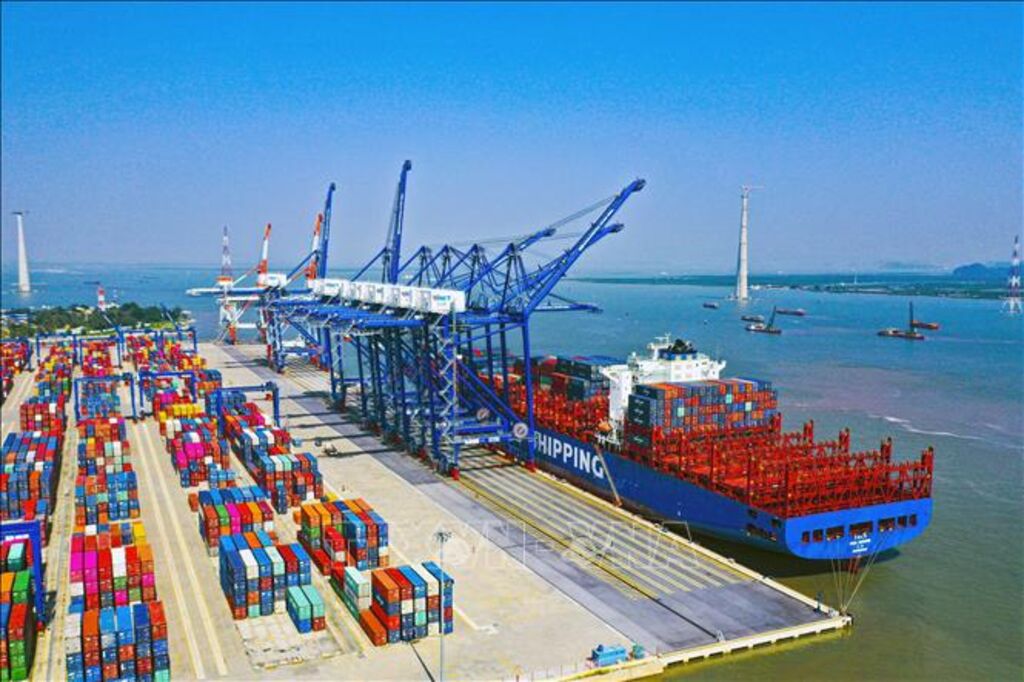
| Lach Huyen international port, Hai Phong city __Photo: Duc Nghia/VNA |
The Ministry of Industry and Trade (MOIT) is seeking public comments on a draft decree revising Decree 77 of 2023 and Decree 66 of 2024 concerning the management of import of remanufactured goods under free trade agreements to which Vietnam is a contracting party.
Accordingly, the list of remanufactured goods under CPTPP would be compiled on the basis of Vietnam’s commitments concerning remanufactured goods and cross-checked against the list of used goods prohibited from import. Noteworthily, 16 tariff codes covered by Vietnam’s reservations under CPTPP would be excluded in adherence to the compilation principles.
For EVFTA and UKVFTA, the lists of remanufactured goods are determined based on tariff codes and descriptions specified in Vietnam’s Nomenclature of Exports and Imports. For goods classified under four-digit or six-digit codes, the regulations would apply to all tariff codes falling within the corresponding headings or subheadings. Regarding goods identified by eight-digit codes, only those specifically listed would be covered.
According to Dr. Khuc Dai Long from the Faculty of Marketing at Thuongmai (Trade) University, this approach requires businesses to pay particular attention to tariff classification rather than relying solely on trade names or common names or descriptions to determine whether their goods fall within the scope of the regulations.
He advised businesses to carefully examine tariff codes, technical descriptions, remanufacturing status and applicable requirements under each agreement.
For products consisting of multiple components or having various configurations or technical specifications, tariff classification should be based on the specific characteristics of each product. Businesses should therefore review their intended imports and verify the relevant tariff codes in detail before concluding import contracts in order to minimise risks during customs clearance.
Importantly, remanufactured goods should be distinguished from used goods in general. To be covered by the draft decree, remanufactured goods must satisfy the eligibility criteria set out in the relevant agreements, while used goods may be prohibited from import or subject to separate regulatory requirements.
Dr. Long further advised businesses to prepare adequate technical documentation and thoroughly understand the requirements applicable in their intended export markets.
Product documents should specify the origin and tariff codes of the goods, their conditions before and after the remanufacturing, the year of remanufacturing completion, warranty and maintenance regimes, and other relevant technical information.- (VLLF)