 |
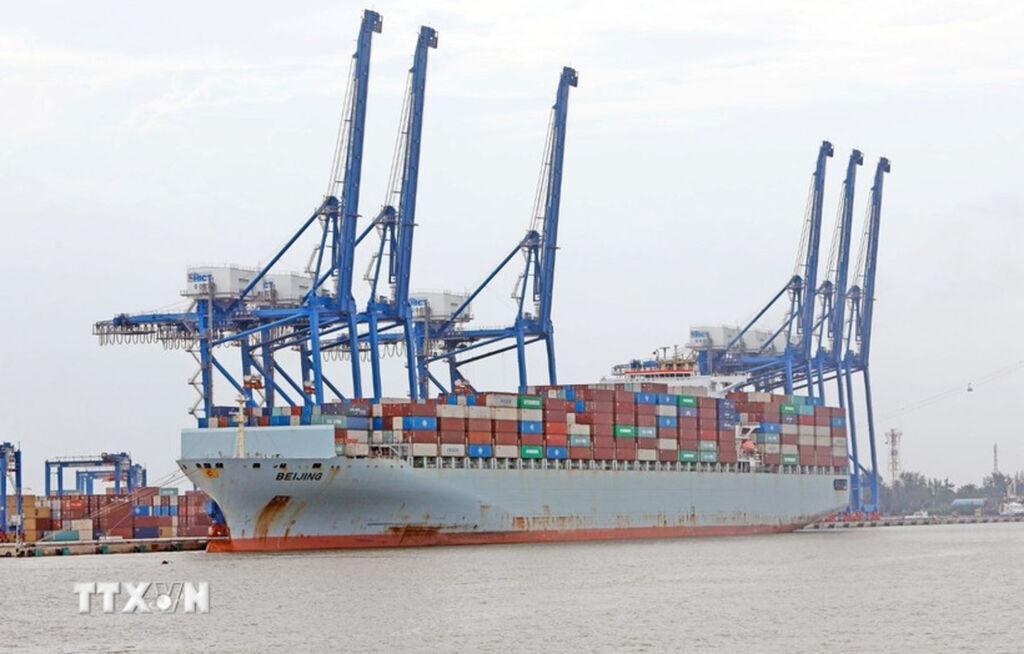
| Cargo handling through Tan Cang Hai Phong International Container Terminal __ Photo: VNA |
The Ministry of Construction has unveiled the draft Vietnam Maritime and Inland Waterway Code with the aim of establishing a unified legal framework for the maritime and inland waterway sector, in line with the requirements of international integration, digital transformation and green development in the transport sector.
The draft governs all areas related to maritime and inland waterway, covering infrastructure, vessels, crew members, transport operations, safety and security, environmental protection, state management and international cooperation. It also introduces new provisions to respond to modern development trends in the sector, including green ports, smart ports, alternative fuels, specialised databases, and digital transformation in management and operation.
Notably, the draft emphasises the need to develop maritime and inland waterway infrastructure in a synchronous manner, in association with the protection of national defence, security, sovereignty and the environment. It also highlights the mobilisation of diverse investment resources, promotes the application of science, technology and innovation, and boosts low-emission transport.
At the same time, the draft seeks to build a modern logistics system through the development of seaports, inland waterway ports, inland container depots and multimodal connectivity systems.
Additionally, the draft aims to tighten discipline in the maritime and inland waterway sector by specifying prohibited acts, including the use of vessels that fail to meet operating conditions, the assignment of unqualified persons to operate vessels, the illegal carriage of dangerous cargo, the encroachment upon navigation channel protection corridors, and acts causing pollution to the water environment.
Stressing the importance of inspection, examination, settlement of complaints and denunciations, and handling of violations to ensure law compliance across the sector, the draft devotes a separate article to the Vietnam Maritime Inspectorate. Accordingly, the inspectorate would be established in accordance with treaties to which Vietnam is a contracting party and would inspect compliance with specialised laws and treaty-related regulations in the sector. It would also be tasked with settling complaints and denunciations, and preventing and combating corruption, waste and negative practices in accordance with law.
Meanwhile, People’s Committees at all levels would be responsible for taking measures to protect infrastructure, prevent encroachment upon navigation channel protection corridors, ensure traffic order and safety, and coordinate rescue operations and the handling of accident consequences within their localities.- (VLLF)