 |
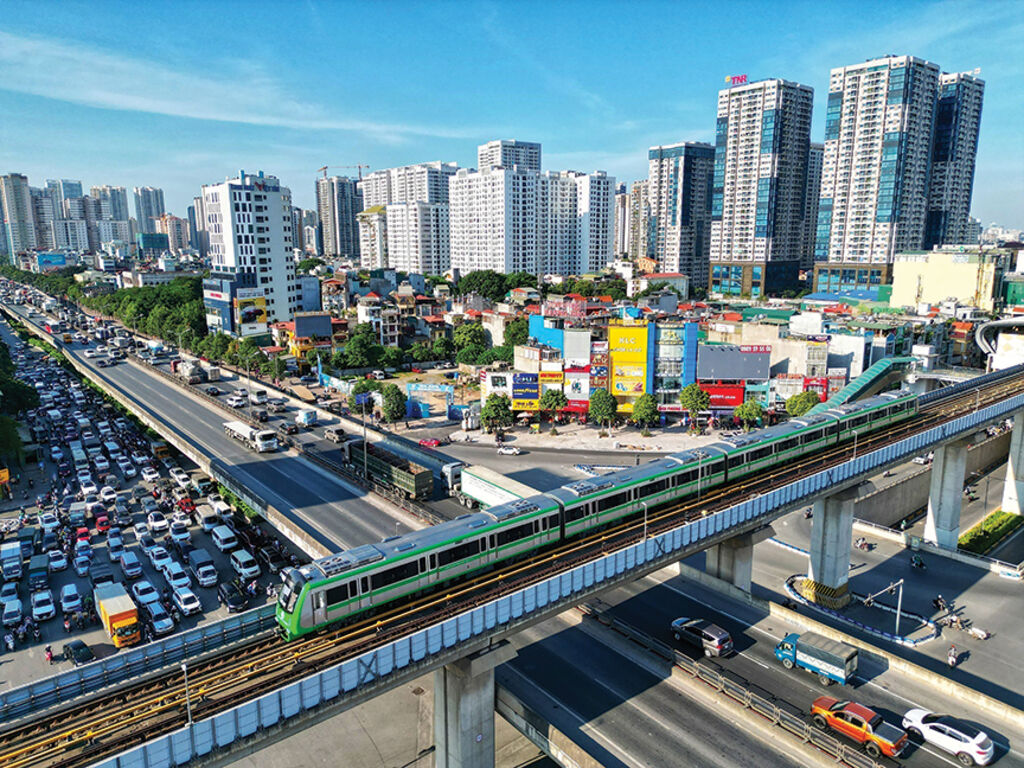
| The Cat Linh-Ha Dong urban railway in Hanoi, the country’s first urban railway line, has become a daily means of transport for many city residents__Photo: Tuan Anh/VNA |
Over the past four decades, Vietnam’s Doi moi (Renewal) process has propelled the nation through a remarkable journey of profound socio-economic transformation. Despite numerous hardships and challenges, from war consequences to domestic and global economic crises, the country has obtained outstanding achievements, steadily enhancing its prestige and position on the world stage.
Economic achievements
The economy has demonstrated impressive resilience and dynamism throughout its renewal. Growth rates have remained robust across periods: averaging 4.4 per cent annually (1986-90), rising to 8.2 per cent (1991-95), and maintaining 7.5 per cent (1990-2000), laying a strong foundation for long-term development.
By 2010, Vietnam’s GDP had surpassed USD 101.6 billion, more than tripling the figure from 2000 and marking its transition from underdeveloped status.
In the following decade, macro-economic stability was reinforced with inflation controlled at low levels. Growth averaged 5.9 per cent per year in the 2011-15 period and 6.8 per cent per year in the 2016-19 period. Even amid the global COVID-19 pandemic in 2020, the country sustained positive growth at 2.9 percent.
Its economy has expanded dramatically in scale, from USD 6.3 billion in 1989 to USD 268.4 billion in 2020, while per capita income surged from USD 159 in 1985 to approximately USD 2,750 in 2020.
In 2025, Vietnam’s GDP is estimated to grow by an impressive 8.02 per cent, reaching around USD 514 billion. This raises per capita income to USD 5,026, ranking 32nd globally. This growth has been supported by record state budget revenues and foreign investment, with the services sector as the leading contributor.
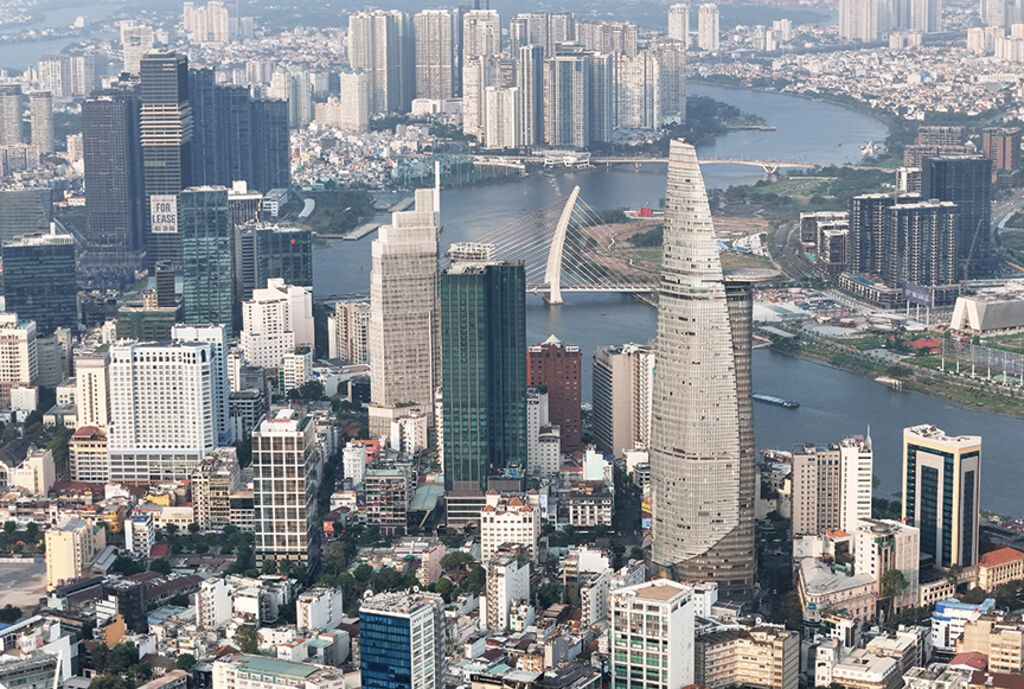 |
| A view of central Ho Chi Minh City__Photo: Hong Dat/VNA |
Shifting from agriculture to industry and services
A defining imprint of Doi Moi has been the successful shift in economic structure towards modernity with higher industrial and service ratios and lower agricultural ratio.
The agro-fishery-forestry share in GDP declined from 18.9 per cent in 2010 to 14.85 per cent in 2020, while industry, construction and services increased from 81.1 per cent to 85.15 per cent. The labour force has moved out of agriculture into higher-productivity sectors, helping lift overall productivity growth from 4.3 per cent (2011-15) to 5.8 per cent (2016-20).
At the same time, modern economic zones, industrial parks, and key economic regions have developed, with increasingly positive economic and export structures. Once a country facing food shortages, Vietnam has now become a major global exporter of agricultural products.
Tourism has emerged as a standout sector, with international arrivals increasing from 10 million in 2016 to 18 million in 2019 and domestic visitors growing from 62 million to 85 million in the same period.
The country’s natural and cultural appeal has been consistently recognized, most recently with its sixth title as the “World’s Leading Heritage Destination” at the 2025 World Travel Awards.
The nation has also marked its presence in advanced technology. The launches of telecommunications satellites Vinasat-1, Vinasat-2, and VNREDSat-1, along with the microsatellites PicoDragon and MicroDragon, demonstrate growing capabilities in space technology. In healthcare, it has developed and produced various vaccines and mastered sophisticated medical techniques, including organ transplantation.
Export helps raise the country’s position in the global supply chain
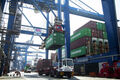
International trade has been a cornerstone of Vietnam’s growth. By 2020, total import-export turnover reached USD 543 billion, with exports accounting for USD 281 billion, up 6.5 per cent, and a trade surplus of USD 19 billion.
This upward trajectory continues, with 2025 trade turnover estimated at a historic USD 920 billion, a 16.9 year-on-year increase. This remarkable performance underscores the role of trade as a key growth pillar, even amid global economic uncertainty and geopolitical risks.
Agricultural exports remain particularly vibrant, with fruits, vegetables, and seafood shipments reaching USD 19.8 billion in 2025 - a 15.2% annual increase - firmly establishing Vietnam in global agro-food supply chains.
Private economy and FDI: key growth drivers
The years 2024 and 2025 witnessed a significant increase in the number of newly registered enterprises and businesses resuming operations.
According to the General Statistics Office, in 2024, more than 233.4 thousand enterprises were newly established or returned to operation nationwide, representing an increase of 7.1 per cent compared to 2023.
In 2025, the figure rose to 297.5 thousand enterprises, marking a sharp increase of 27.4 per cent year on year.
These figures provide clear evidence of the recovery and development of the business environment following the difficulties caused by turbulence in the global economy.
By 2023, registered foreign direct investment (FDI) in the country reached US$36.6 billion; this increased to approximately USD38.23 billion in 2024 and USD38.42 billion in 2025, positioning Vietnam among the world’s leading destinations for FDI inflows. Notably, realised FDI in 2025 is estimated at USD27.62 billion, up 9 per cent year on year and representing the highest level recorded during the 2021-25 period.
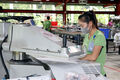
FDI has made a substantial contribution to the process of industrialisation and modernisation, enabling the country to integrate more deeply into global supply chains and creating millions of new jobs for workers.
Social development with people at the centre
Since the launch of the Doi Moi process in 1986, Vietnam has recorded significant achievements in social development. The State has promulgated the Labour Code and introduced a comprehensive range of policies covering job creation, vocational training, overseas labour deployment, human resource development, mobilisation of the domestic workforce, labour market development under a socialist-oriented framework, wage reform, social insurance reform and labour protection.
According to Vietnam Social Security (VSS), by the end of November 2025 more than 20.04 million people nationwide were participating in social insurance schemes, reaching 93.1 per cent of the plan and accounting for 42.4 per cent of the working-age population. Of this total, mandatory social insurance covered 18.032 million people, equivalent to 97 per cent of the assigned target. Participation in voluntary social insurance continued to grow steadily, reaching 2.016 million people, or 68.4 per cent of the plan. Compared with the same period in 2024, this represented an increase of approximately 167,000 new participants.
The Government has also demonstrated strong commitment to social welfare through housing policies. The Prime Minister issued Decision No. 444/QĐ-TTg on February 27, 2025, assigning targets for social housing completion in 2025 and subsequent years through 2030 and requiring localities to incorporate these targets in their socio-economic development plans. In 2025, the country completed 102,633 social housing units, exceeding the target by around 2 per cent. By the end of 2025, ongoing social housing projects reached approximately 657,395 units, equivalent to about 62 per cent of the target set under the programme “Investment in the construction of at least one million social housing units for low-income earners and industrial park workers during the 2021-30 period.”
Vietnam achieved the Millennium Development Goals on eradicating extreme poverty and hunger as early as 2006, meeting the targets 10 years ahead of the 2015 deadline. During the 2010-20 period, the national poverty rate declined sharply - from 14.2 per cent in 2010 to 7 per cent in 2015 under the 2011-15 poverty line, and from 9.2 per cent in 2016 to below 3 per cent in 2020 under the multidimensional poverty standard. It has since become one of the leading countries in the Asia-Pacific region in applying the multidimensional poverty measurement approach across all dimensions of poverty reduction.
Throughout the 40 years of Doi Moi, a consistent development philosophy has been maintained, placing people at the centre of development. Economic growth has been closely linked with social progress and equity, ensuring social welfare and steadily improving living standards.
Vietnam’s Human Development Index (HDI) has improved continuously, placing the country among those with medium-to-high human development globally. Between 1990 and 2023, its HDI rose from 0.499 to 0.766, an increase of 53.5 per cent.
According to the UNDP’s 2025 Human Development Report, themed “The Age of Artificial Intelligence and Human Development Choices”, Vietnam’s HDI in 2023 ranked 93rd out of 193 countries and territories, placing it in the group of nations with high human development. By 2025, the nation’s ranking improved by 18 places, while the Happiness Index recorded a sharp increase. Education, healthcare and social security policies were implemented in a coordinated manner, contributing to a reduction in the multidimensional poverty rate to 1.3 per cent by 2025.
Notably, Vietnam has achieved significant improvements in human development without major trade-offs in inequality. The UNDP report also highlights the country’s strong performance in promoting gender equality.
Innovation and digital transformation: new driving forces
As Vietnam enters the fifth decade of Doi Moi, it faces an urgent need to transform its growth model from extensive to intensive development, grounded in science and technology, innovation, and digital transformation. Progress reflected in global innovation rankings, as well as advances in e-government and online public services, indicates that the country is moving in the right direction.
According to the World Intellectual Property Organization (WIPO), which released the 2025 Global Innovation Index (GII) Report, Vietnam ranked 44th out of 139 countries and economies, maintaining the same position as in 2024. WIPO also recognised Vietnam as one of nine middle-income economies that have recorded the fastest improvements in innovation rankings since 2013.
The country continued to strengthen its performance in innovation inputs, climbing three places compared with 2023, from 53rd to 50th. Innovation inputs are assessed across five pillars: Institutions; Human Capital and Research; Infrastructure; Market Sophistication; and Business Sophistication.
Among lower-middle-income economies, Vietnam maintained its second position, surpassed only by India, which ranked 38th globally.
The ongoing refinement of the legal framework for science and technology, the digital technology industry and innovation has not only created new drivers for growth but also demonstrated the strong determination of the Party and the State to keep pace with global development trends. At the 9th session of the 15th National Assembly in mid-2025, five key laws in the fields of science, technology, innovation and digital transformation were passed. These included the Law on Science, Technology and Innovation; the Law on the Digital Technology Industry; the amended Law on Product and Goods Quality; the amended Law on Standards and Technical Regulations; and the amended Law on Atomic Energy.
Governance capacity has also improved markedly. According to the 2025 Effective Government Index (CGGI) Survey, Vietnam was recognised as one of the Asian countries with the strongest gains in governance performance, rising 12 places from 60th to 48th compared with 2021. Notably, it was among only five countries to record continuous improvement across all five survey rounds.
Vietnam made progress in six out of seven CGGI pillars, with the most notable advances in Leadership and Foresight, Sound Laws and Policies, and Effective Financial Management. The most significant improvement was recorded in the Leadership and Foresight pillar, where the country climbed 31 places, from 61st to 30th during the 2021-25 period. This reflects the Government’s strong commitment to long-term vision, proactive governance and strategic coherence across ministries and sectors.
Proactive, intensive and extensive international integration
Four decades of Doi Moi have also marked Vietnam’s journey toward deep international economic integration - conducted at multiple levels, in diverse forms, and in line with the principles and standards of the global market. Throughout this process, the country has established numerous strategic economic partnerships and steadily expanded its integration footprint.
Following an accession process lasting more than a decade (1995–2006), Vietnam officially signed the Protocol of Accession to the World Trade Organization (WTO) on November 7, 2006, in Geneva, Switzerland, marking a major milestone in the country’s international economic integration. As of January 11, 2007, its rights and obligations as an official WTO member came into effect. This represented a significant turning point, opening a new phase of development in the context of global economic integration.
During the 2020-25 period, the country signed four additional free trade agreements (FTAs), namely the Regional Comprehensive Economic Partnership (RCEP); the Vietnam–Israel Free Trade Agreement (VIFTA); the Vietnam-United Kingdom Free Trade Agreement (UKVFTA); and the Vietnam-UAE Comprehensive Economic Partnership Agreement (CEPA). These additions brought the total number of FTAs in force to 17, expanding Vietnam’s FTA-linked markets to 65 countries and territories. Collectively, these agreements have enabled deeper access to major global markets and enhanced the competitiveness of its exports.
More broadly, key highlights of Vietnam’s international economic integration include the promotion, ratification and effective implementation of the Comprehensive and Progressive Agreement for Trans-Pacific Partnership (CPTPP); the ratification of the EU-Vietnam Free Trade Agreement (EVFTA); the signing of RCEP; and Vietnam’s effective performance as ASEAN Chair in 2020. In this role, the country contributed actively to the implementation of the ASEAN Economic Community and to strengthening economic linkages between ASEAN and its external partners.
Vietnam is also an active, proactive and highly responsible member of the international community. It has participated constructively in major multilateral frameworks, including the Association of Southeast Asian Nations (ASEAN), the Asia-Pacific Economic Cooperation (APEC) forum and various United Nations bodies, making positive contributions while increasingly affirming its position and role in the region and globally. Việt Nam has also been elected with high levels of confidence to several important UN bodies, including the UN Human Rights Council (2014-16), the UNESCO World Heritage Committee (2013-17) and the UN Economic and Social Council (ECOSOC) (2016-18).
Notably, in 2020, the country simultaneously undertook three major responsibilities: serving as a non-permanent member of the UN Security Council, Chair of ASEAN, and Chair of the ASEAN Inter-Parliamentary Assembly (AIPA). Despite the exceptionally challenging context of the COVID-19 pandemic and severe losses caused by natural disasters, Vietnam successfully fulfilled all three roles, thereby enhancing its prestige and standing in the region and around the world.- (VLLF)