 |
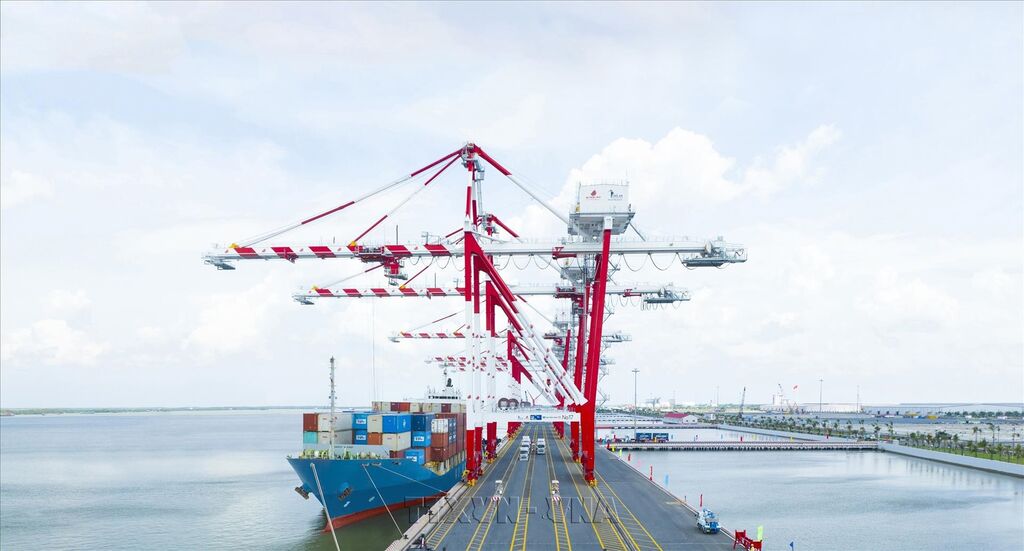
| Long An international port in Tay Ninh province __Photo: VNA |
The Ministry of Construction (MOC) has released a draft decree revising Decree 87 of 2009, on multimodal transport, proposing changes in business conditions and operators’ responsibilities, and measures to promote infrastructure development.
The proposed amendments aim to attract investment in transport connectivity infrastructure, build hubs linking different modes of transport, and improve business efficiency.
Prioritised investment in multimodal transport infrastructure
Under the draft, carriers undertaking individual legs of a multimodal transport journey would be required to meet the business conditions applicable to their respective modes of transport.
Seaports, inland waterway ports, airports, railway stations, inland container depots and logistics centres would be designated as key facilities for multimodal transport connectivity. Road infrastructure linking these facilities with other modes of transport would have to be commensurate with their scale and capacity.
Priority would be given to planning and construction of cargo transshipment facilities and infrastructure connecting different modes of transport in urban areas, industrial parks, industrial clusters, economic zones, free trade zones, and along major transport routes.
Investors in such infrastructure could benefit from preferential policies on state investment loans, access to lawful sources of capital, tax incentives, among other incentives provided by law.
The draft also emphasises technological application and digital transformation, requiring enterprises to apply technologies for real-time tracking and management of transport journeys, vehicles and cargoes, while optimising multimodal transport connectivity.
Multimodal transport operators may prepare and issue their own multimodal transport documents in the form of data messages in accordance with the law on e-transactions, with the same legal validity as written documents, and take responsibility for the accuracy and completeness of information included in them.
Responsibilities of management agencies and operators
The draft decree designates MOC as the agency responsible for unified state management of multimodal transport.
MOC would also serve as the focal point for providing lists of international multimodal transport operators and notifying relevant changes under the ASEAN Framework Agreement on Multimodal Transport.
At the local level, provincial People’s Committees would be responsible for state management of multimodal transport in their localities and directing competent agencies to conduct inspections and handle violations.
For international multimodal transport operators from the member states of the ASEAN Framework Agreement on Multimodal Transport or countries that have concluded treaties on multimodal transport with Vietnam, the draft proposes a minimum asset requirement of 80,000 Special Drawing Rights (SDR), or an equivalent guarantee or alternative financial arrangement. These operators would also be required to obtain professional liability insurance for their operations or provide an equivalent guarantee.
Before commencing operations, operators would be required to provide the specified minimum information via MOC’s information system or submit it in writing. Any changes to the registered information, or the termination of operations, would have to be reported at least three working days in advance.- (VLLF)