 |
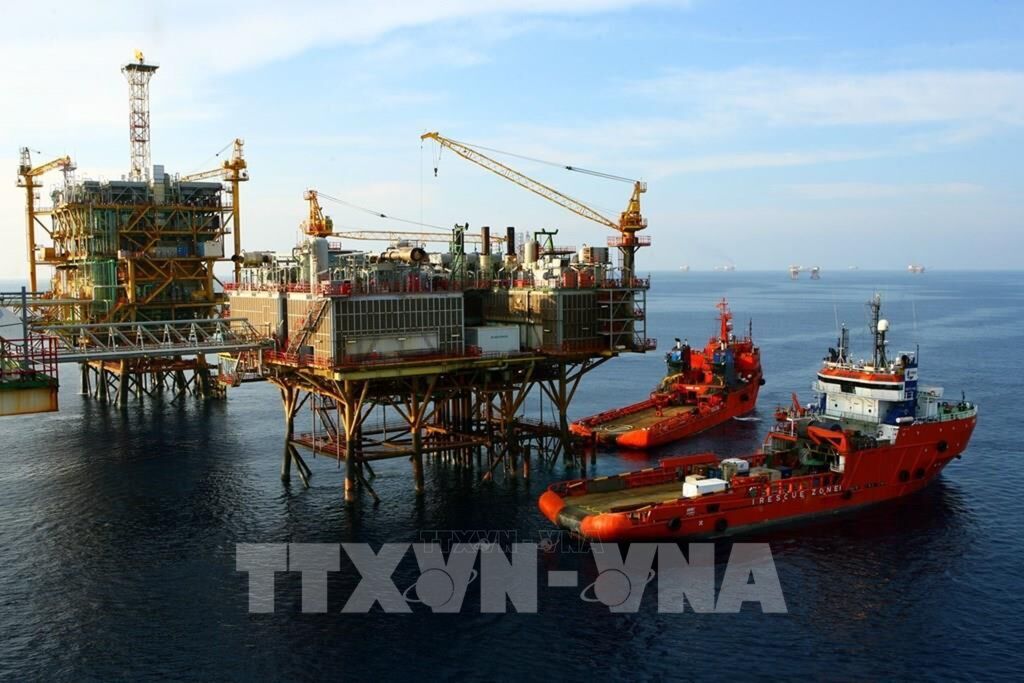
| Oil and gas exploitation activities in the East Sea __Photo: VNA |
The Ministry of Finance (MOF) is finalising a draft decision setting out criteria for classifying enterprises as part of the restructuring of state capital in state-owned and state-invested enterprises. Once issued by the Prime Minister, the decision would provide a basis for ministries, sectors, localities, state-owned economic groups and corporations to prepare plans to restructure state capital in the next phase.
Classifying enterprises by strategic importance
The most notable aspect of the proposed restructuring is a shift from the approach of focusing solely on equitisation and divestment towards managing the State’s capital portfolio. The emphasis would no longer be on the number of enterprises in which the State holds capital, but on identifying the sectors in which state investment remains necessary and determining the appropriate ownership ratio. The aim is to achieve socio-economic development objectives, safeguard national defence and security, and maintain major economic balances.
Rather than setting out a fixed list of individual enterprises, the draft decision would classify state enterprises according to their sectors and fields of operation. Under this approach, enterprises would be divided into groups based on the required level of state ownership.
The first group would comprise enterprises wholly owned by the State and operating mainly in sectors that provide essential public products or services, or in areas of strategic importance. These include national defence and security, energy, food security, strategic mineral extraction and basic chemicals, as well as certain critical national digital infrastructure, data infrastructure and digital platforms.
The second group would cover enterprises in which the State retains at least 65 per cent of charter capital. These would include enterprises that own or operate airports and airfields, certain strategically important seaports and large-scale mineral extraction projects. The group would also cover financial institutions and banks, mechanical engineering and manufacturing enterprises, fertiliser producers, and providers of essential goods and services to people in mountainous, remote and isolated areas.
The third group would include enterprises in which the State holds more than 50 per cent but less than 65 per cent of charter capital. These would include key petroleum importers with a market share of at least 30 per cent, telecommunications enterprises owning particularly important network infrastructure, and companies engaged in mineral prospecting, exploration and reserve assessment.
The proposed classification reflects a more targeted approach to state ownership, with the level of state capital determined by the strategic importance of each sector. In the petroleum sector, for example, the State would continue to retain a controlling stake without necessarily maintaining a significantly higher ownership ratio.
Restructuring enterprises outside strategic sectors
Alongside identifying the sectors in which state ownership should be retained, the draft decision also sets out restructuring principles for enterprises operating outside strategic sectors.
Under the proposal, in case the State currently holds more than 50 per cent of an enterprise’s charter capital and the enterprise meets one of the specified special criteria, the agency acting as the state owner's representative could decide to retain a stake of more than 50 per cent. This would allow the enterprise to remain within the state enterprise sector.
For enterprises in which the State holds 50 per cent or less of charter capital and which do not fall within the categories requiring continued state ownership, the agency acting as the state owner's representative would be required to formulate a restructuring plan providing for the full divestment of the State’s shares or contributed capital.
The proposed restructuring measures could include divestment, consolidation or transfer to an enterprise assigned to invest and trade in state capital.
For enterprises operating in multiple sectors, the state ownership ratio would be determined by the sector or field accounting for the largest share of the enterprise’s total revenue or output during the three most recent years. If the enterprise’s business structure changes during the implementation period, the competent authority could adjust the capital restructuring plan to reflect the changed circumstances.- (VLLF)