|
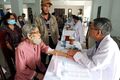
| Market surveillance officers conduct inspection of imported milk powder at a supermarket in Lao Cai province__Photo: VNA |
In response to the requirement of enhancing the effectiveness of state management of food safety, safeguarding consumers’ rights and health, and improving the competitiveness of Vietnam’s food industry in domestic and international markets, the Ministry of Health (MOH) has put forward the draft amended Law on Food Safety with rafts of solutions.
Accordingly, the Ministry places strong emphasis on tightened management of facilities producing and trading in high-risk food products. This aims to tighten control throughout the entire supply chain, from production to market circulation, while reinforcing both pre-market and post-market inspections for high-risk products.
Under the draft, high-risk food producers would have to apply advanced quality management systems to ensure food safety throughout the production process, in line with food safety control practices in the developed countries.
At the production stage, the draft requires high-risk food producers to comply with internationally recognized standards such as HACCP, ISO 22000, IFS, BRC, and FSSC 22000. Meanwhile, dietary supplement manufacturers would continue to be required to obtain a certificate of food safety that meets Good Manufacturing Practice (GMP) standards.
Before being marketed, food products must be registered for free sale, with a specified validity period of their registration certificates. The comprehensive control is also required over the market circulation of food products through mandatory notifications to competent agencies.
For high-risk food imports, in addition to circulation registration requirements, the draft additionally requires state inspection throughout the circulation process as well as stricter oversight of advertisements on e-commerce platforms and social media.
Food traders, including those trading in high-risk food products, would have to meet requirements on storage conditions, quality management system, technical documents, and professionally qualified personnel in charge of food product quality and safety.
According to the MOH, high-risk food products are those used for vulnerable groups, such as the elderly and children, or people at risk of chronic diseases such as diabetes and hypertension, as well as products that are prone to misuse or abuse.
The draft also clearly defines the responsibilities of the Ministry of Agriculture and Environment, Ministry of Industry and Trade, and other relevant ministries and sectors in the food safety management.
Other solutions to enhance the state management of food safety would also include risk-based control of processed and prepackaged food products before they enter the market; risk-based inspection of imported food consignments at Vietnam’s border gates; and stricter control over substances used in the food production and processing that might be misused or abused and pose potential health risks.- (VLLF)