 |
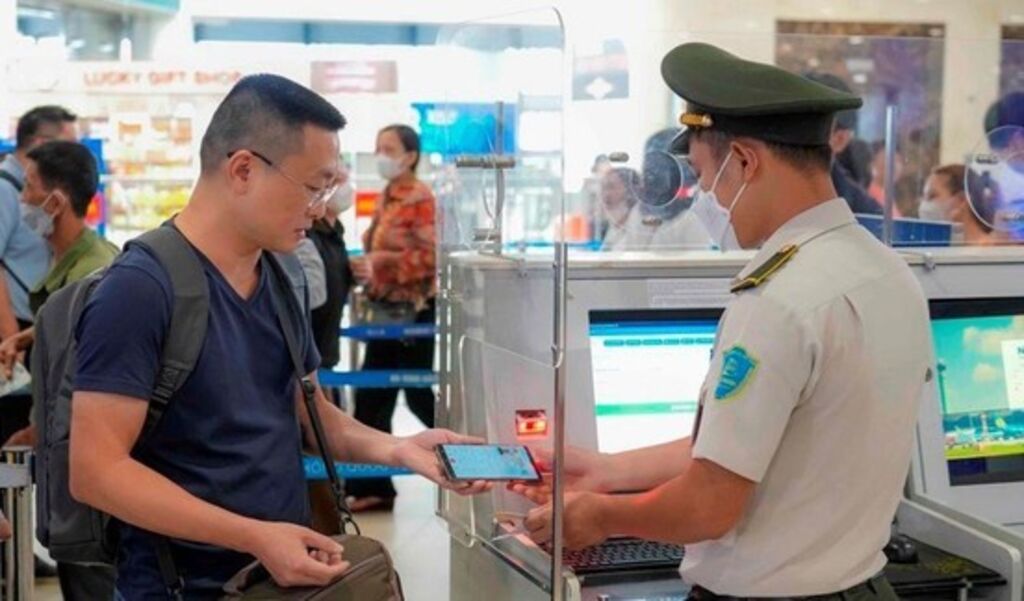
| A passenger uses VNeID at Noi Bai International Airport's security counter__Photo: VNA |
In order to promote positive behaviors and encourage Vietnamese citizens to proactively update their data, safely use digital services, and contribute to building a digital society, the Ministry of Public Security (MPS) has proposed a draft resolution on the development of digital citizens.
Under the draft, a person would be recognized as a digital citizen if meeting four conditions: (i) having an e-identification account on the national digital identification application (VNeID); (ii) having the capacity for using public services and digital services in a safe and lawful manner; (iii) having fulfilled the responsibilities of a digital citizen; and (iv) having been classified as a digital citizen.
The MPS says that citizens who fully complete their VNeID profiles for the first time would receive 100 points and be classified as basic digital citizens.
The more citizens use online services and actively contribute opinions on draft policies, participate in surveys, and submit feedback or recommendations in the digital environment, the more points they would earn. Points would be awarded based on criteria such as data updates, frequency of digital service use, and contributions to the digital community. Citizens with high scores would enjoy various incentives in terms of taxes and charges, services, administrative procedures and social welfare. Noteworthily, digital citizen scores would not be used for imposing penalties or restricting the lawful rights and interests of citizens.
Digital citizens would have the rights to own and manage their digital identities; access, use and benefit from digital services; be protected and have their safety guaranteed in the digital environment; and participate in digital democracy and digital oversight.
In return, digital citizens would bear responsibilities such as creating and updating data, using online public services, observing laws and practicing civilized behaviors, and responsibly contributing to the development of the digital society.
According to the MPS, citizens who actively participate in digital services would be fully exempt from charges and fees for 66 fundamental and essential administrative procedures related to personal rights or those frequently used by citizens, such as marriage registration, birth registration, death registration, renewal of driver licenses, and reissuance of citizen identity cards.
A minimum reduction of 50 percent in charges and fees would be offered for 56 complicated administrative procedures that require higher management costs, such as pre-acceptance test of fire prevention and fighting, access to citizens’ information in the population database, adjustment of residence information, and updating DNA data in the citizen identification database.
The draft also proposes a 10-percent reduction for five types of taxes and registration fees payable by citizens for the performance of digital services and online administrative procedures via VNeID, particularly those related to essential assets and services or procedures that enhance transparency.
Meanwhile, serious violations committed by citizens in the digital space would be subject to warnings or suspension of point accumulation until they are remedied.
The digital citizen scoring system would be implemented on a pilot basis before being rolled out on a wider scale, according to the MPS.- (VLLF)