 |
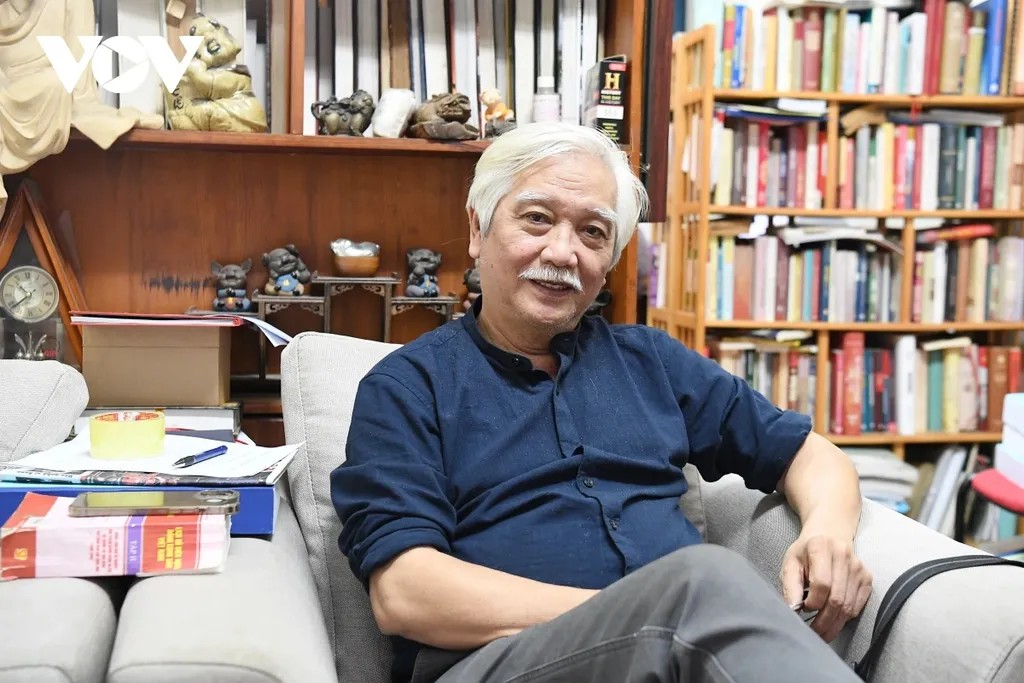
| Historian Duong Trung Quoc__Photo: vov.vn |
The 80-year journey since Vietnam’s first National Assembly (NA) election in 1946 has closely paralleled the country’s national development. On the occasion of this anniversary and the upcoming election of deputies to the 16th National Assembly and People’s Councils at all levels, Việt Nam News and Law spoke with historian Duong Trung Quoc about the evolution of the NA over the past eight decades.
With more than 40 years devoted to historical research, historian Duong Trung Quoc has participated in numerous studies on the history of the Vietnamese State, giving him an in-depth understanding of the development of the NA. In addition to his academic work, he also served as an NA deputy for four consecutive terms from 2002 to 2022.
In this interview, he shares his observations and reflections on the 80-year history of Vietnam’s legislature, drawing on both scholarly research and personal experience.
Looking back at history from 1946 to the present, how do you assess the role of NA elections in the process of building the Vietnamese State?
From a historical perspective, the 1946 General Election can be regarded as a particularly important milestone in the formation of the modern Vietnamese State. It marked the first time Vietnamese people, as citizens of an independent nation, exercised their fundamental political right to elect representatives to the NA - the highest organ of state power.
The election also achieved democratic standards that were considered among the most modern in the world at that time.
Notably, from the very first NA term, Vietnam promoted gender equality by electing 10 women deputies to the NA. This represented a remarkable step forward, especially considering that many developed democracies at the time had yet to grant women the right to stand for election.
The first NA also embodied equality among ethnic groups and religions. It became a forum bringing together representatives from different social strata united by the shared goals of safeguarding and building the nation.
In the context of a newly independent country, President Ho Chi Minh proactively built a legislature characterised by political diversity and a spirit of reconciliation. Although several political parties initially boycotted the election, after the election was completed the NA agreed, at President Ho Chi Minh’s request, to admit 70 additional delegates from parties that had not participated in the election, thereby broadening the bloc of national unity.
The newly elected NA was entrusted with drafting the country’s first Constitution - the 1946 Constitution, laying the institutional foundation for the transition from a feudal and colonial system to a rule-of-law state organised under a democratic republican model.
Despite the immense difficulties facing the newly independent country at that time, the organisation of a universal suffrage election demonstrated the progressive vision of the revolutionary leadership. It not only strengthened the legitimacy of the young government but also established an enduring political principle: the state power must originate from the will of the people.
Undoubtedly, the 1946 General Election was not merely a political event but also a testament to Việt Nam’s early engagement with universal democratic values while preserving the country’s longstanding tradition of national unity.
During the period from 1954 to 1975, although the country was temporarily divided following the conclusion of the Geneva Agreement, the legislature legally maintained its status as the NA of the Democratic Republic of Vietnam representing the entire national territory.
It is important to note that, during this period of division, elections of NA deputies continued to be organised in the North, while the NA retained representatives from the South. This affirmed the principle that there was only one National Assembly representing the will of people nationwide, even though other political entities existed in the South, such as the National Liberation Front and the Provisional Revolutionary Government.
Thanks to the maintenance of the continuity and nationwide representation of the legislature throughout this period, after the complete liberation of the South in 1975, Vietnam had a solid basis for the unification of its political institutions. This led to the election of the unified NA in 1976, which officially renamed the country the Socialist Republic of Vietnam.
From 1975 to the present, each NA election has been closely associated with a particular stage of the country’s development. Whether during wartime or peacetime, NA elections have remained a manifestation of institutional continuity and a reaffirmation that state power belongs to the people under the leadership of the Communist Party of Vietnam.
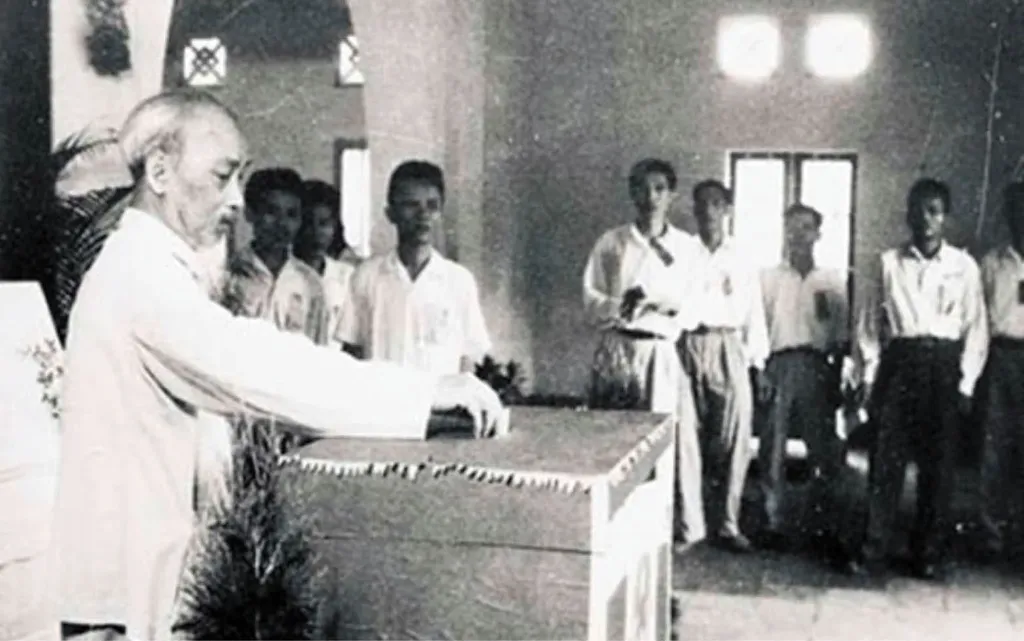 |
| President Ho Chi Minh cast his vote at House No. 10, Hang Voi Street, Hanoi__Photo: vietnam.vn |
The Law on Election of Deputies to the National Assembly has been amended several times. In your opinion, how these amendments reflect the development of Vietnam’s political and social life?
In my view, revising election-related legislation is a natural aspect of any country’s political life. Laws are not immutable; they must evolve alongside societal change.
In Vietnam, amendments to the Law on Election of Deputies to the National Assembly have usually coincided with important national transitions.
For instance, President Ho Chi Minh’s Order No. 51-SL, issued on October 17, 1945, established the regulations governing the first general election of the NA pf the Democratic Republic of Vietnam. It clearly set out the principles of universal suffrage, voting rights, candidacy rights and election organisation nationwide.
Subsequently, each constitutional revision was accompanied by a corresponding law on election of deputies to the NA, notably in 1959, 1980 and 1992.
Regulations governing the election of NA was once again revised with the promulgation of a new Law on Election of Deputies to the National Assembly in 1997, which was subsequently amended in 2001 and 2010.
In 2015, the Law on Election of Deputies to the National Assembly and People’s Councils was enacted to ensure consistency with the 2013 Constitution.
Most recently, together with the revision of the 2013 Constitution, the 2025 Law Amending a Number of Articles of the Law on Election of Deputies to the National Assembly and People’s Councils was adopted. Effective from July 1, 2025, the law introduced several notable adjustments. These changes include adjustments to election timing, organisational models, campaign procedures and methods, as well as orientations toward improving the quality of deputies. Such reforms affect not only technical and organisational aspects but also reflect new requirements in national governance, aiming to create a more democratic, transparent and practical electoral process.
Overall, these amendments demonstrate two key developments. First, they reflect the growing maturity of Vietnam’s political and social life. As society becomes increasingly diverse, more refined mechanisms of representation are required. Second, they highlight the State’s commitment to ensuring the democracy, transparency and effectiveness of the election process. In other words, the history of amendment to the election legislation mirrors the evolution of Việt Nam’s political system.
In your opinion, what are the most notable differences between past and present NA elections in terms of electoral procedures, campaigning methods and voter participation?
The most obvious difference lies in the country’s social conditions.
The earliest elections were organised during wartime, when travel was difficult and information channels were limited. While those elections carried profound political significance, their technical organisation remained relatively simple.
Today, electoral processes have become far more standardised. The legal framework is clearer, with detailed regulations governing every stage, from consultative rounds and candidate nomination to campaigning and ballot counting. Modern mass media also provides voters with greater access to information, helping them better understand candidates.
Another notable development is that voter participation has become increasingly informed and substantive. In the past, particularly during wartime, voting was both a civic duty and a symbolic act. Today, voters not only feel a sense of responsibility but also pay closer attention to the quality of NA deputies and the effectiveness of parliamentary activities. In my view, this reflects the maturation of political awareness within society.
Notably, the 2025 amendments to the election law introduce important innovations linked to digital transformation and procedural modernisation.
For example, the use of the National Population Database and the Vietnam National E-Identification application (VNeID) is expected to enhance accuracy and transparency in voter management.
Modern technologies are also expected to change electoral campaigning methods and improve voter engagement. Alongside traditional face-to-face meetings, candidates and voters may now interact through online or hybrid formats. Online meetings can be recorded and widely disseminated, enabling voters to gain a more comprehensive understanding of candidates and fostering greater interaction.
Another important issue concerns the proportion of full-time NA deputies, which currently remains modest. While part-time deputies bring valuable experience from various sectors, they often lack the time and tool necessary for parliamentary work. Increasing the number of full-time deputies is therefore considered an important step toward strengthening professionalism within the NA.
Overall, these innovations demonstrate the proactive adaptation of Việt Nam’s legal system to contemporary governance requirements. They contribute to building a streamlined, effective and efficient State apparatus, that truly belongs to the people and operates by the people and for the people.
Ultimately, the success of the upcoming election serves as a fundamental prerequisite for improving the State apparatus and institutionalising the Party and State’s policies, thereby advancing the country’s socio-economic development goals.
After eight decades of NA elections, what do you see as the most important historical lesson? How should future elections carry this legacy forward?
In my view, the most fundamental lesson lies in maintaining the people’s trust in their representative institutions.
Since the historic 1946 General Election when the nation was still in its infancy, the people have held a steadfast belief that their ballots contribute directly to shaping the country’s destiny. This trust has become the cornerstone sustaining Việt Nam’s electoral traditions over the past eight decades.
In the future, it is crucial to continue consolidating that trust by elevating both the professional calibre of deputies and the operational effectiveness of the NA. Today’s citizens are more educated and have greater access to information. As a result, their expectations of their elected representatives are significantly higher.
Once elected, an NA deputy represents not only the voters of his or her constituency but the entire nation. For example, although I stood as a candidate in Dong Nai Province, once elected I became accountable to voters across the country. Any voter could raise concerns and expect me to address them. Such responsibility creates considerable pressure for deputies, especially given that the current proportion of full-time deputies remains lower than that of part-time deputies.
I believe that each election should be seen not merely as a legal procedure but also as an opportunity for society to reflect on which voices should be represented in the NA and how those representatives will shape the nation’s development path. If this sense of purpose is maintained, the noble tradition inaugurated by the 1946 General Election will continue to flourish as Vietnam enters the new stages of development.- (VLLF)