 |
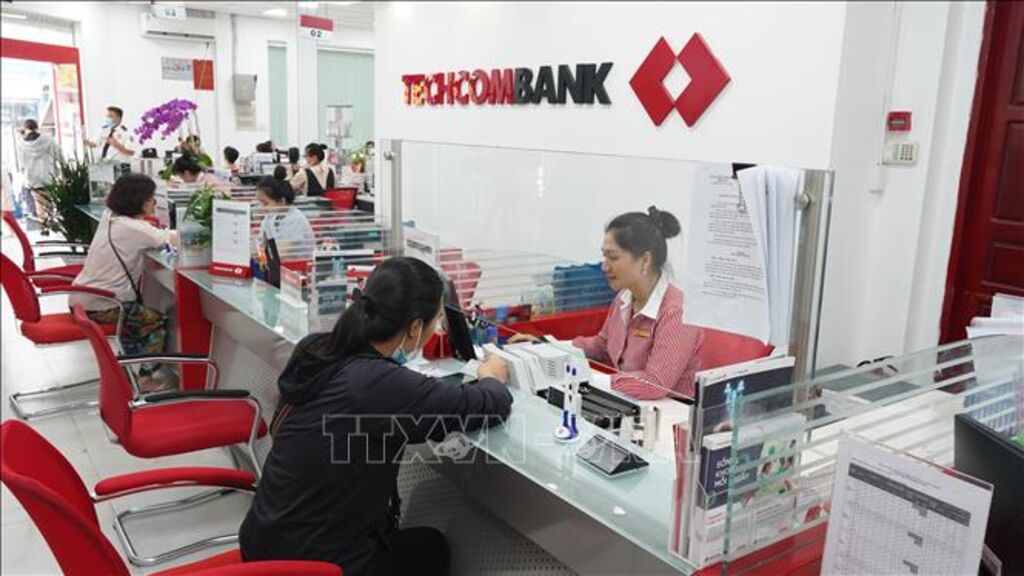
| Clients carrying out transactions at a TechcomBank's branch__Photo: VNA |
Law on Deposit Insurance
The 2025 Law on Deposit Insurance (coded 111/2025/QH15) was adopted on December 10, 2025, by the 15th National Assembly at its 10th session. The law comprises eight chapters with 41 articles.
Compared with the 2012 Law, which it replaces from May 1, the new law introduces a separate chapter providing for the participation of the deposit insurance organisation in handling credit institutions subject to early intervention or special control, as well as in responding to incidents and crises.
Accordingly, the law allows the deposit insurance organisation to extend special loans to:
(i) Commercial banks, cooperative banks and microfinance institutions placed under special control to implement recovery plans;
(ii) Commercial banks under special control to carry out mandatory transfer plans; and,
(iii) Commercial banks, cooperative banks, people’s credit funds and microfinance institutions subject to early intervention or special control and facing mass withdrawals, in order to pay depositors.
The deposit insurance organisation is authorised to decide on special loans, including whether they are secured or unsecured, and whether they bear interest.
The law also establishes a legal basis for premature insurance payouts, rather than allowing payment only after a credit institution is declared bankrupt. The obligation to pay arises upon the occurrence of one of the following events:
(i) A credit institution’s bankruptcy plan is approved, or the State Bank of Vietnam confirms that a foreign bank branch is unable to meet its deposit payment obligations;
(ii) The State Bank of Vietnam suspends deposit-taking activities of a credit institution under special control where accumulated losses exceed 100 per cent of charter capital and reserve funds; or,
(iii) The State Bank of Vietnam issues a notice on insurance payouts to ensure system safety and maintain social order and security.
Law on Judicial Expertise
Coded 105/2025/QH15, the 2025 Law on Judicial Expertise, comprising six chapters and 45 articles, provides judicial experts and judicial expertise organisations; procedures and costs of judicial expertise; applicable regimes and policies; state management of judicial expertise; and responsibilities of relevant authorities, organisations and individuals.
The law takes effect from May 1, replacing the 2012 Law on Judicial Expertise, except the provisions of Clauses 1 thru 4, Article 45 of the law.
Three cases eligible for exemption or reduction of trade union fees
 |
| Union members and workers facing hardship are given Tet gifts on the occasion of Lunar New Year in An Giang province__Photo: VNA |
From May 16, Decree 105/2026/ND-CP, detailing a number of provisions of the Law on Trade Unions regarding trade union finances, will take effect.
Under the decree, unpaid trade union fees may be exempted in two cases:
Enterprises, cooperatives and cooperative unions undergoing dissolution may be exempted when trade unions participate in debt settlement plans; and,
Entities undergoing bankruptcy may be exempted when trade unions file petitions to initiate bankruptcy proceedings.
Decisions on exemption shall be issued by the Vietnam General Confederation of Labour or provincial-level Labour Federations.
In addition, enterprises may be considered for a reduction in trade union fee contributions if they continue to implement a large-scale labour reduction after the period of suspension of trade union fee payment expires.
Large-scale labour reduction is defined as a reduction of 30 per cent of the workforce or at least 30 employees (for employers with fewer than 200 employees), or 50 employees (for employers having between 200 and 1,000 employees); or 100 employees (for employers with more than 1,000 employees).
The reduction may not exceed 20 per cent of the statutory contribution rate and is applied for a maximum period of six months.
Procedures for participation in voluntary supplementary pension insurance
Article 6 of Decree 85/2026/ND-CP sets out procedures for participation in voluntary supplementary pension insurance, effective from May 10.
The employer is required to compile written agreements, consult employees and obtain consensus before signing participation agreements either with each individual employee or with the trade union representative.
The employer must then enter into a contract with a pension fund management company, which will open individual pension accounts for participating employees.
Based on the agreed programme, the employer will make contributions, including its own contributions and those made on behalf of employees, and notify the fund management company of the amounts contributed for each employee.
Enterprises face fines of up to VND 2 billion for failing to notify economic concentration
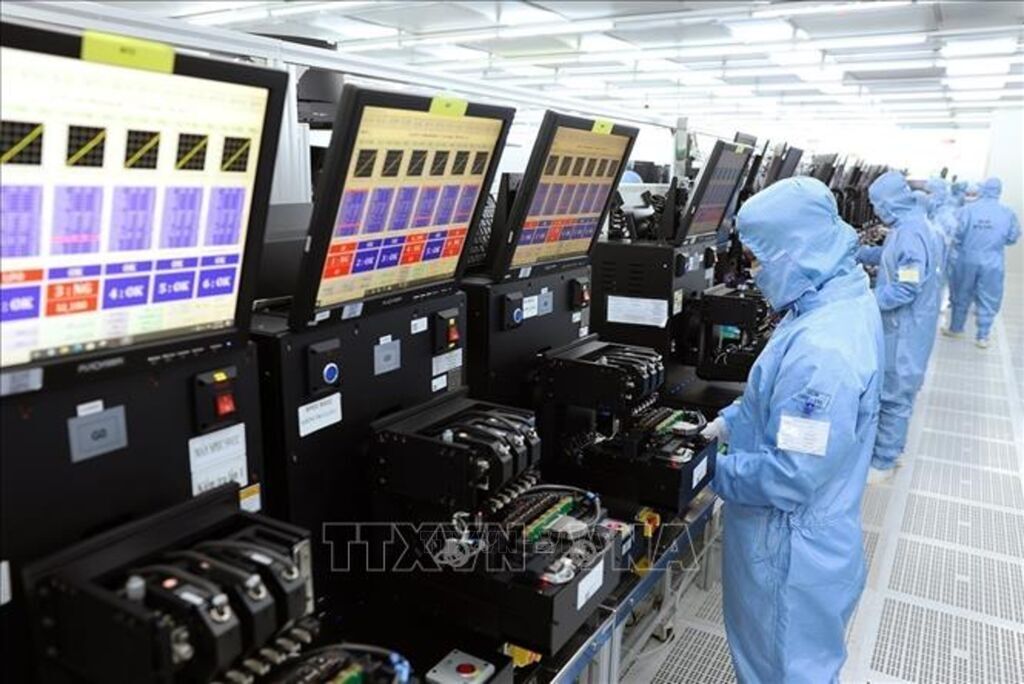 |
| Production line for export camera modules and electronic components at MCNEX VINA Co., Ltd., Phuc Son Industrial Park, Ninh Binh province __Photo: VNA |
Decree 102/2026/ND-CP, amending Decree 75/2019/ND-CP on administrative sanctions in the field of competition, will take effect from May 20.
The decree requires enterprises to provide complete and truthful information and to fully comply with conditions set out in decisions on economic concentration.
Enterprises that fail to notify economic concentration as required will face fines ranging from VND 500 million to VND 2 billion, depending on their assets and turnover in the Vietnamese market.
Businesses may be considered for interest relief when repaying guaranteed loans
This is provided in the Prime Minister’s Decision 12/2026/QD-TTg amending the Regulation on credit guarantees for small- and medium-sized enterprises (SMEs) borrowing capital from commercial banks, issued together with Decision 03/2011/QD-TTg.
Under the revised provisions, once the Vietnam Development Bank fulfils its guarantee obligations, the enterprise must acknowledge the debt and enter into a compulsory loan agreement, thereby becoming a borrower of the bank.
Based on financial conditions and repayment capacity, the bank may consider granting interest exemption or reduction. In such cases, the state budget will not provide interest subsidies or cover management fees.
Risk treatment will be carried out in accordance with the credit risk management mechanism applicable to the Vietnam Development Bank, as prescribed by the Prime Minister.- (VLLF)