 |
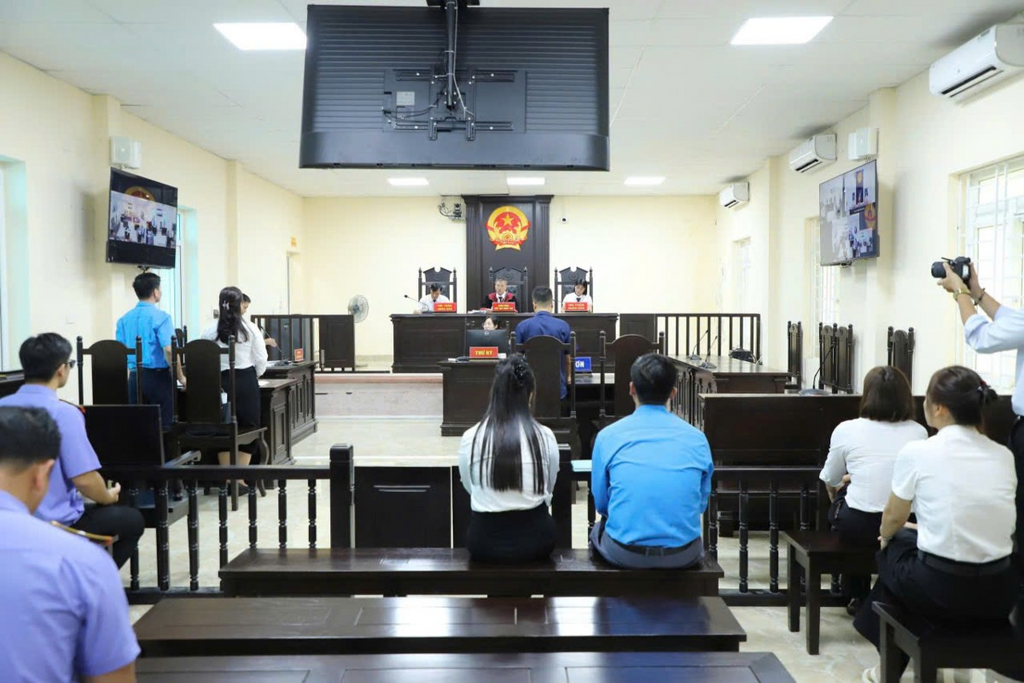
| The trial involving MD Company__Photo: Viet Nam Social Security |
National Assembly Resolution 205/2025/QH15 has introduced a new legal mechanism permitting People’s Procuracies to initiate civil lawsuits in the public interest, including cases aimed at protecting the rights of vulnerable groups.
For the social insurance sector, the pilot mechanism provides an important additional tool to deal with employers that persistently delay or evade payment of social insurance, health insurance and unemployment insurance premiums.
Under the mechanism, social insurance agencies will review and classify non-compliant employers, provide relevant information and case files, and coordinate with People’s Procuracies in urging compliance, verifying violations and working with businesses. In particular, where an employer’s violation reaches the threshold for legal action but remains unremedied, the People’s Procuracy may consider initiating a civil lawsuit within its authority.
The mechanism is particularly significant because the 2024 Law on Social Insurance does not authorise social insurance agencies themselves to initiate lawsuits. With Resolution 205 in place, enforcement can move beyond reminders and inspections to judicial proceedings aimed at recovering overdue or evaded premiums and protecting employees’ lawful rights and interests.
Additional mechanism to tackle persistent violations
Viet Nam Social Security said some employers continue to delay or evade payment of social insurance, health insurance and unemployment insurance premiums for prolonged periods, directly affecting employees’ entitlements.
The implementation of Resolution 205 therefore provides an additional legal avenue for cases in which employers fail to comply despite repeated reminders and enforcement measures.
Viet Nam Social Security stressed that the public-interest litigation mechanism is not intended to create difficulties for businesses. Rather, it is designed to strengthen legal compliance and social responsibility while safeguarding employees’ legitimate social security rights.
A recent case involving MD Company in Ung Thien commune, Ha Noi, illustrates how the mechanism can work in practice.
The company currently declares social insurance contributions for five employees but has persistently delayed or evaded payments, affecting their entitlements.
After the Ung Hoa Social Insurance Office forwarded information on the violations and the People’s Procuracy of Region 12, Ha Noi, became involved, the company paid part of its outstanding contributions for May and June of 2026. However, as of August 2026, it still owed VND 158 million, according to the case file.
As social insurance agencies do not have the authority to initiate lawsuits under the 2024 Law on Social Insurance, the Ung Hoa Social Insurance Office participated as an interested party and asked the People’s Procuracy of Region 12 to exercise its power to initiate a public-interest civil action under Resolution 205/2025/QH15.
Acting as plaintiff, the procuracy filed a lawsuit seeking an order requiring MD Company to fulfil its social insurance premium payment obligation. The People’s Court of Region 12, Ha Noi, accepted the case and scheduled it for trial on September 7, 2026.
The case highlights the role of social insurance agencies in identifying violations, urging employers to remedy them, providing evidence and coordinating with People’s Procuracies where judicial action is required.
The scale of non-compliance is also reflected in nationwide inspection results. By the end of August 2026, social insurance agencies had issued inspection decisions covering 6,694 entities. Inspections resulted in orders to retrospectively collect more than VND 128.2 billion in underpaid contributions relating to 40,146 employees and more than VND 330 billion in overdue and evaded social insurance, health insurance and unemployment insurance premiums.
In addition, social insurance agencies issued, or advised competent authorities to issue, 362 administrative penalty decisions, with fines totalling more than VND 3.1 billion.- (VLLF)