According to the Ministry of Science and Technology, the selected achievements reflect the increasingly central role of science, technology, innovation and digital transformation in institutional reform, socio-economic development, national defence and security, and in enhancing Vietnam’s position amid deep international integration.
1. National Assembly adopts 10 laws on science, technology and digital transformation
At its 9th and 10th sessions, the 15th National Assembly adopted 10 laws relating to science, technology, innovation and digital transformation, laying a comprehensive and synchronised legal foundation for development in these areas.
The new legal framework covers key technological sectors and concretises major orientations of the Party, particularly Politburo Resolution 57-NQ/TW. The move is regarded as a significant institutional breakthrough, addressing long-standing bottlenecks and establishing a legal corridor for new growth drivers, the development of the digital economy and digital society, and more effective state governance.
2. National Exhibition on Science, Technology, Innovation and Digital Transformation Achievements
Held to mark the 80th anniversary of National Day, the exhibition retraced eight decades of scientific and technological development alongside the nation’s history of construction and defence.
By combining historical storytelling with technology, data, images and artefacts, the exhibition offered a modern and engaging format aimed at raising public awareness and inspiring innovation. Alongside the exhibition, the issuance of commemorative stamp collections marking major national milestones further highlighted the historical and political significance of science and technology in national development.
3. Restart of the Ninh Thuan nuclear power project
The decision to restart the Ninh Thuan nuclear power project represents a major shift in national energy policy.
Nuclear power is identified as a stable baseload source with large capacity and low emissions, contributing to energy security, environmental protection and Vietnam’s greenhouse gas reduction commitments. The project also opens new opportunities for the development of nuclear science, high technology, high-quality human resources and international cooperation in the energy sector.
4. Mastery of technologies for the design and production of armoured vehicles
 |
| XCB-01 armoured vehicle at the Ministry of National Defense's outdoor exhibition area of the 80 Years of National Achievements Exhibition in 2025__Photo: VNA |
In 2025, Vietnam successfully researched, designed and manufactured the XCB-01 and XTC-02 armoured vehicles using domestic technologies. The achievement affirms the country’s technological autonomy in the defence industry, enabling the armed forces to reduce reliance on imports and optimise costs. It also lays the groundwork for the development of advanced defence technology products in the future.
5. Successful application of next-generation DNA identification technology
For the first time, Vietnam has mastered next-generation DNA identification technology (NGS-SNP), increasing DNA extraction efficiency from 22 per cent to 80 per cent and enabling the analysis of severely degraded samples.
The technology opens up the possibility of large-scale identification of fallen soldiers’ remains, supporting efforts to determine the identities of tens of thousands of martyrs. The achievement carries profound scientific significance and reflects humanitarian values and social responsibility.
6. Nationwide 5G coverage
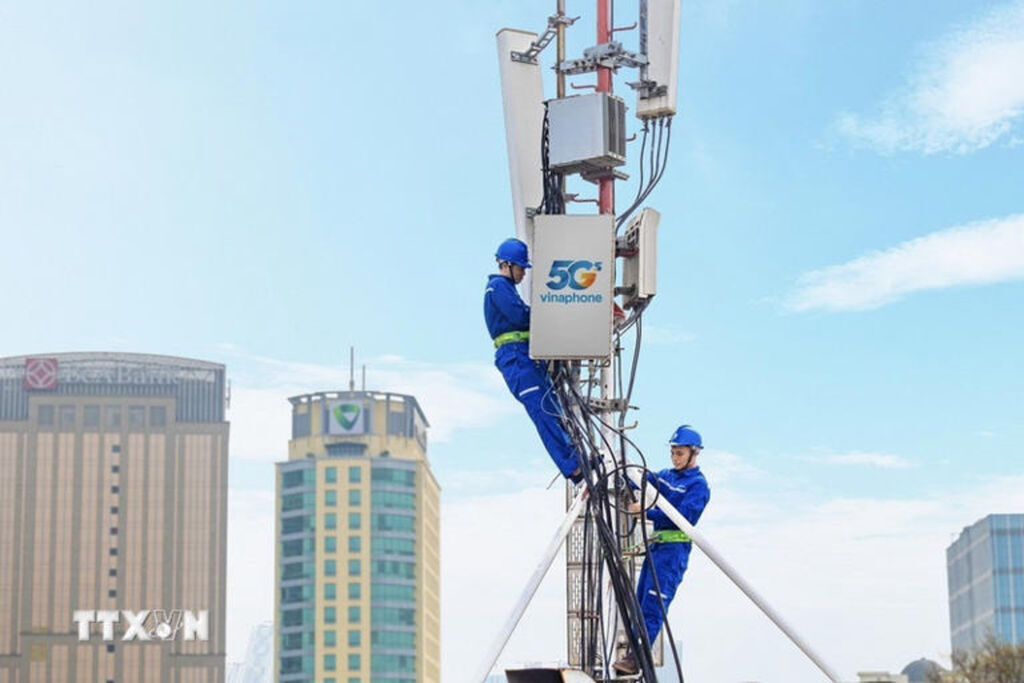 |
| VNPT Group installs VinaPhone 5G base stations across the country__Photo: VNA |
In 2025, more than 22,400 5G base stations were deployed nationwide, establishing 5G as critical digital infrastructure for national digital transformation.
With high speed and low latency, 5G provides a foundation for technological applications in education, healthcare, smart manufacturing, smart transport and online public services. It also serves as dual-use infrastructure, supporting both socio-economic development and national defence and security.
7. Research, production and international commercialisation of the AVAC ASF LIVE vaccine
AVAC ASF LIVE is among the world’s first commercially available vaccines against African swine fever, developed and mastered by Vietnamese scientists.
By 2025, more than four million doses had been supplied domestically and nearly one million doses exported to international markets. The vaccine contributes to effective disease control, supports the recovery of livestock production and reduces economic losses, while demonstrating Vietnam’s research and innovation capacity in veterinary vaccines.
8. Mastery and commercialisation of specialised fuels Jet A-1K and DO L-62
Vietnam has mastered the entire process of research, production and commercialisation of two specialised fuel products, Jet A-1K and DO L-62, enabling the full replacement of imported supplies.
The achievement enhances energy and defence security and demonstrates the strategic technological capabilities of domestic enterprises. It also establishes a dual-use research and development model within the oil and gas industry.
9. The Hanoi Convention – a global milestone in combating cybercrime
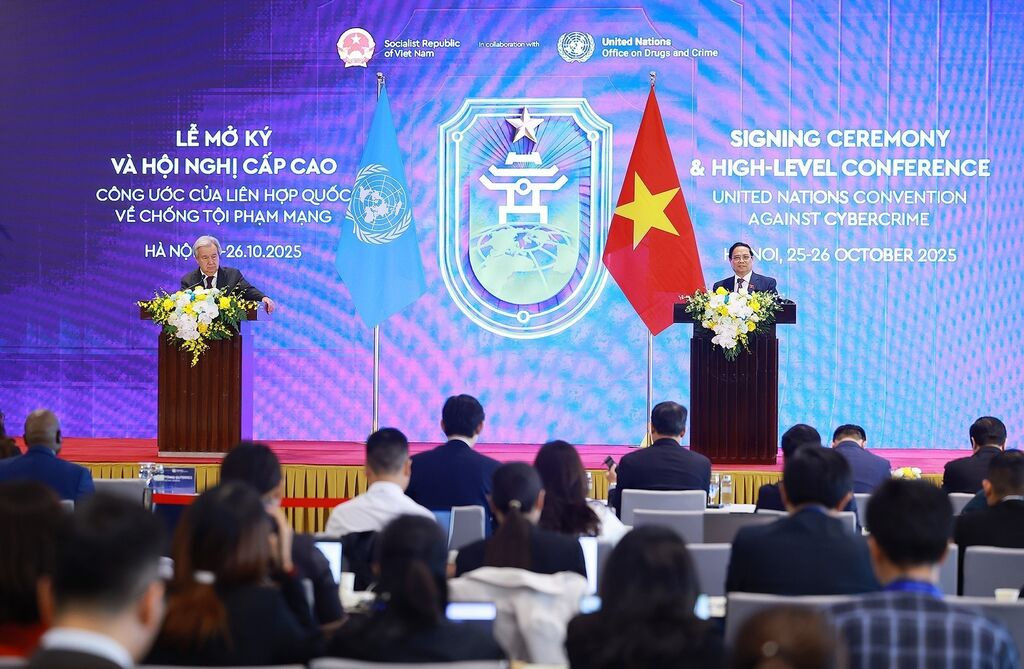 |
| Prime Minister Pham Minh Chinh (right) and the United Nations Secretary-General at the press encounter during the Signing Ceremony and High-Level Conference for the United Nations Convention Against Cybercrime__Photo: VNA |
Vietnam’s hosting of the signing ceremony for the Hanoi Convention marked an important step in international integration in the field of cybersecurity.
The event underscores Vietnam’s proactive and responsible role in shaping global standards and cooperation mechanisms to combat cybercrime. The Convention also provides impetus for further refinement of the domestic legal framework and the development of technologies to ensure cybersecurity amid deepening digital transformation.- (VLLF)