 |
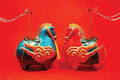
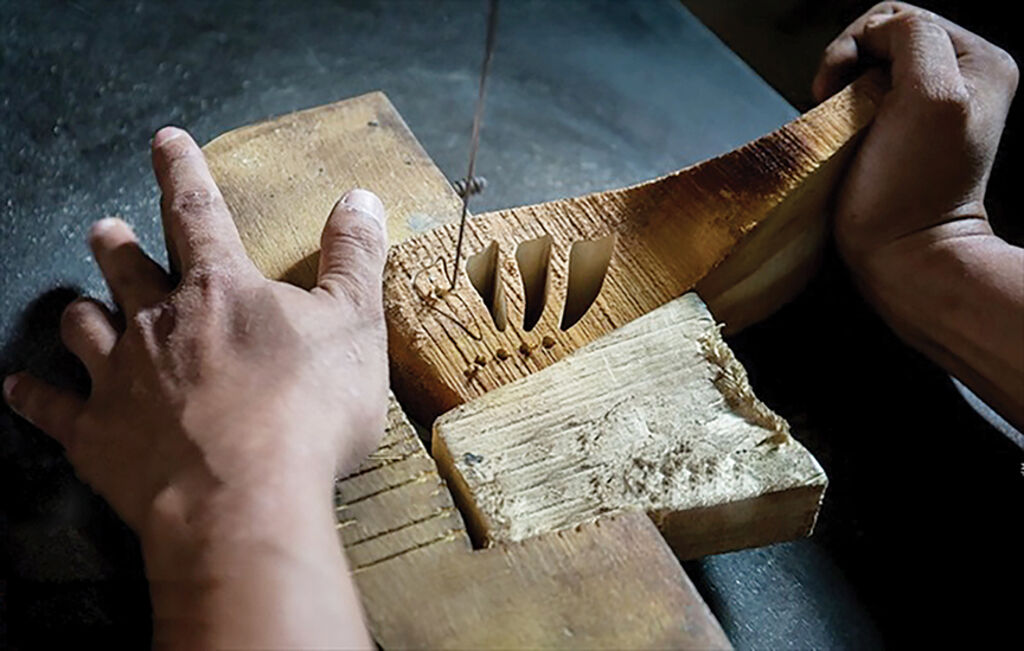
| Piercing silhouettes into the clog soles__Photo: VPN |
Once thought to have faded from everyday life, wooden clogs are finding their way back into modern wardrobes. What many may not realise is that a large share of the wooden clogs sold on the market today are still made in Phu Van, a century-old craft village in Thu Dau Mot ward, Ho Chi Minh City. Here, amid the pace of urban change, the crisp clack of handcrafted wooden clogs still rings out from small workshops, carrying the memory of a craft that has preserved a simple yet distinctive part of Vietnamese cultural identity.
The wooden clog village through the decades
Phu Van’s association with wooden clogs dates back to the early years of the 20th century, when clog-making in the area had already developed into a recognised trade. Over time, the craft became so closely identified with local life that the area came to be known by a simple, familiar name: Xom Guoc, or “wooden clog hamlet”. What began as an oral nickname was officially recognised in 1999, when Xom Guoc was added to the official public transport map.
The village reached its most prosperous period between the 1920s and the 1970s. At that time, Phu Van was known as the region’s “clog capital”, producing thousands of pairs each year. Its products ranged from plain, practical designs for daily wear to more elaborate artistic clogs decorated with carved patterns. Phu Van clogs were not only popular in the domestic market but also found customers abroad, including in Laos, Cambodia and several European countries.
However, the rise of modern footwear industries and changing consumer habits gradually pushed the village into a prolonged decline. Many workshops were forced to scale back or suspend operations, leaving artisans without stable jobs. Under financial pressure, many workshop owners had to close their businesses.
The craft, however, did not disappear. Phu Van wooden clog makers are constantly seeking to innovate their designs in order to adapt to market demand and sustain the local traditional craft. Instead of sticking only to traditional designs, Phu Van artisans now make lighter, lower and more fashionable clogs suited to modern wear. This shift has helped wooden clogs return to public view. Once associated mainly with older generations and traditional dress, they are now being used by younger consumers, including Gen Z, as trendy accessories for streetwear and photo shoots.
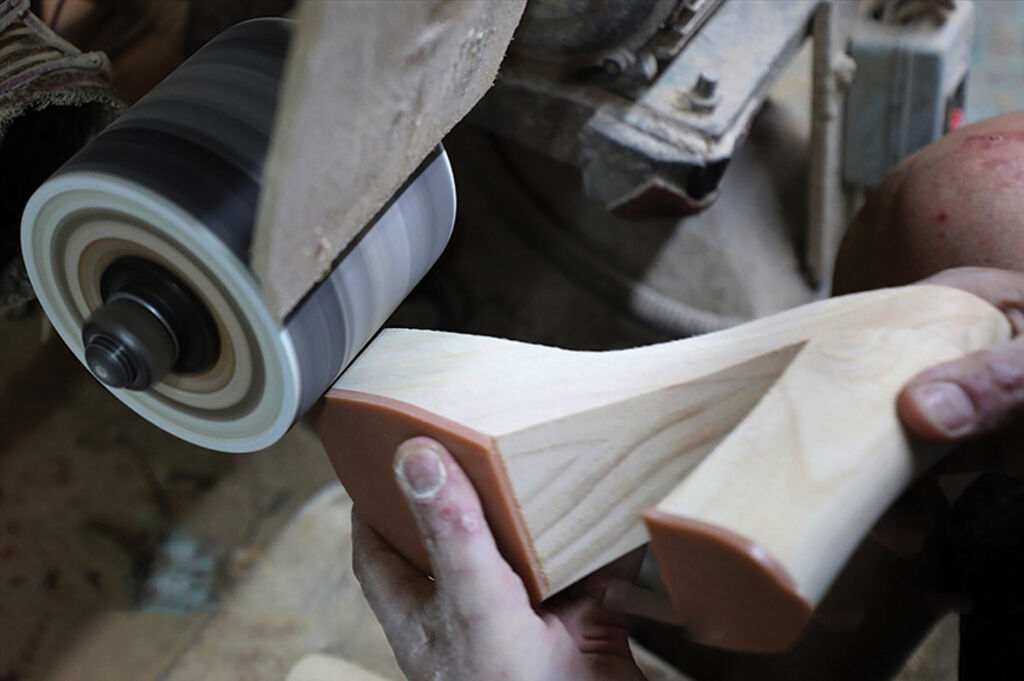 |
| Polishing the clog Photo: VPN |
From logs to clogs
To make a pair of clogs that is durable, lightweight and elegant, the choice of wood is essential. Phu Van artisans favour timbers that are porous, light, strong, pest-resistant and easy to split and shape, such as chinaberry, jackfruit, mango, coconut and pine. Among them, chinaberry and jackfruit are the most widely used because of their attractive natural grain and good pliability, which help prevent cracking while giving the finished clogs a refined appearance.
Turning a raw log into finished footwear requires a series of careful steps. The process begins with sawing the logs and splitting the blocks to form rough clog blanks. Large logs are cut into smaller sections and run through band saws to create basic profiles, which are then shaped into classic flat designs or heeled versions ranging from three to 15 centimetres.
Next comes drying, the most time-consuming stage. Sun-drying is ideal as it allows the clog blanks to dry naturally and evenly. When the weather is cloudy or rainy, craftsmen smoke-dry the blanks with firewood and sawdust to remove moisture thoroughly.
“This step is critical. If the wood remains damp, the finished clogs will warp and crack, whereas properly dried wood becomes incredibly lightweight,” said Nguyen Ngoc Thanh, owner of a wooden clog workshop in the village.
Once the blanks reach the required dryness, experienced artisans use sanding machines to smooth every surface, removing rough splinters and revealing the natural wood grain.
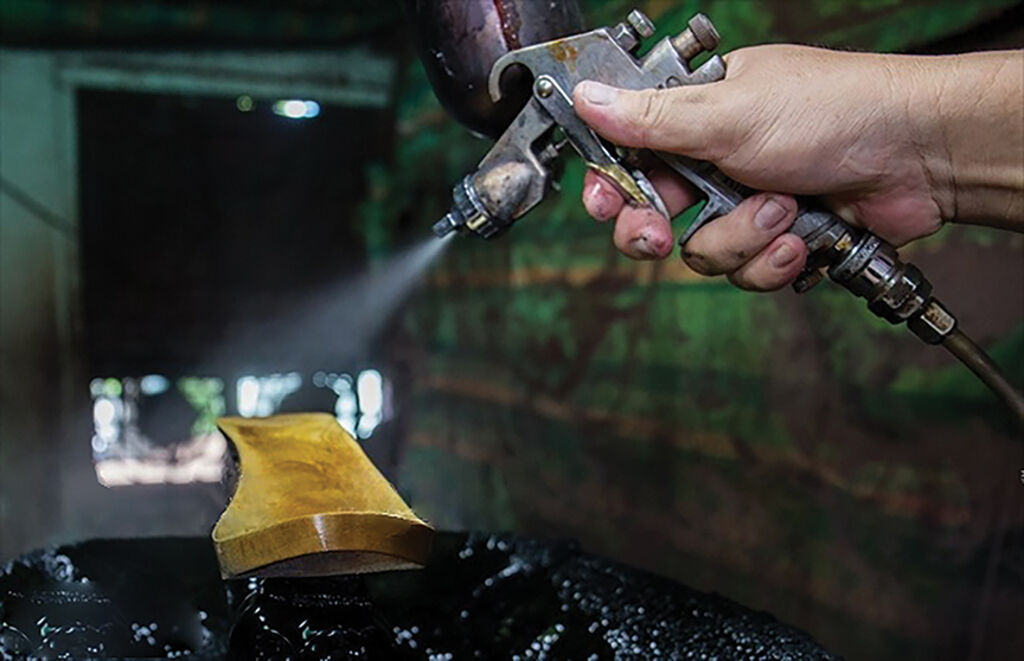 |
| Spraying glossy finish on the wooden clogs Photo: VPN |
The next stage involves decoration and waterproofing. The smoothed clog blanks are coated with primer, glued and sprayed with a glossy finish. For premium artistic lines, artisans carve delicate patterns, such as doves or water droplets, or apply lacquered hand-painted motifs to the blanks.
Finally, anti-slip rubber soles are attached, and velvet, leather or plastic straps are fitted according to each customer’s foot measurements.
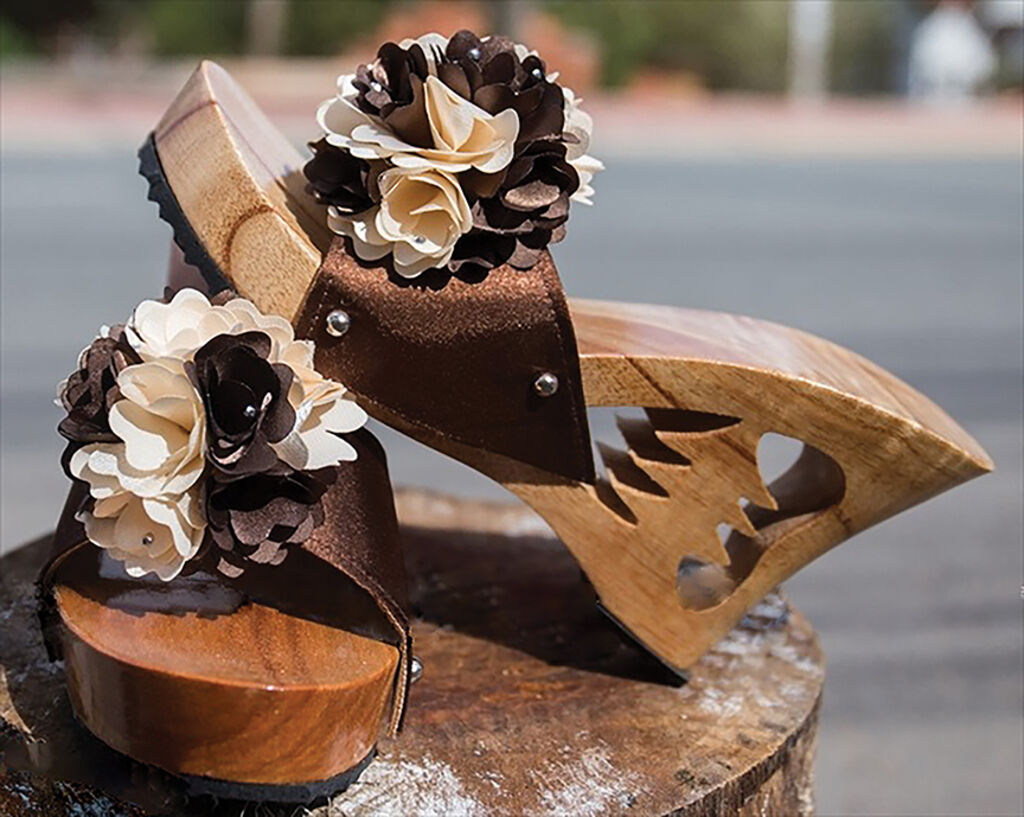 |
| A pair of wooden clogs Photo: VPN |
In each pair of Phu Van clogs, the value lies not only in the wood, the shape or the painted motifs, but also in the hands that keep the craft alive. As wooden clogs return to modern wardrobes, the village shows that tradition can endure when it is allowed to adapt, finding new meaning in contemporary life while retaining the quiet charm of its origin.- (VLLF)