Assoc. Prof. Dr. Vu Trong Lam
Director-General and Editor-in-Chief of the National Political Publishing House
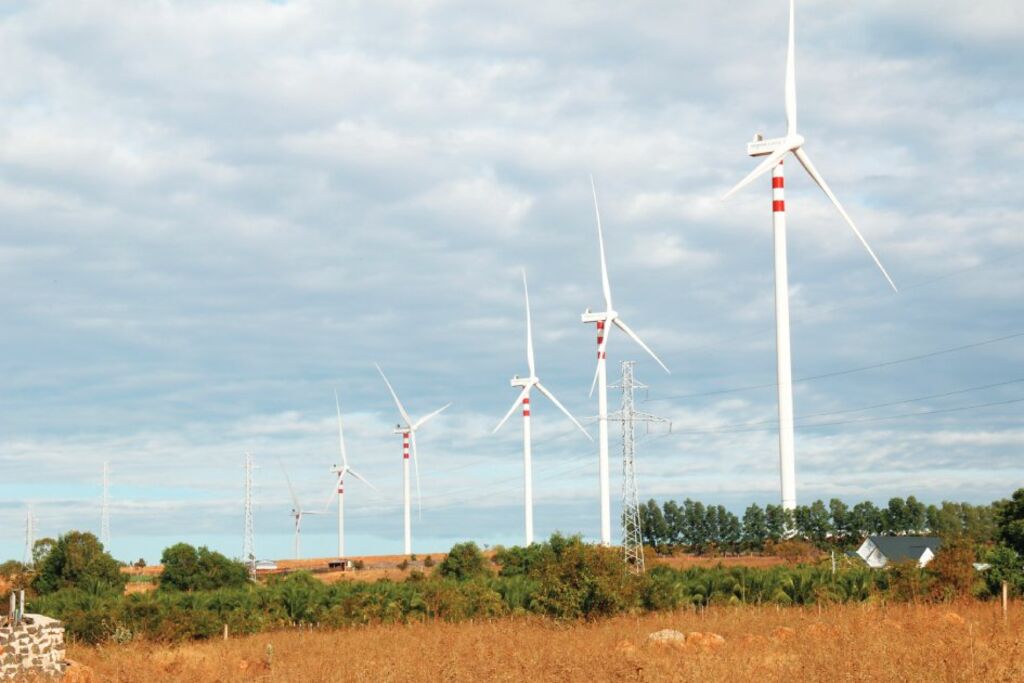 |
| A wind farm in the coastal area of Lam Dong province__Photo: Nguyen Thanh/VNA |
Green transition has emerged as a global development trend and an objective requirement for Vietnam in addressing climate change, environmental pollution and resource depletion. It is regarded as an inevitable pathway towards sustainable development.
Over the recent years, Vietnam has achieved initial progress in advancing green transition. However, significant limitations remain, requiring a clear roadmap and comprehensive solutions to ensure that green transition is effectively aligned with sustainable development goals.
Current status of green transition
Green transition involves shifting the development model from “brown”, which is characterised by resource-intensive, high-emission and energy-consuming activities, to “green”, which is based on clean technologies, low emissions, circularity and environmental friendliness. This transformation spans multiple sectors and requires coordinated efforts in both state governance and broader socio-economic activities. In Vietnam, green transition has been reflected in several key areas.
Institutional progress
Institutional reform has laid the groundwork for green transition. Prime Minister Decision 1658/QD-TTg of 2021 approving the National Green Growth Strategy for the 2021-30 period, with a vision towards 2050, identifies green growth as a key pathway to sustainable development and carbon neutrality. Follow-up instruments, including the National Action Plan on Green Growth and the Action Programme on Green Energy Transition, have further operationalised this direction. In particular, Vietnam’s COP26 commitment to achieve net-zero emissions by 2050 demonstrates strong political resolve, while opening up opportunities to access international finance and support to realise this goal. Across the country, green growth has been increasingly incorporated in master plans, gradually forming a legal basis for implementation across sectors and localities.
Energy transition
Energy transition has become a central pillar of green transition. Renewable energy reached 16 per cent of total electricity output in the first quarter of 2025[2], marking significant progress from the previous negligible levels.
With regard to solar energy, local authorities have encouraged and mobilised enterprises to install solar power systems for domestic consumption and production. In Vinh Phuc province (now part of Phu Tho province), two major enterprises, Honda Vietnam and Toyota Vietnam, have installed solar power systems with a combined output of over 6,000 kWp. In Ho Chi Minh City, as of July 2023, 80 per cent of solar energy systems had been installed in households (429 systems with a total output of more than 27,000 kWp)[3].
The transport sector has also taken the lead in green energy transition. Since 2018, Vietnam has distributed E5 biofuel nationwide at a lower price than traditional A95 petrol, while also offering additional benefits such as reduced emissions, improved engine performance and lower fuel consumption. Battery electric vehicles are also becoming increasingly prevalent in the market.
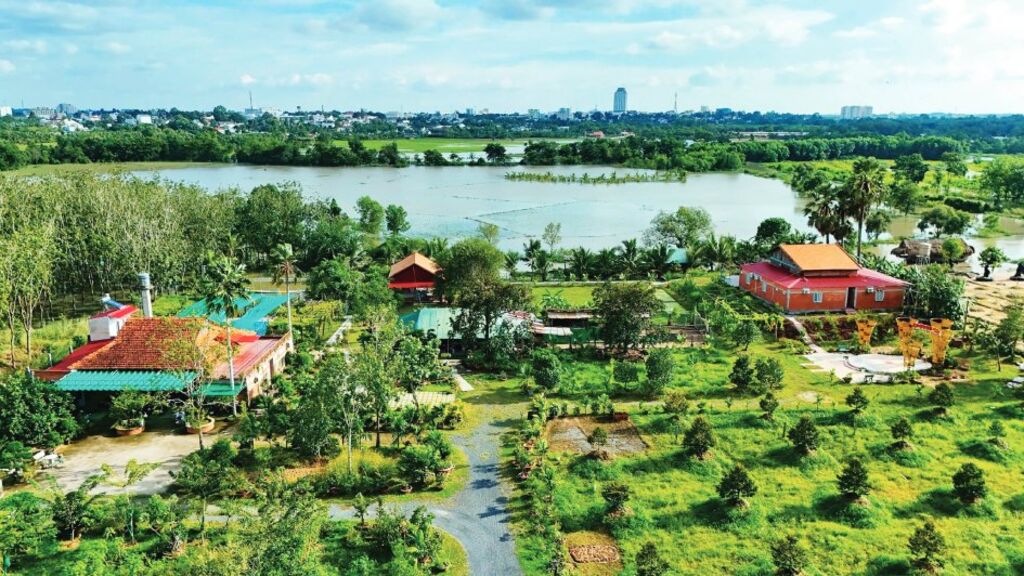 |
| A green farm model developed by local households in Tay Ninh province, combining agricultural production with experiential tourism and contributing to the diversification of local tourism products__Photo: VNA |
Advancing green agriculture
In agriculture, green agriculture models have managed to increasingly attract the attention of farmers, with efforts focused on reducing inputs, applying integrated pest management methods and promoting environmentally responsible practices.
Organic farming is expanding, supported by improved policies and market linkages[4]. Initiatives on waste management, biosecure livestock farming and VietGAP standards have further enhanced sustainability.
The agriculture sector has also actively expanded international cooperation with countries possessing advanced agricultural systems as well as with international institutions, in order to attract funding, particularly investment in green growth, develop markets, and access science and technology in support of the sector’s development. These efforts help promotes linkages between Vietnamese and foreign enterprises in developing green agriculture and food production and distribution value chains.
Growth of green finance
Green credit has grown steadily, averaging over 22 per cent annually during 2017-23. By the end of 2023, outstanding green loans reached around VND 621 trillion (approximately USD 23.6 billion), or about 4.5 per cent of total credit.
Notably, green credit has been primarily directed towards renewable and clean energy sectors (nearly 45 per cent) and green agriculture (around 30 per cent). Many credit institutions have developed green credit packages and programmes aligned with their business activities and green transition strategies. As of December 31, 2023, outstanding loans assessed for environmental and social risks reached VND 2.84 quadrillion, accounting for more than 20 per cent of total outstanding loans in the economy, an increase of over 20 per cent compared to the end of 2022[5]. According to the Ministry of Finance, during the 2019-23 period, Vietnam issued approximately USD 1.16 billion in green bonds. These results demonstrate the efforts and commitment of credit institutions in promoting green finance, making an important contribution to the green transition of the economy.
Shifting to green lifestyles
Public participation remains crucial to green transition. Environmental campaigns, particularly those targeting plastic waste, have helped raise awareness and encourage behavioural change.
Green consumption trends in Vietnam have also grown significantly in recent years. Consumers are becoming more concerned with smart and sustainable consumption, as well as with the use of environmentally friendly products and services throughout the entire lifecycle, from production to consumption and use. Notably, in the context of the COVID-19 pandemic, both consumers and investors have gradually shifted towards “green” consumption channels and increasingly prioritised products that help protect health.
 |
| Hanoi residents have gradually become accustomed to travelling by elevated metro, allowing them to rest throughout their journeys__Photo: Hoang Hieu/VNA |
Opportunities, limitations and challenges
Vietnam benefits from a “latecomer advantage”, allowing it to adopt advanced technologies and models without being locked into outdated systems.
Strong political commitment, combined with international cooperation, provides a solid foundation for advancing green transition. At the same time, ongoing efforts to develop a skilled green workforce are expected to support long-term transformation.
Despite notable progress, green transition in Vietnam continues to face a range of limitations and structural challenges. Gaps between policy formulation and implementation remain evident, while renewable energy accounts for a relatively modest share compared to fossil fuels. High investment costs, coupled with limited readiness among domestic enterprises, continue to constrain the pace of transition.
Regulatory inconsistencies, particularly in emerging areas such as green fintech, also create barriers to compliance and investment. In addition, coordination among ministries, sectors and localities is not always effective, and infrastructure supporting green development remains uneven and insufficiently synchronised in several areas.
Socially, awareness and adoption of green lifestyles remain limited. Many still regard green development as the responsibility of the State, rather than a joint obligation of individuals and businesses. Concerns over higher upfront costs, combined with limited understanding of long-term economic, health and environmental benefits, as well as entrenched consumption habits, continue to hinder behavioural change. Disparities in income and education across regions further widen the gap in practice of green lifestyles.
At the same time, the green transition requires substantial financial resources. According to the World Bank, Vietnam will need approximately USD 368 billion between 2022 and 2040 to strengthen climate resilience and reduce greenhouse gas emissions, with nearly half expected to come from the private sector. The scale of required investment and the need for advanced technologies pose significant challenges, particularly for a developing economy undergoing structural transformation.
Enterprise readiness is also a concern. While many foreign-invested enterprises have adopted ESG standards, a large proportion of domestic firms continue to take a “wait-and-see” approach, constrained by limited resources, outdated technologies and insufficient experience in green transition.
Overall, inconsistencies between policy orientation and implementation persist, reflecting a lack of clarity, coordination and professionalism in executing green transition strategies. This underscores the need to clearly define objectives aligned with sustainable development, while ensuring social equity and improving quality of life.
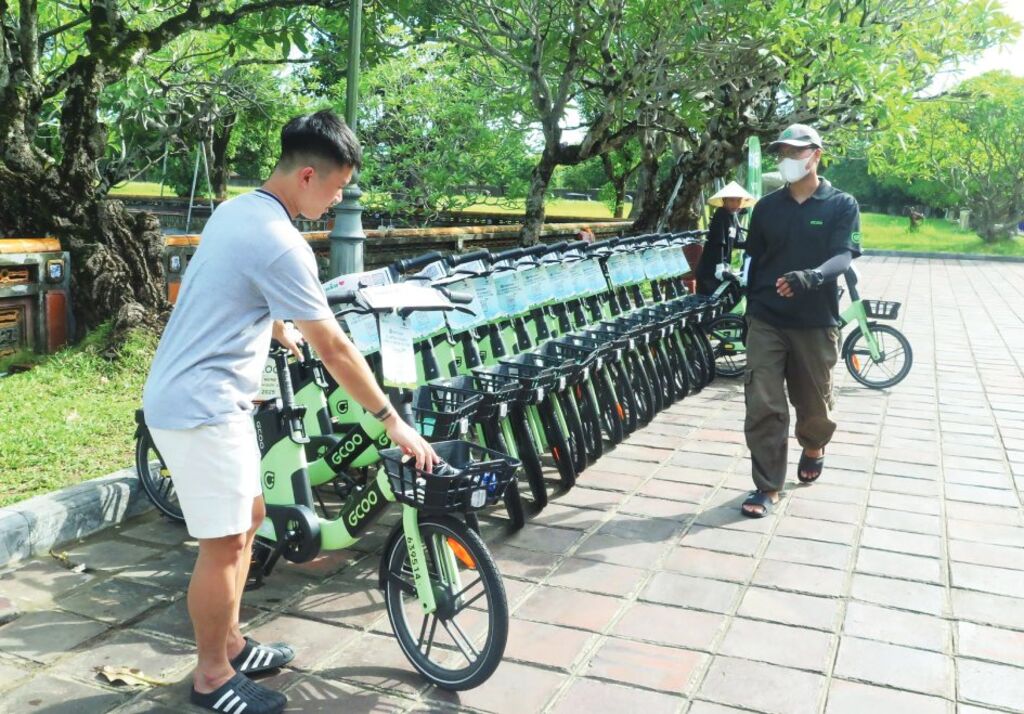 |
| Many residents also use public bicycle rental services, a new and environmentally friendly form of urban transport__Photo: Nguyen Ly/VNA |
Green transition roadmap and key solutions towards sustainable development in Vietnam
Green transition roadmap
To achieve net-zero emissions by 2050, Vietnam needs to draw a comprehensive and phased green transition roadmap, aligned with its socio-economic conditions at each stage of development. This process calls for a balanced combination of policy frameworks, technological innovation, financial resources and active participation from society as a whole.
Up to 2030, priority should be given to completing the legal framework to facilitate the operation of a green economy. This includes the issuance and synchronised implementation of policies on the circular economy, green finance, green credit and the green bond market, alongside the development of a standardised carbon accounting system.
Government Decree 06 of 2022 on greenhouse gas reduction and ozone layer protection, has laid an initial legal foundation for the carbon credit market. However, further refinement of domestic market mechanisms and stronger integration with international markets will be required in the coming period.
At the same time, investment in renewable energy, particularly wind, solar and biomass power, should be accelerated, alongside the development of green infrastructure, sustainable urban areas and environmentally friendly mass transit. Tax and credit policies promoting investment in clean technologies and renewable energy should be expanded to facilitate stronger private sector engagement.
In the medium term, from 2030 to 2045, focus should shift to restructuring industries and the broader economy towards low emissions and higher technological content. Traditional heavy industries, such as steel, cement and chemicals, will need to adopt cleaner production processes, advanced technologies and renewable energy sources.
Meanwhile, the digital economy, circular economy and smart agriculture are expected to emerge as key growth drivers. The application of digital technologies and artificial intelligence in energy management, green supply chains and climate-resilient agriculture will help improve efficiency while reducing environmental impact. Innovation centres and hi-tech parks powered by clean energy should be further developed to support this transformation.
In the long term, by 2050, the goal is to establish a fully developed green economy ecosystem. Clean energy is expected to account for over 80 per cent of total output, while industries operate on low-carbon technologies, smart urban systems are fully developed, and green transport becomes the dominant mode. This ecosystem must also be accompanied by the development of a green consumption society, where lifestyles and behaviours prioritise energy efficiency, plastic waste reduction and environmentally friendly products. This will be a decisive stage for Vietnam to fulfil its net-zero commitment.
Key solutions to promote green transition
In the current context of national development, several priority solutions should be implemented to accelerate green transition towards sustainable development.
First, the institutional and policy framework should continue to be improved, with a view to developing a comprehensive green transition ecosystem and strengthening coordination among stakeholders. Consideration should be given to adopting a Politburo resolution on green transition. Relevant objectives should be integrated into socio-economic development strategies, master plans and plans across all sectors and localities, with effective implementation in practice.
Second, awareness and behavioural change must be strengthened. Green transition should be associated with cultural values and social norms, becoming a defining feature of a modern society. Greater emphasis should be placed on education and communication to raise awareness among students and the wider public, while promoting home-based green lifestyles.
For businesses, green brand development should become a core operational principle rather than merely a matter of corporate responsibility. Appropriate tax and investment incentives should be introduced to encourage enterprises to adopt green technologies and implement environmentally beneficial projects.
Third, financial mechanisms should be enhanced through the establishment of dedicated support funds for renewable energy, green technology and waste reduction. A Green Development Fund could also be launched to provide guarantees for viable green projects, thereby building up investor confidence.
At the same time, greater investment in human resources is required, including research and development, international cooperation and participation in national programmes on productivity, technology innovation and product development. Training in green skills and governance capacity should also be prioritised.
Fourth, sector-specific priorities must be clearly defined to ensure effective implementation. In the energy sector, this includes developing a robust legal framework for green fuels such as hydrogen, ammonia and biofuels, and promoting renewable energy use through innovative models such as Build-Lease-Transfer model, enabling businesses to access clean electricity at lower cost[6].
Environmental management standards should be clarified, while hotspots of pollution, particularly air and water pollution, must be addressed. Efforts should also focus on expanding clean public transport, developing electric vehicle manufacture.
Urban planning and development should follow smart, modern and climate-resilient approaches, including reviewing urban technical infrastructure such as wastewater treatment systems, waste management, lighting and green spaces. In agriculture, large-scale green production models should be developed, building on land consolidation and modern farming practices, while piloting new technologies in crop and livestock production and product processing.
Fifth, the “dual transition” approach, combining digital transformation and green transition, should be implemented in a consistent and coordinated manner. Both should be placed at the centre of national development strategies. Digital transformation and green transition should be recognised as key objectives, orientations and development trends for the country, and as pathways towards national prosperity.
It is essential to foster a spirit of innovation, creativity and willingness to take risks in exploring new solutions and methods for practical application, while integrating digital transformation and green transition into socio-economic development. Mechanisms should be introduced to encourage enterprises, particularly start-ups, to participate in digital transformation and green transition on the basis of accepting and managing risks.
In conclusion, the green transition roadmap in Vietnam should be implemented in a phased but flexible manner, combining short-, medium- and long-term goals. While each stage has distinct objectives, all are directed towards building a low-carbon, modern, sustainable and competitive economy. This is not only an urgent requirement but also a strategic choice for the country in ensuring sustainable development, energy security and environmental protection.-
[1] The Vietnamese version of this article is published on the Communist Review on April 2, 2026.
[2] See: Lan Anh, “Renewable energy accounted for 16 per cent of total system’s electricity output in the first quarter of 2025”, Vietnam Clean Energy Magazine (online), April 4, 2025, available at: https://nangluongsachvietnam.vn/d6/vi_VN/news/Quy-I2025-nang-luong-tai-tao-chiem-16-tong-san-luong-dien-toan-he-thong-6-8-28130.
[3] See: La Hong Ky, “Current status and solutions for rooftop solar power development”, Environmental Magazine (online), April 16, 2024, available at: https://tapchimoitruong.vn/chuyen-muc-3/hien-trang-va-giai-phap-phat-trien-dien-mat-troi-mai-nha-29881.
[4] See: Thu Huyen, “Highlights of Vietnam’s organic agriculture in 2025”, Vietnam Organic Agriculture Magazine (online), available at: https://nongnghiephuuco.vn/nhung-dau-an-cua-nong-nghiep-huu-co-viet-nam-nam-2025-10945.html.
[5] See: Anh Minh, “Urgently removing institutional bottlenecks to promote green credit and green bonds”, Government Online Newspaper, April 3, 2024, available at: https://baochinhphu.vn/khan-truonggo-vuong-ve-co-che-de-phat-trien-tin-dung-xanh-trai-phieu-xanh-102240403163357905.htm.
[6] See: Phan Thi Song Thuong and Nguyen Tat Truong, “Some issues in the development of renewable energy in Việt Nam: Current situation, potential and policy implications”, Communist Review (online), March 28, 2024, available at: https://www.tapchicongsan.org.vn/web/guest/nghien-cu/-/2018/906102/mot-so-van-de-ve-phat-trien-nang-luong-tai-tao-o-viet-nam-hien-nay--thuc-trang,-tiem-nang-va-ham-y-giai-phap.aspx