 |
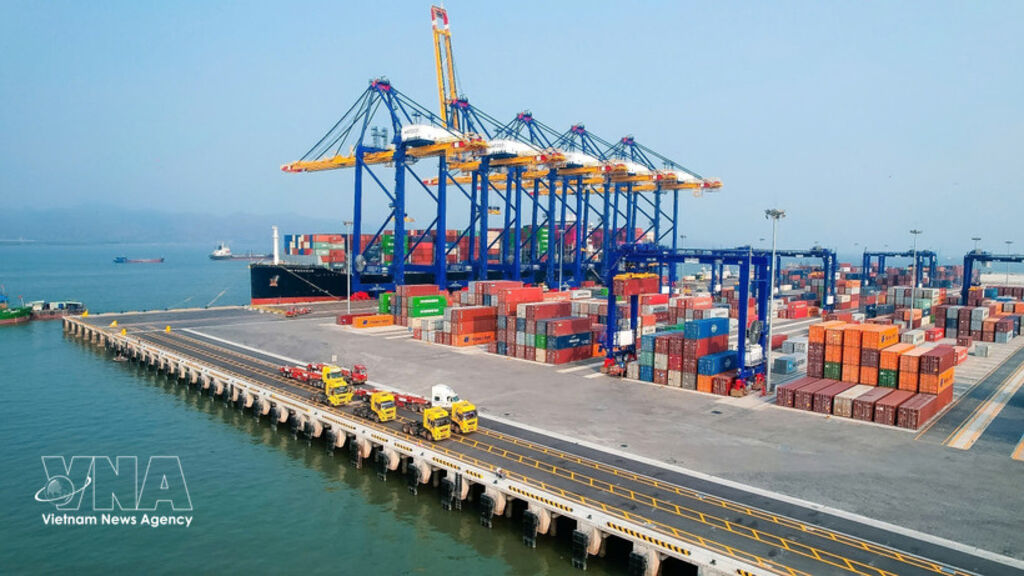
| Import-export activities at Lach Huyen international port in Hai Phong__Photo: VNA |
Impacts from rising tensions in the Middle East have quickly reached Vietnam’s import–export activities, placing businesses under pressure to adapt in order to maintain orders and market share. In this context, identifying logistics bottlenecks and strengthening coordination among enterprises, authorities and industry associations has become essential to mitigating risks and stabilising supply chains.
According to Truong Xuan Trung, Trade Counsellor of Vietnam in the UAE, the Middle East serves not only as a consumption market but also as a key global transhipment hub, meaning instability in the region creates ripple effects across intercontinental transport networks. Shipping route adjustments and airspace restrictions have lengthened transit times, increased costs and disrupted delivery schedules, with some Vietnamese shipments forced to reroute or seek alternative markets.
From a logistics perspective, Tran Chi Dung, General Secretary of the Vietnam Logistics Business Association, described the Middle East conflict as the next major shock to global logistics after the pandemic, with higher uncertainty due to security risks. Shipping lines have imposed additional surcharges and altered routes, extending delivery times by 10–14 days or more and creating dual pressure on costs and contractual commitments.
In practice, logistics costs in some localities such as Gia Lai have risen by 15–25% due to higher fuel, insurance and transport surcharges. Detours around the Cape of Good Hope instead of traditional routes have significantly prolonged transit times, increasing warehousing expenses and contractual risks while affecting sectors including coffee, wood products and textiles.
Nguyen Tuan Viet, CEO of VIETGO, noted that disruptions along the Suez Canal route have in some cases doubled shipping times, while sea freight rates have surged two to threefold, posing particular challenges for fresh agricultural exports. Nevertheless, some firms have adapted by handling goods flexibly at transhipment hubs or partially selling products in intermediary markets to minimise risks, while negotiating freight rates when vessels operate below capacity.
Experts stressed that current responses remain largely short-term. They highlighted three key priorities: developing alternative transport scenarios, accelerating supply chain digitalisation and diversifying markets to enhance resilience. The Ministry of Industry and Trade has launched a logistics development plan through 2035 with a vision to 2050, focusing on integrated services, digital transformation and green logistics to improve competitiveness.
Meanwhile, localities such as Hai Phong and Ho Chi Minh City are promoting logistics infrastructure, data systems and workforce development to deepen participation in global supply chains. However, Vietnam’s logistics costs remain high, domestic firms still operate mainly in low-value segments, and dependence on international carriers persists.
Experts noted that businesses face both immediate pressures - rising costs and transport disruptions - and structural challenges related to supply chain governance and risk forecasting capacity. Addressing logistics issues therefore requires a long-term approach tied to supply chain restructuring, stronger risk management and technology investment, alongside continued institutional and infrastructure improvements.
They held that amid growing geopolitical uncertainties, logistics is increasingly becoming a decisive factor in competitiveness, shaping not only businesses’ ability to weather short-term shocks but also Vietnam’s long-term position in global supply chains.- (VNA/VLLF)