 |
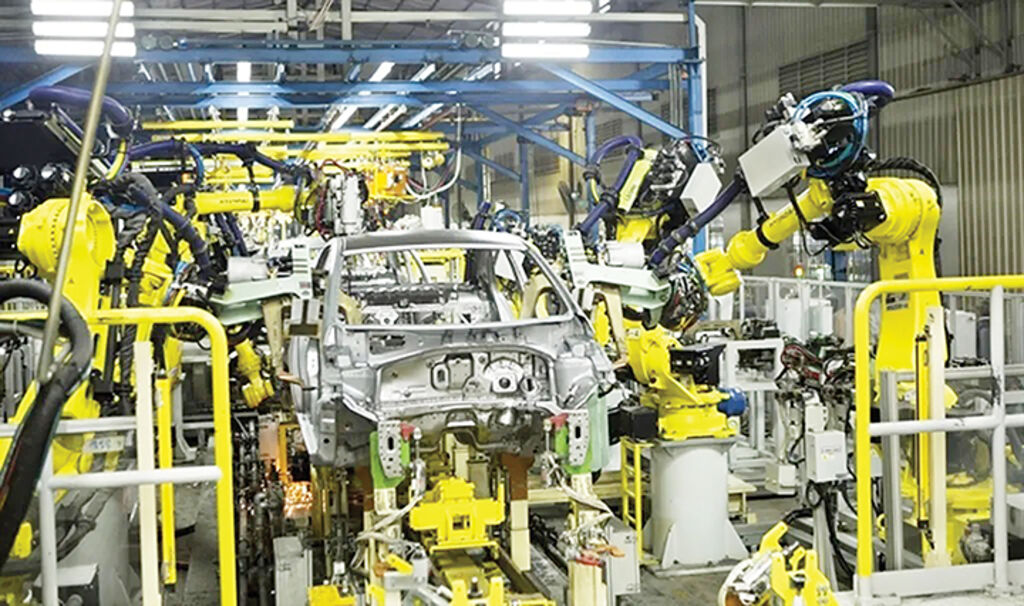
| The automobile manufacturing line at the Hyundai Thanh Cong plant is equipped with an automated robotic welding system transferred from the Hyundai Motor Group of the Republic of Korea__Photo: Van Xuyen/VNA |
Effective as of April 1 this year, the 2025 Law Revising the Law on Technology Transfer (the Law) marks a significant step in completing the legal framework for the transfer, application and commercialisation of technologies.
Compared with its 2017 predecessor, the Law amends 20 articles, adds one while annulling nine articles and three clauses. It focuses on expanding the scope of transferable technologies, improving domestic technological capacity through technology transfer, and developing a science and technology market that operates in a more professional and transparent manner. The Law also introduces new policies on providing higher financial, institutional and legal incentives for technology transfer, tightening of oversight of cross-border transfers so as to safeguard technological security, and strengthening of the state management of technology transfer.
Raising domestic technological capacity through technology transfer
One of the most notable provisions of the Law is the expansion of the scope of transferable technologies. Accordingly, technologies eligible for transfer are no longer merely machinery and equipment, but now include data, designs, models and algorithms. This approach reflects current development trends, in which economic value is increasingly driven by intangible assets, digital solutions and innovative models.
Forms of technology transfer are also specified, namely transfer of technological documents, quality management processes, and relevant technical standards and specifications, thereby providing a more comprehensive legal basis for technology transactions in practice.
The Law further supplements the groups of technologies prioritised for transfer, including high technologies, strategic technologies, advanced technologies, new technologies, clean and green technologies, as well as technologies serving nationally important projects, key projects, or national defence and security tasks.
Advanced, new, clean and green technologies that are suitable to the country’s socio-economic conditions and capable of generating new products or services are encouraged to be transferred from abroad into Vietnam. The import, adaptation and mastery of high, strategic, advanced, clean and green technologies must serve the objectives set out in national, sectoral, regional and local socio-economic development strategies, master plans and development plans.
The Law also lays strong emphasis on the requirement to master and further improve transferred technologies. Technology transferees are entitled to develop and use transferred technologies in accordance with the intellectual property law and relevant regulations. This is expected to increase the effectiveness of technology transfer while addressing the growing concern of acquiring technologies without building and strengthening internal capabilities.
Incentives for technology transfer
The Law allows organisations and individuals that lawfully own technologies to contribute them as capital to investment projects or enterprises, and may commercialise such technologies in accordance with the laws on science, technology and innovation, intellectual property, management and use of public assets, and enterprises.
For investment projects that involve the use of state capital, technologies used as capital contributions must be subject to price valuation under the law on price and the lawful ownership or use rights over such technologies must be verified before the capital contribution is made.
Technology transfer from Vietnam to abroad is also promoted. Those engaged in such activity will receive a support to cover trade promotion expenses.
Meanwhile, the State attaches importance to transferring advanced, high and strategic technologies from foreign-invested enterprises to domestic ones. The State will give priority to the application of investment, taxation, land and credit incentives, etc., for foreign-invested projects that have plans on technology transfer, workforce training, and improvement of capacity for technology research, development, manufacturing and application in Vietnam.
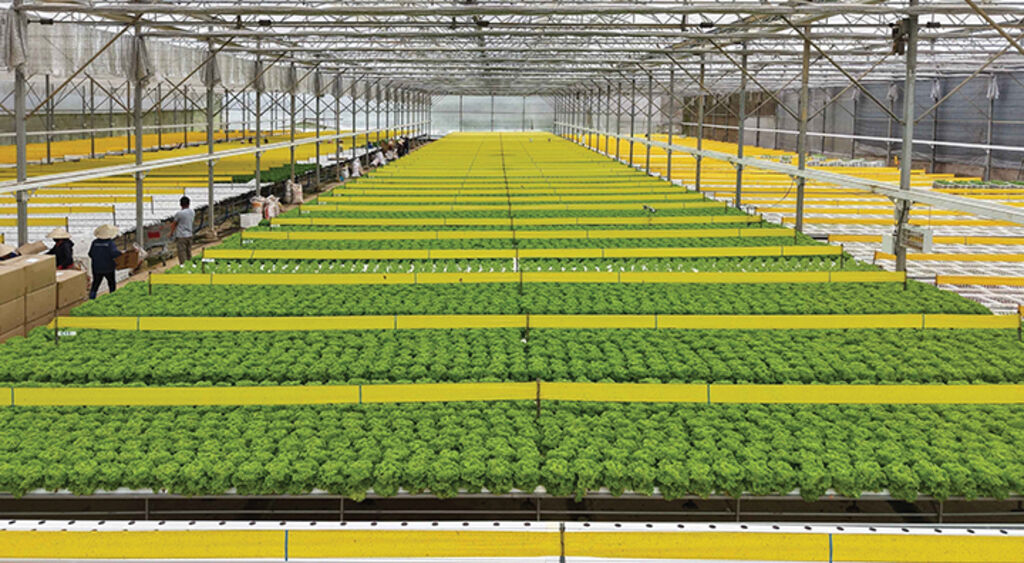 |
| Advanced technologies are applied in greenhouse vegetable cultivation at Langbiang Farm Co., Ltd. in Lam Dong province__Photo: Hoang Hieu/VNA |
The State will also prioritise the procurement of ownership or use rights over technologies for national defence and security, education, healthcare, environmental protection, and disaster and epidemic prevention purposes. The procurement must comply with the regulations on intellectual property rights, and ensure the transparent and efficient use of state budget funds.
The State will facilitate technology popularization via such mechanisms as free-of-charge provision, provision of incentives or conditional licensing, while promoting the cooperation for technology development in order to build capabilities for Vietnamese organisations and enterprises.
Technological innovation support will be further provided through the National Technology Innovation Fund and other central and local science, technology and innovation development funds.
Enhancing the state management effectiveness
The Law adds provisions on technology appraisal procedures applicable to investment projects, particularly those involving the use of technologies subject to transfer restrictions or those likely to exert adverse environmental impacts. Responsibility for appraising and licensing technology transfer is now assigned to provincial-level People’s Committees rather than line ministries, thereby reducing formalities for project commissioning.
Inspection, supervision and evaluation of technology transfer activities funded by the state budget will also be strengthened. The Law promotes the disclosure of technology transfer information on the national digital platform for science, Technology and innovation management.
The State will develop a network of technology consultancy, appraisal and assessment organisations, innovation centres, start-up support centres, and science and technology exchanges. These entities are expected to play an important role in linking supply and demand, and helping businesses, particularly small- and medium-sized enterprises, cooperatives and business households, access and effectively apply technology.- (VLLF)