 |
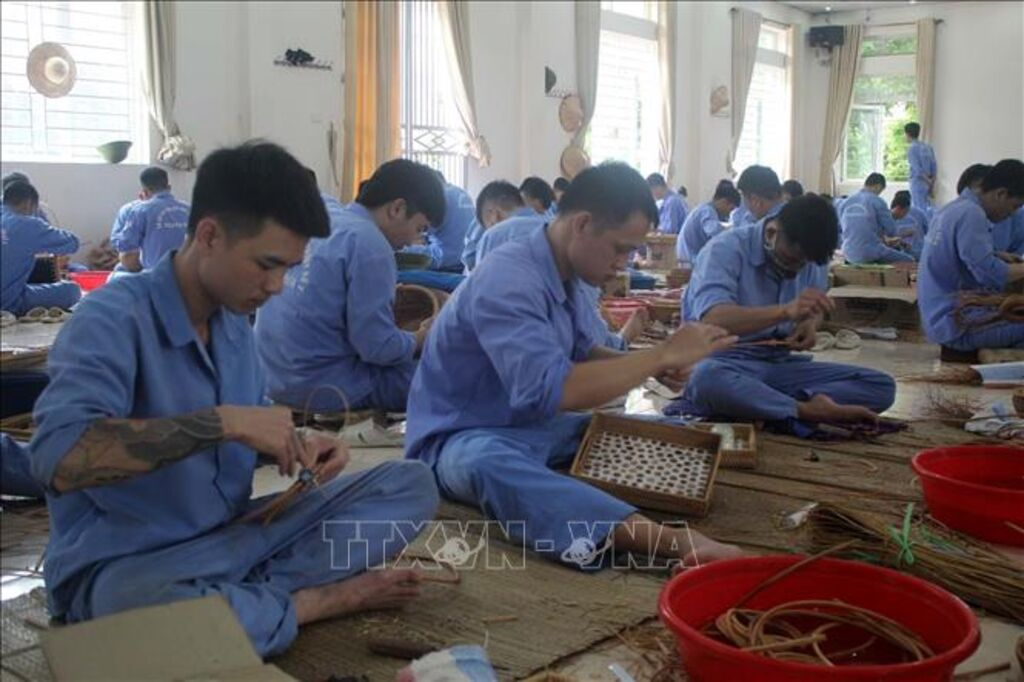
| Drug addicts undergoing rehabilitation receive vocational training__Photo: Nguyen Nam/VNA |
Almost 3,900 sessions on the dissemination of the law on drug prevention and control, drawing more than 420,000 participants, have been held across Thai Nguyen province since early 2026 as part of sweeping grassroots anti-drug efforts, the provincial Department of Public Security has reported.
Working in close coordination with the provincial Party Committee, provincial authorities and mass organisations, the department has mobilised local residents through precise technological, cultural and administrative mechanisms to prevent and report drug-related crimes. Rather than relying on generic public awareness drives, commune-level public security forces have tailored their interventions to specific geographical realities across the province.
Using digital platforms in anti-drug practices combat
Digital integration forms a central pillar of this operational approach, particularly among the youth. Police across all 92 communes and wards maintain official Facebook and Zalo fanpages to publish information on emerging methods of drug crime, explicitly warning adolescents and parents about synthetic narcotics disguised as e-cigarettes, food products and beverages.
Furthermore, local police actively instruct citizens on using the national electronic identification application, VNeID. By utilising the platform’s dedicated security and order reporting feature, residents can securely and confidentially transmit information on drug trafficking and organised drug abuse directly to public security offices. To reinforce these online efforts, the police have also launched a digital video-creation contest on drug prevention, encouraging citizens to produce accessible visual content that illustrates the legal consequences of drugs and promotes healthy lifestyles.
Culturally tailored outreach in mountainous communities
In mountainous and remote areas where digital access is difficult, public security officers substitute online outreach with face-to-face engagement designed around local customs. During village meetings in Mo Ba hamlet in Quang Son commune, the police conduct direct briefings for the H’Mong ethnic minority community, clarifying the prohibitions against cultivating narcotic-bearing plants and outlining citizens' legal obligations to report violations.
Instead of relying solely on legal texts, designated briefers pair spoken instruction with theatrical skits, cultural performances and visual aids to ensure complex legal frameworks are easily understood. Similarly, interactive legal knowledge contests in communes such as Xuan Duong have drawn hundreds of villagers to test their grasping of the law on drug prevention and control and criminal modus operandi. The contests are organised through practical, scenario-based exercises, alongside traditional public address loudspeaker broadcasts scheduled during peak household hours.
Self-governing models and post-rehabilitation support
Administrative accountability is further reinforced through structured self-governing community models embedded within families, schools and communities. In Phu Luong commune, the "Drug-free Hoang Clan" model leverages traditional familial authority to educate younger generations on law compliance and monitor social behaviour.
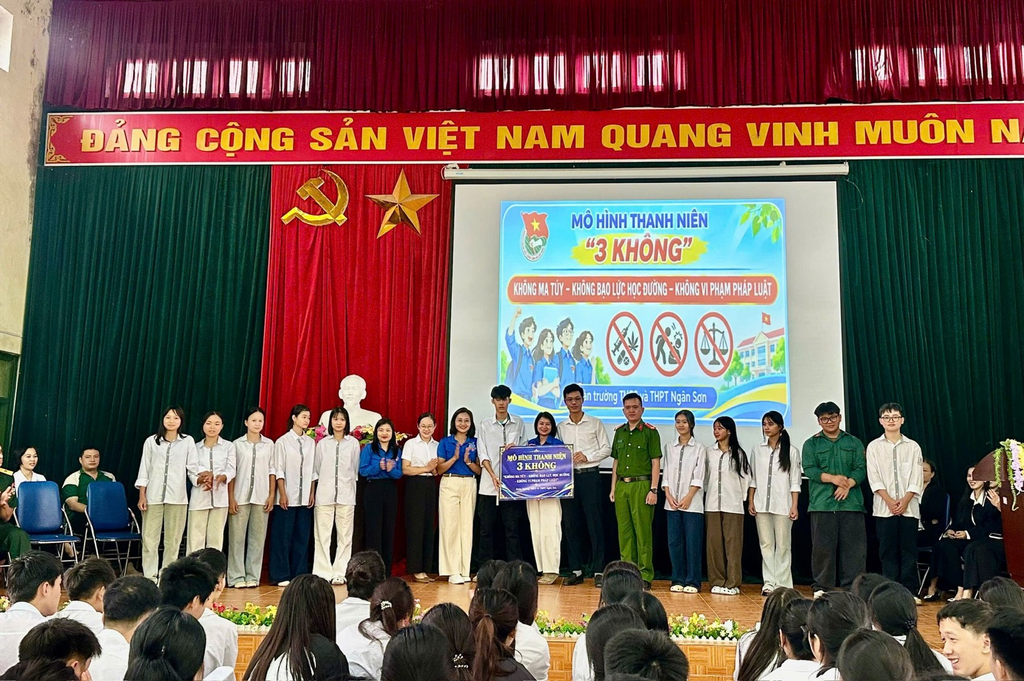 |
| The “Three-No Youth” model in Ngan Son commune__Photo: https://bocongan.gov.vn/ |
Meanwhile, Ngan Son commune has introduced the “Three-No Youth” model that targets saying no to drug, saying no to school violence and saying no to law violation.
For its part, Bang Van commune operates a “Drug-free youth union unit” in Thong Nhat hamlet, and Trung Thanh ward maintains a “Drug-free residential group.”
Education institutions complement these community networks, such as safe hamlet models and inter-family security teams, by signing emulation pledges for drug-free schools and establishing peer-support clubs like “Friends helping friends” and “Youth with the law” to detect early behavioural indicators of drug use among students.
Beyond deterrence and crime detection, the public security forces maintain a structured focus on drug rehabilitation and relapse reduction. In Thuong Quan commune, the local police conduct regular home visits and provide ongoing support for people who have undergone rehabilitation. Through synchronised coordination between public security forces, family members and mass organisations, the drug addicts receive the encouragement necessary to resist relapse and secure stable livelihoods.- (VLLF)