 |
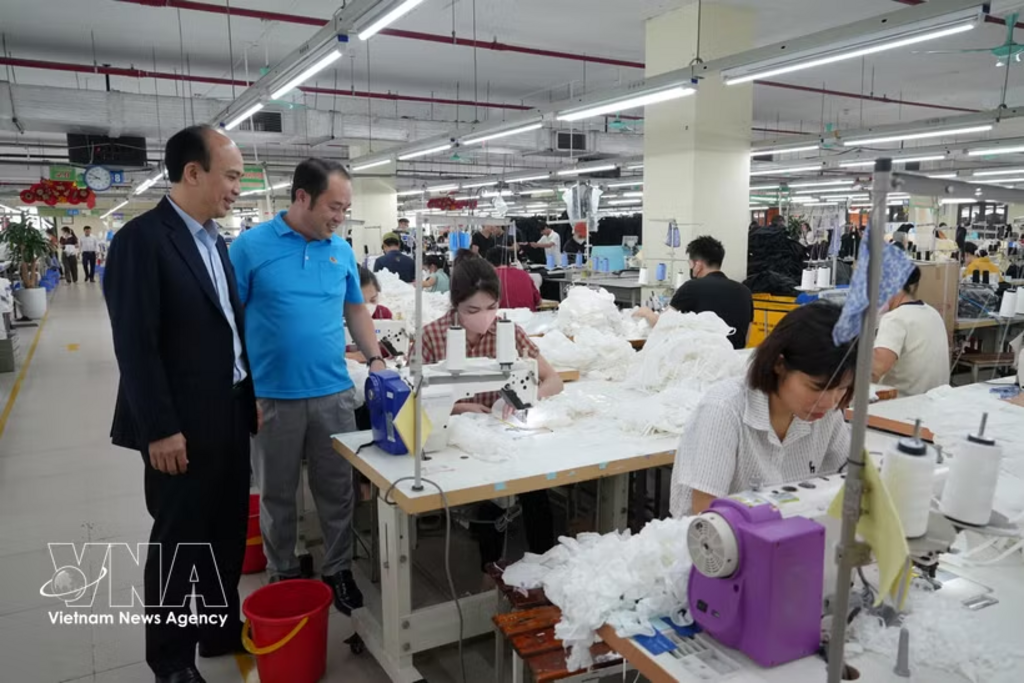
| Illustrative image__Photo: VNA |
With the Politburo’s Resolution 68-NQ/TW on private economic sector development opening the door for both the private economy and overseas Vietnamese resources, the next task is to ensure that the door is genuinely easy to enter, with clear procedures, professional support mechanisms and a sufficiently transparent legal environment for investors to see a long-term path ahead, according to Nguyen Quynh Lan, former official at the Export Development Canada (EDC) and current Vice Chairwoman of the Canada-Vietnam Trade Council.
Speaking to Vietnam News Agency correspondents in Canada, she said Resolution 68-NQ/TW has sent an important signal regarding development thinking. What is particularly notable is not merely the introduction of additional support policies for businesses, but the clearer recognition of the sector as a force that should be protected, accompanied and enabled to develop sustainably.
Drawing on her experience at the EDC, Lan noted that Canada builds trust with international investors not only through tax incentives but also through the consistency and predictability of its legal environment. This is also what Canadian investors often look for when considering the Vietnamese market. Resolution 68-NQ/TW has begun addressing such concerns through stronger political commitments to protecting property rights, ensuring contract enforcement and clearly distinguishing criminal responsibility from administrative responsibility.
From the perspective of the Canada-Vietnam Trade Council, Lan observed that this shift is already reflected in the quality of discussions with Canadian partners. Whereas previous conversations largely focused on risks, policy stability and concerns about investing in Vietnam, current discussions are increasingly centred on concrete opportunities. Areas attracting particular interest include the green economy, financial technology, high-tech agriculture and high-value technology sectors. According to her, this represents a qualitative shift rather than simply numerical indicators.
She said Vietnam’s private sector should seize the current moment to “leapfrog” technologically, rather than following the linear industrialisation path taken by earlier developed economies. Instead, Vietnam could move directly into high-value sectors such as applied artificial intelligence, financial technology, smart agriculture and the digital economy. These are fields in which Vietnam has strong potential and where the Vietnamese expert community in Canada can make meaningful contributions.
There are currently many Vietnamese IT specialists working in technology corporations, banks, start-ups and innovation ecosystems across Canada. With appropriate mechanisms in place, this workforce could become a technology bridge, helping Vietnamese enterprises access management expertise, technical solutions, international standards and partnership networks in North America.
However, she stressed that overseas Vietnamese should be regarded as strategic partners rather than merely a source of remittances. Once they are viewed as technical, commercial and intellectual partners, Vietnam can develop mechanisms enabling them to participate more deeply in policy co-design, from drafting regulations and piloting models to connecting domestic enterprises with international markets.
Based on these realities, she proposed three recommendations. First, Vietnam could establish a specialised “Trade Desk” dedicated to overseas Vietnamese. Second, technology should be prioritised as the initial “launch pad” for mobilising overseas Vietnamese resources. Compared with sectors requiring land, factories or substantial credit capital, technology is an area where the group can contribute more quickly and with fewer barriers. Third, Vietnam could study Canada’s “Soft Landing” model for supporting foreign businesses entering the market. Such programmes typically provide mentoring, workspace, initial support and links with local partners, enabling businesses to test the market before making major investment commitments.
Lan concluded that when policies are implemented consistently and supported by concrete connection mechanisms, the financial, technological, intellectual and network resources of the Vietnamese community in Canada could become an important part of Vietnam’s development process.- (VNA/VLLF)