 |
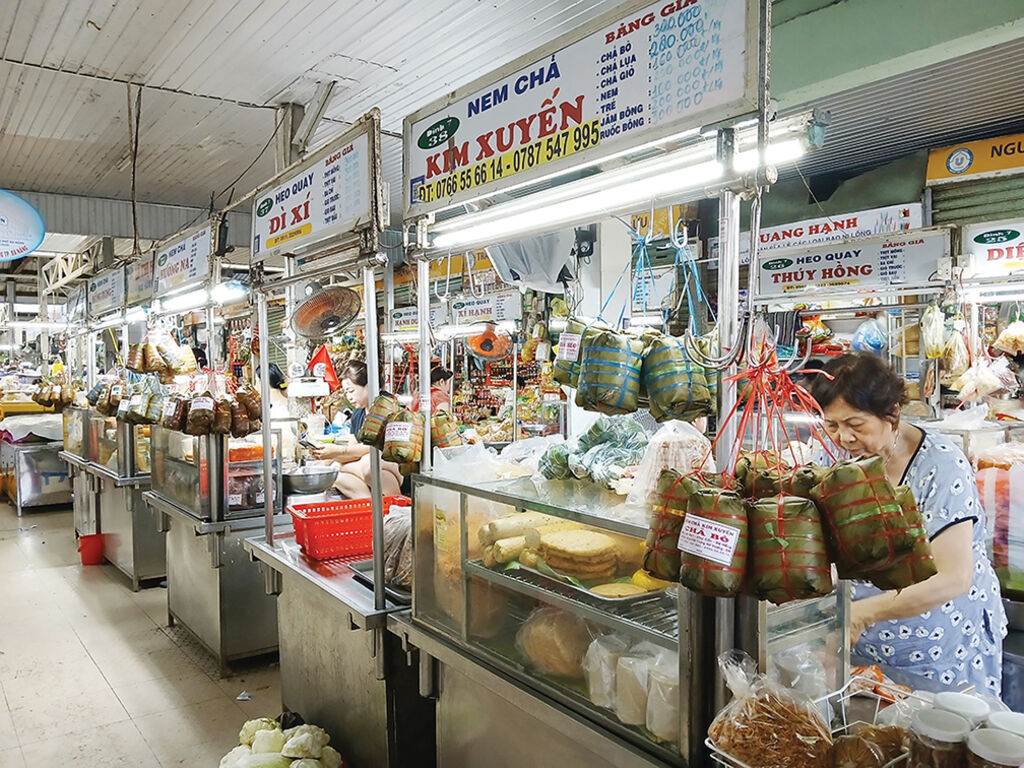
| Pre-processed and ready-to-eat food is stored in glass display cabinets to ensure food safety and hygiene__Photo: My Ha/VNA |
The suspension of Government Decree 46 on food safety has eased congestion at ports and border gates, but it has also posed deeper challenges in policy design. While strengthening food safety remains essential, recent developments highlight the need to better align regulations with business realities.
Challenges in the implementation of Decree 46
In response to increasingly serious violations of food safety regulations, including cases involving counterfeit and substandard goods, the Government issued two legal instruments in January concerning state management in this field. These include Decree 46/2026/ND-CP dated January 26, 2026, detailing and guiding the implementation of several articles of the Law on Food Safety (Decree 46), and Resolution 66.13/2026/NQ-CP dated January 27, 2026, on the declaration and registration of food products (Resolution 66.13).
The purpose of these two documents was clear and undisputed: to improve the legal framework, strengthen the effectiveness of state management of food safety, protect consumer rights, and create a foundation for the sustainable development of food production and trading activities.
However, shortly after the two documents took effect, goods began to accumulate at ports and border gates. According to preliminary surveys conducted by four trade associations operating in the agro-forestry-fisheries sector, approximately 123,400 tonnes of imported packaged food, raw materials, packaging and food additives were backlogged at ports and border checkpoints. Prior to this, nearly 300,000 tonnes of farm produce and fresh food had experienced similar delays.
The reason was quite simple. Compared with the previous framework under Decree 15/2018/ND-CP (Decree 15), Decree 46 expands the scope of pre-clearance inspection. Not only imported finished food products but also raw materials, food additives and packaging used for internal production are subject to pre-clearance inspection and required to undergo conformity declaration procedures. Inspection procedures are also revised. Instead of primarily reviewing documentation, the new process requires documentation review combined with sampling and laboratory testing.
Meanwhile, Resolution 66.13 introduces additional documentation requirements. Certificates issued by international laboratories are no longer recognised for specific procedures. Notably, some nutritional products for children under 36 months of age are required to obtain two circulation licences.
To deal with the situation, on February 4, the Government issued Resolution 09/2026/NQ-CP, suspending the implementation of Decree 46 and Resolution 66.13 until April 15. During this suspension period, Decree 15 and guiding texts continue to apply.
Suggestions on policy design and implementation
Although the Government decided to postpone the implementation of Decree 46 until April 15, thereby providing businesses with additional time to prepare for the new requirements, recent developments have raised a broader question: how to balance state regulatory management with normal production and business operations.
In an article published in Phu nu Viet Nam newspaper, Pham Thi Ngoc Thuy, Director of the Office of the Private Sector Development Committee, identified three aspects which, in her view, require careful consideration in any revision of Decree 46.
Applying risk-based management and post-clearance inspection
According to Thuy, one of the primary causes of obstacles to implementing Decree 46 was the abrupt change in management approaches. Compared with Decree 15, both the number of product categories subject to inspection and the frequency of inspection increased significantly.
The shift of multiple product groups from post-clearance to pre-clearance inspection required greater implementation capacity in terms of infrastructure and personnel. It also affected enterprises, as goods had to wait between seven and 15 days for customs clearance.
Thuy stated that any revision of Decree 46 should reaffirm the role of post-clearance inspection and place market surveillance at the centre of regulatory efforts. Modern state management does not require the inspection of all goods but should apply a risk-based approach. In her view, revisions should consider mutual recognition mechanisms and reduced inspection regimes for enterprises with established compliance records, allowing regulatory resources to focus on higher-risk subjects.
Thuy’s views have received broad support from the business community.
Speaking at a consultation workshop on Decree 46 held on February 4, a representative of the Vietnam Chamber of Commerce and Industry (VCCI) stated that food safety management regulations such as Decree 46, Resolution 66.13 and the forthcoming Law on Food Safety should follow a risk-based and post-clearance management orientation, rather than applying inspections indiscriminately.
Specifically, policies should focus on high-risk points in the supply chain instead of widespread inspections. New procedures should only be introduced if they obviously demonstrate effectiveness in ensuring food safety, while avoiding disruption to supply chains or unnecessary cost increases for enterprises.
In addition, authorities should consider managing systems rather than individual products. This would require switching from a model of registration and testing for each product to comprehensive management along the entire food value chain, from farm to table. Such an approach would involve applying international standards such as HACCP, ISO and GMP, along with traceability systems and internal control procedures within enterprises.
Building a shared-use data system and strengthening interdisciplinary coordination
The second issue concerns the absence of an integrated data system and a coordinated implementation mechanism. Food safety management involves multiple ministries and local authorities, yet coordination remains fragmented.
Thuy noted that without a shared-use data system to monitor enterprises’ compliance histories, regulatory authorities face difficulties in making timely and accurate decisions. Hence, it is necessary to prioritise digitalisation of procedures and establish a unified coordination mechanism to reduce overlapped administrative layers.
Regarding this issue, VCCI recommended promoting digital transformation and data connectivity. Specifically, ministries and agencies should accelerate digitalisation efforts and develop a unified data system among regulatory authorities in order to enhance transparency, minimise overlapped procedures, and improve inspection effectiveness and food traceability.
Harmonising international standards
The third matter relates to the compatibility of domestic regulations with international standards. According to Thuy, enterprises have questioned why consignments that already meet internationally recognised standards such as ISO and HACCP must still undergo domestic food-safety procedures through manual processes.
Drawing on international experience, Hoang Thi Lien, Chairwoman of the Vietnam Pepper and Spice Association, along with other participants at the workshop, recommended broader recognition of international certifications such as HACCP, ISO, GMP and FSSC 22000 as important evidence of food safety compliance in order to avoid repeated licensing requirements.
Addressing the workshop, Dau Anh Tuan, Deputy Secretary-General and Head of the Legal Department of VCCI, emphasised that food safety is not merely a technical or sectoral management issue but a fundamental and strategic matter for public wellbeing and economic development. The quality and safety of food products directly affect the reputation and competitiveness of Vietnamese goods in international markets as well as the country’s ability to integrate more deeply into global supply chains.
“Food safety legislation affects the entire chain from production, processing and circulation to consumption. Therefore, any regulatory change must be considered with careful preparations, alongside an appropriate roadmap and clear implementation guidance to avoid disruption to enterprises,” Tuan said.- (VLLF)