 |
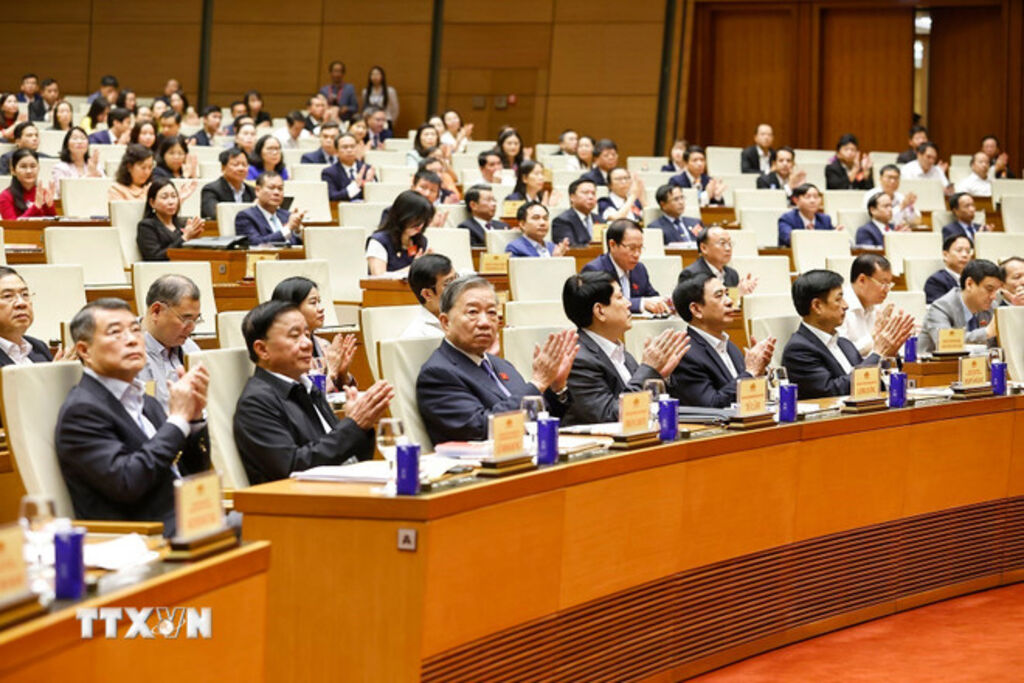
| Party General Secretary To Lam emphasised that the successful election provides a solid foundation for the state apparatus to enter a new phase of development__Photo: VNA |
The election of deputies to the 16th National Assembly (NA) for the 2026-31 tenure has concluded successfully, with results reflecting high voter participation, strict adherence to legal procedures and a continued emphasis on representative structure.
Held on March 15 across 182 constituencies nationwide, the election saw the participation of approximately 76 million voters, representing an exceptionally high turnout rate of around 99.7 per cent. This figure not only underscores citizens’ engagement in political life but also reaffirms public confidence in the electoral process.
Following the vote, the National Election Council officially announced the results on March 21, confirming that 500 deputies had been elected to the 16th NA from a total of 864 candidates. The outcome aligns with the planned structure and composition, ensuring representation across regions, social groups and professional sectors.
According to NA Chairman Tran Thanh Man, who also serves as Chairman of the National Election Council, the election was “a major national festival conducted in a democratic, equal, lawful, safe and substantive manner,” despite its unprecedented scale and complexity.
Balanced structure and inclusive representation
The composition of elected deputies reflects continued efforts to maintain balanced and inclusive representation. Women account for a significant proportion of elected representatives, while ethnic minorities and non-Party members are also represented in line with policies aimed at broadening participation in the country’s highest representative body.
The candidate pool demonstrates a combination of experience and renewal, with a large proportion of first-time candidates alongside re-elected deputies. More than 70 per cent of candidates stood for election for the first time, signalling a new generation of representatives expected to bring fresh perspectives and innovative thinking to the legislature.
The results also show steady progress in gender representation. Of the 500 deputies elected, women account for 30 per cent.
For the first time across 16 terms, candidates nominated by central authorities to stand for election in local constituencies recorded the highest success rate, with 214 out of 216 candidates elected. Among them, a significant number were senior female leaders. Prominent figures such as President of the Vietnam Fatherland Front Central Committee Bui Thi Minh Hoai and Deputy Prime Minister Pham Thi Thanh Tra were elected with high vote shares in their respective constituencies, demonstrating the credibility and practical capabilities of women within the political system.
Ethnic minority representation also reached a notable level. Of the 500 deputies elected, 76 are from ethnic minority groups, accounting for 15.2 per cent. This reflects a high level of trust among voters nationwide in candidates from ethnic minority communities. Notably, for the first time, the NA includes a representative from the O Du ethnic group, one of the smallest ethnic minorities in Vietnam, underscoring the commitment to ensuring that “no ethnic group is left behind”.
Results in key regions such as the Northwest, Central Highlands and Mekong Delta further demonstrate the improving quality of ethnic minority representation. For instance, in Dien Bien province, ethnic minority deputies account for as much as 42.85 per cent of NA’s representatives. The contingent of ethnic minority deputies not only ensures representation but also demonstrates strong professional qualifications, with the majority holding university and postgraduate degrees.
At the same time, the structure of deputies has been further improved. The proportion of part-time deputies holding concurrent positions in executive or judicial bodies has been reduced, while the number of full-time legislators has increased. The proportion of full-time deputies is projected at around 40 per cent, the highest to date.
Strengthening representation at all levels
At the provincial level, a total of 2,552 People’s Council deputies were elected nationwide, in line with statutory requirements. Women accounted for 758 deputies, or 29.7 per cent, marking a slight increase compared to the previous term. Meanwhile, young deputies under the age of 40 numbered 184, representing 7.21 per cent, while ethnic minority deputies accounted for 16.18 per cent.
The proportion of deputies with higher educational qualifications has also risen significantly, with 75.59 per cent holding postgraduate degrees, reflecting a notable improvement in professional capacity.
At the grassroots level, the election results further demonstrate broad-based representation. Nationwide, more than 72,000 commune-level People’s Council deputies were elected, with women accounting for 31.55 per cent, ethnic minorities 20.41 per cent, and young deputies 19.64 per cent.
Post-election responsibilities and expectations
In an article published following the announcement of the results, Party General Secretary To Lam emphasised that the successful election provides a solid foundation for the state apparatus to enter a new phase of development.
“The election is a victory of the people, but it also places great responsibilities on the shoulders of newly elected representatives,” he noted, stressing that deputies must represent not only their constituencies but also the will and aspirations of the entire people.
He described deputies as a vital bridge between the people and state institutions, entrusted with deciding on key national and local issues.
The Party chief called on each deputy to maintain close ties with voters and remain attentive to public opinion, noting that this is both a legal obligation and a moral responsibility. At the same time, he emphasised the need for integrity, accountability and a strong sense of public service.
Quoting President Ho Chi Minh, the Party chief underlined that deputies must always place national interests above personal gain and serve the people with dedication, resisting individualism and vested interests. Only by upholding these values, he stressed, can deputies fulfil the responsibilities entrusted to them by the people.-