 |
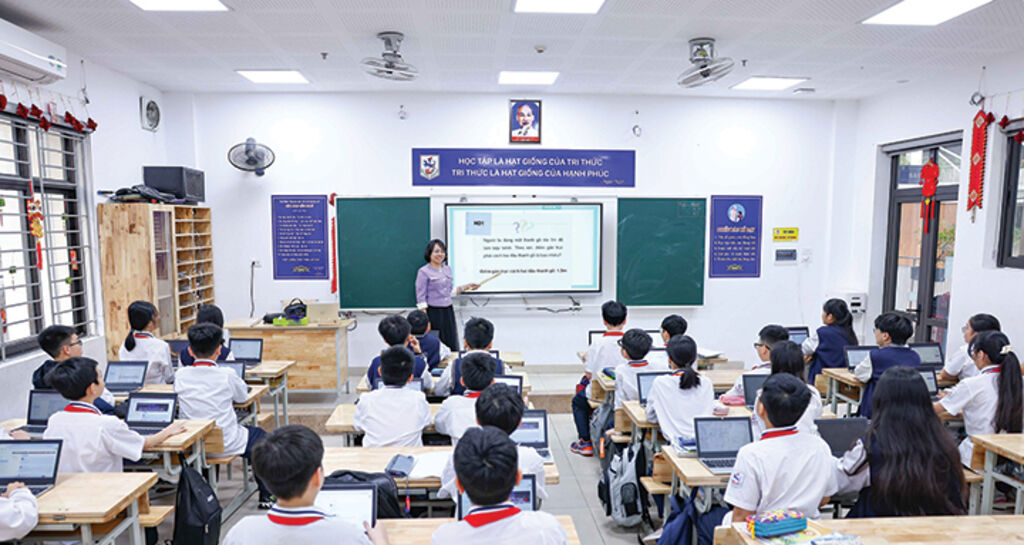
| A smart classroom at Giang Vo lower secondary school in Hanoi__Photo: Thanh Tung/VNA |
Effective on January 1 this year, the legislative package including the revised Education Law, the Law on Higher Education, and the Law on Vocational Education aims to strengthen the autonomy of education institutions while ensuring quality, effectiveness and accountability of the education sector.
Passed by the National Assembly in 2025, these laws directly institutionalise the Party’s policies and orientations on education and training, science, technology, innovation, digital transformation, and law-making reform.
By promoting decentralisation of authority, cutting red tape and streamlining organisational structures of education institutions, such laws are closely aligned with Vietnam’s two-tier local administration model. Ultimately, they are expected to create a coherent, modern legal framework for and improve the overall quality and competitiveness of the domestic education system.
Building a modern, flexible and internationally integrated education system
The Law Amending and Supplementing a Number of Articles of the Education Law lays a modern and flexible policy foundation for developing an open education system focused on substantive learning, genuine outcomes and international integration.
Under the law, the State will implement universal early childhood education for children aged three to six years, while primary and lower secondary education will become compulsory. This reinforces the State’s commitment to equal access to education for all.
To help ease the financial burden on families, the law officially enshrines tuition exemption for public school pupils and tuition support for those attending private or people-founded education institutions.
Digital transformation is given top priority through the building of a national education database and the recognition of digital diplomas and certificates as having the same legal validity as traditional paper documents.
The Law also expands scholarship policies for students studying high-technology and new-economy disciplines. It allows education institutions providing specialised arts training to teach the general education curriculum, thereby creating greater diversity and flexibility within the education system.
In addition, intensified decentralisation and delegation of authority from the National Assembly and the Government to the Ministry of Education and Training, provincial-level People’s Committees and education institutions are expected to improve the state management effectiveness while giving institutions greater autonomy.
Reforming the higher education governance
As per the Law on Higher Education, higher education institutions are granted greater autonomy to take the initiative in their academic and professional operations, while being held to stricter standards of accountability, transparency and effective governance.
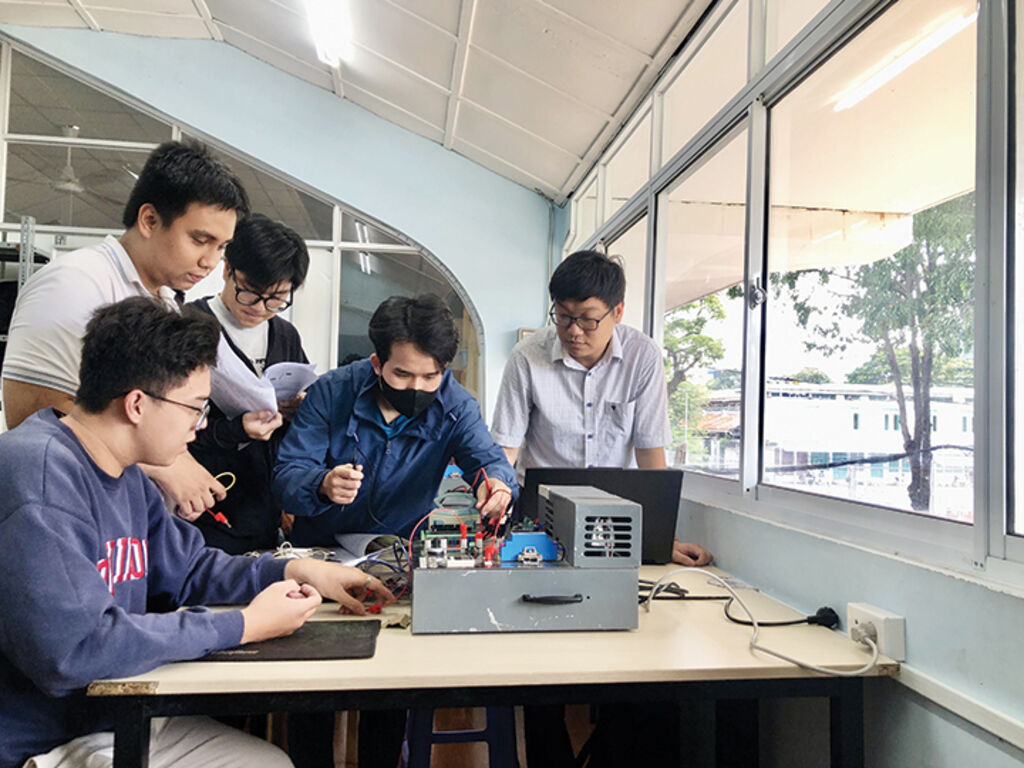 |
| Students at the University of Technology, Vietnam National University Ho Chi Minh City, practise applying high technology__Photo: My Phuong/VNA |
This new framework accords higher education institutions broad autonomous powers to determine enrolment quotas, select admission methods, organise training courses, formulate joint training programmes and award qualifications, provided that they meet quality assurance requirements. However, these autonomous powers do not apply to teacher training, national defence or security disciplines.
Institutions are also empowered to take the lead in scientific research, technological development and innovation, lawful exploitation of assets, resources and intellectual property, and international cooperation.
The law shifts the regulatory approach from the rigid “input control” to “standards-based management” and process supervision. This provides higher education institutions with greater flexibility in academic teaching and research, enabling them to align their outputs more efficiently with growing labour-market demands.
The legislation elevates the role of higher education in cultivating high-level human resources for science and technology, while establishing a robust legal basis for promoting the commercialisation of research and innovation outcomes.
Standardising the vocational education system
The Law on Vocational Education integrates the vocational secondary school model into the broader national system, creating clearer pathways between qualification levels to foster lifelong learning opportunities for all citizens.
Under Article 6, the vocational secondary education programme combines core upper-secondary education knowledge with practical work skills. This dual approach will enable learners to complete their secondary education while acquiring the hands-on capability to perform occupational tasks in stable work environments, apply modern technologies, and work effectively both independently and in teams.
The law also allows higher education institutions to offer vocational training in priority fields such as the arts, sports, teacher training, national defence and security.
Noteworthily, enterprises are now formally recognised as key partners in vocational education, serving as practical training venues and internship bases where students and lecturers can engage directly with real-world technologies and production lines. Enterprises participating directly or indirectly in vocational education will be entitled to preferential taxation, land access and human resource support policies.- (VLLF)