 |
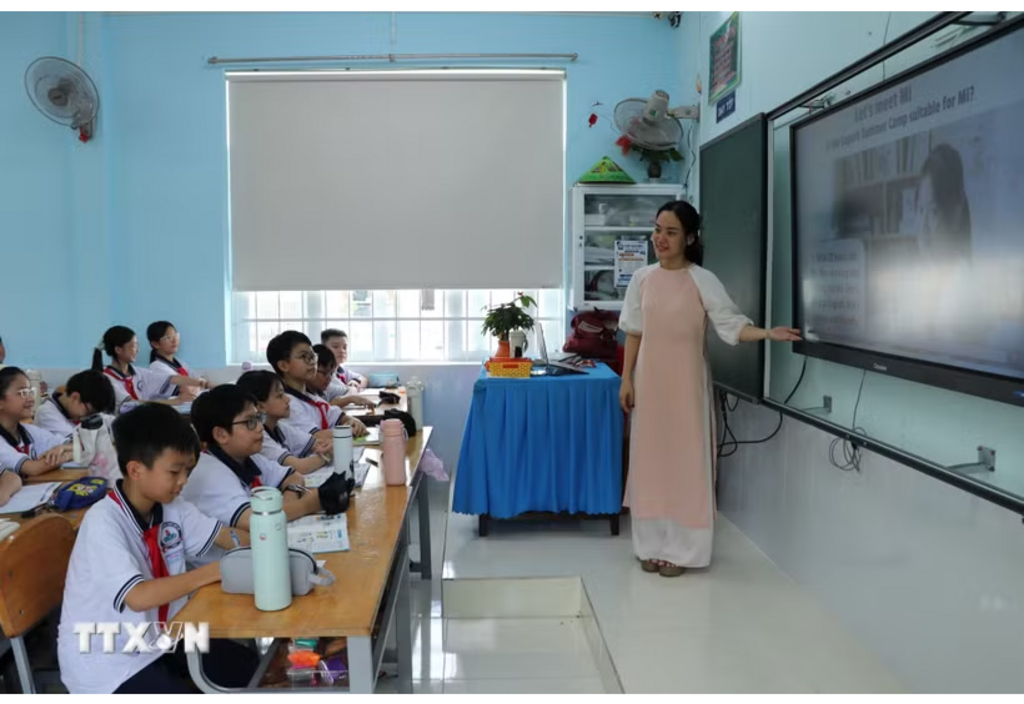
| Human rights education is included in existing curricula of the national education system__Photo: Huynh Son/VNA |
Deputy Prime Minister Phan Van Giang on November 13 signed Decision 2199/QD-TTg approving a scheme on human rights education in the nation’s new era of development through 2030, with a vision towards 2045.
Under the decision, the scheme is intended to create a fundamental shift in the entire political system and public awareness, responsibility and capacity to respect, ensure and protect human and citizens’ rights.
By 2030, all early childhood education institutions, general education schools, higher education institutions, vocational education institutions, academies, political schools and civil servant training centres will provide human rights and children’s rights education, which will be included in existing curricula in formats tailored to each educational level or training tier, alongside formal training for officials, civil servants, public employees, and the armed forces personnel.
Identifying human rights education as a long-term strategic task, the scheme places people at the centre as the subject, goal, and driving force of development. The scheme’s implementation will span two phases, starting with improving institutions, curricula, teaching materials, and consolidating staff for synchronised nationwide rollout between 2026 and 2030, before moving to modernise education and foster a society-wide culture of guaranteeing human rights from 2031 to 2045.
To achieve these targets, authorities will refine institutions and policies, renovate teaching methods, raise the capacity of teachers, lecturers and experts, boost scientific research and international cooperation, and promptly evaluate implementation results. Digital transformation also plays a pivotal role in developing online learning platforms and expanding public communication on mass media and social networks. These outreach efforts will equip citizens knowledge to verify information and identify disinformation, fake news, and online violations of human rights, while guaranteeing equal access to knowledge for ethnic minorities, people in remote areas, persons with disabilities, the elderly, and other vulnerable groups.
Effective implementation of this scheme will help promote the civic responsibility and support the building of the socialist rule-of-law State of Vietnam, thereby consolidating the social consensus towards a democratic, safe, humane and sustainably developed society.- (VLLF)