 |
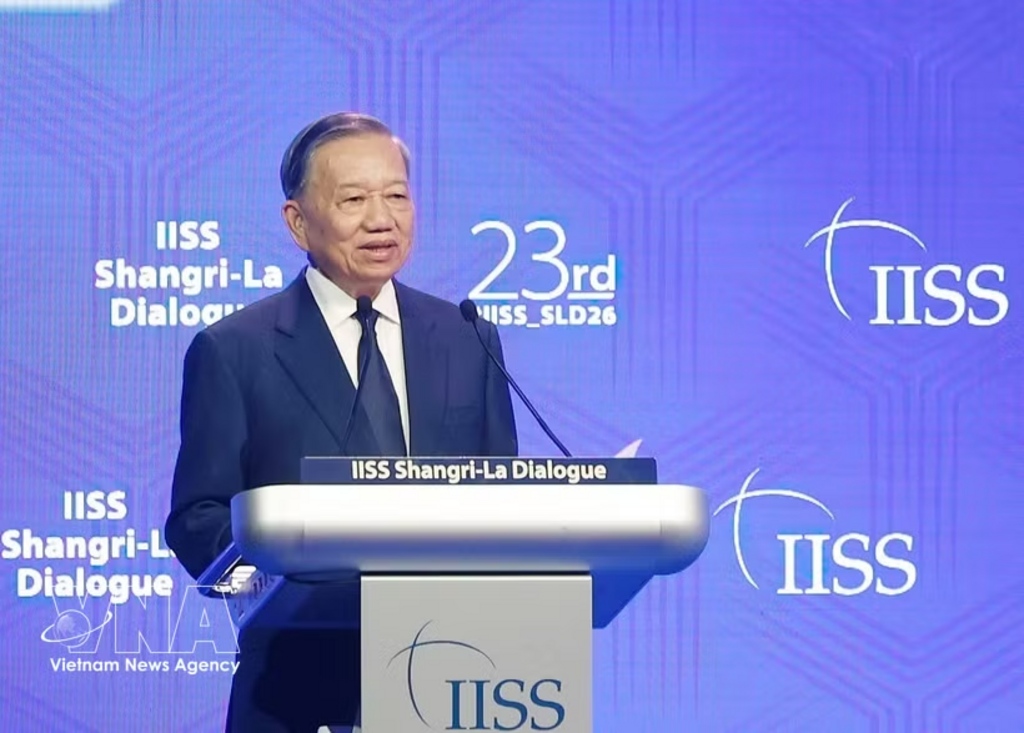
| General Secretary of the Communist Party of Vietnam Central Committee and President To Lam speaks at the 23rd Shangri-La Dialogue on May 29, 2026__Photo: VNA |
The keynote address delivered by General Secretary of the Communist Party of Vietnam Central Committee and President To Lam at the 23rd Shangri-La Dialogue on May 29 demonstrates a profound understanding of contemporary global challenges and their interconnected nature, while offering practical solutions to build trust, manage risks and promote international cooperation, SD Pradhan, former Chairman of India’s Joint Intelligence Committee and former Deputy National Security Adviser, has assessed.
Speaking to Vietnam News Agency correspondents in New Delhi, Pradhan noted that, drawing on his extensive experience in national security and international relations, as well as his deep knowledge of international law, the top Vietnamese leader identified three closely interrelated crises facing the world today: a crisis of the international order, a crisis of the development model, and a crisis of strategic trust.
According to Pradhan, these challenges are unfolding against a backdrop of declining effectiveness of multilateral institutions, intensifying and increasingly unrestrained strategic competition, and mounting pressures on the international legal order.
The former intelligence chief commended General Secretary and Presdent Lam’s pragmatic assessment that the Asia-Pacific region is not confronted with a choice between competition and non-competition, as competition is an inherent feature of international relations.
Pradhan highlighted six key directions proposed by the Vietnamese Party and State leader to address the current challenges.
First, dialogue should serve as an effective tool for risk reduction through the early identification of threats, enhanced information-sharing, the maintenance of communication channels during periods of tension, and the prevention of disagreements escalating into crises.
Second, he advocated the development of an open and inclusive regional architecture with the Association of Southeast Asian Nations (ASEAN) at its centre, capable of bridging interests, reducing mistrust, strengthening existing mechanisms, and ensuring transparency and respect for international law.
Third, human security and societal resilience should be placed at the heart of sustainable development efforts through the creation of open and diversified supply chains, enhanced infrastructure connectivity, and expanded cooperation in finance, technology, cybersecurity, critical infrastructure protection, and search and rescue operations.
Fourth, responsible norms should be established for emerging technologies and the defence industry. Fifth, greater awareness is needed of the harmful effects of disinformation and influence operations, which can undermine social cohesion and distort public perceptions. Sixth, capacities for preventive diplomacy, mediation and conflict resolution should be strengthened through flexible mechanisms and multiple channels of dialogue.
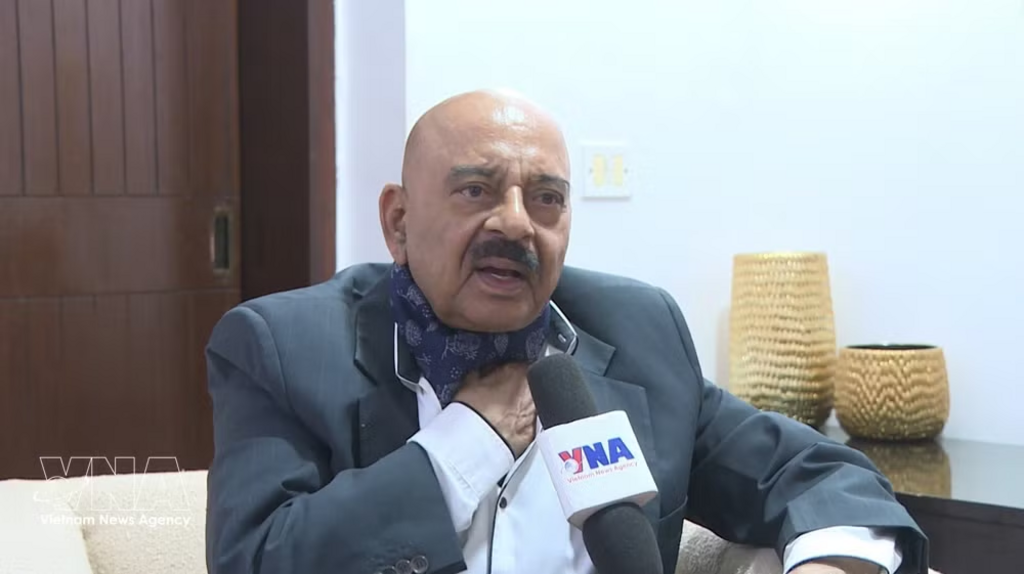 |
| SD Pradhan, former Chairman of India’s Joint Intelligence Committee and former Deputy National Security Adviser__Photo: VNA |
Pradhan said the considerable attention paid by international media to the speech reflected growing global interest in Vietnam’s approach to issues of peace, security and development, while also underscoring the country’s increasingly prominent role in multilateral forums.
Referring to the Party and State leader’s recent interview with Reuters, Pradhan observed that his reaffirmation of Vietnam’s foreign policy of independence and self-reliance, encapsulated in the message that Hanoi sides with no one, clearly reflected the country’s long-standing policy of diversification and multilateralisation of external relations.
He added that his emphasis placed on the Charter of the United Nations and the 1982 United Nations Convention on the Law of the Sea (UNCLOS) is particularly significant amid rising tensions in the East Sea and is consistent with the views of many countries in the Global South, including India.
According to Pradhan, General Secretary and President Lam’s participation in the Shangri-La Dialogue demonstrates Vietnam’s role not merely as a participant in regional affairs, but as a country actively contributing to the shaping of both regional and global agendas.- (VNA/VLLF)