 |
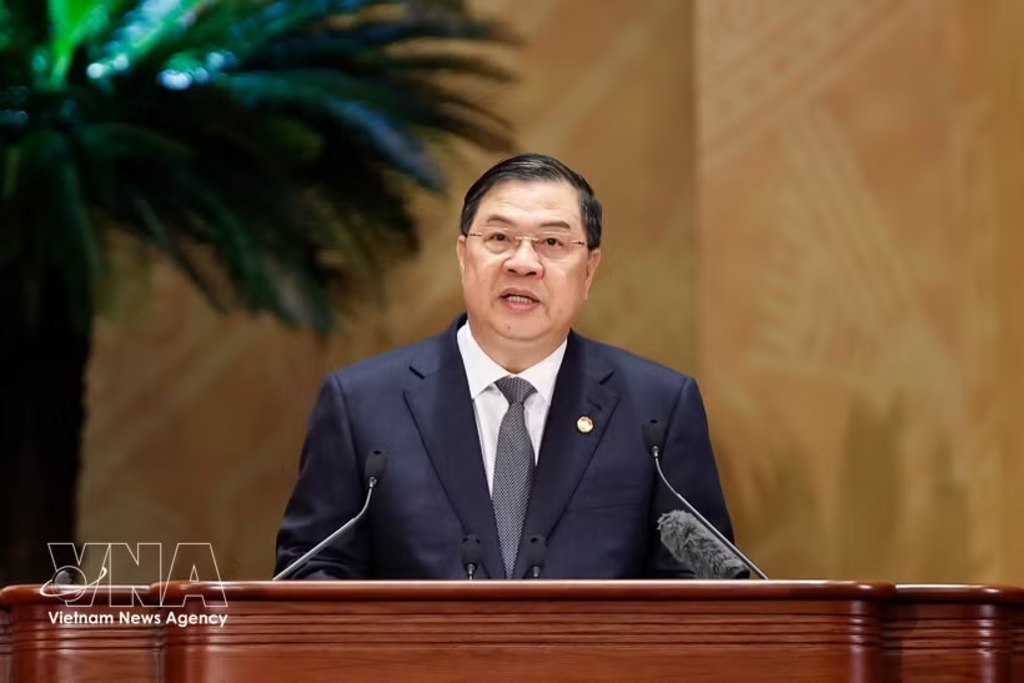
| Permanent Deputy Prime Minister Pham Gia Tuc speaks at the congress__Photo: VNA |
Government and National Assembly representatives addressed the Vietnam Fatherland Front (VFF)’s 11th National Congress for the 2026–2031 tenure in Hanoi on May 12, underscoring cooperation with the VFF Central Committee.
Toward a harmonious, civilised and progressive society where citizens enjoy prosperity, happiness
Permanent Deputy Prime Minister Pham Gia Tuc delivered a speech on Vietnam’s recent socio‑economic trajectory and coordination between the Government and the VFF Central Committee.
Tuc said that despite an increasingly complex and unpredictable global backdrop weighing on development tasks since early 2026, Vietnam has notched a series of positive results under the Party leadership, especially the Politburo and Secretariat headed by Party General Secretary and State President To Lam, together with backing from the NA, VFF, the entire political system, the public, business circles and international partners.
He attributed those gains to increasingly substantive and effective coordination between the Government and VFF Central Committee. The two sides have worked in lockstep to foster great national unity, roll out social welfare, strengthen public outreach and political system building, enhance oversight and social criticism, fight corruption and wastefulness, improve legal and policy frameworks, and advance people‑to‑people diplomacy. Information sharing mechanisms, joint meetings and inter‑agency coordination have also been maintained and renewed.
Going forward, the Government and the VFF will keep following directives from the Party Central Committee, its Politburo and Secretariat to deepen cooperation. Priority tasks include urging officials, intellectuals, overseas Vietnamese and all walks of life to contribute ideas and effort toward delivering the 14th National Party Congress’s Resolution, socio‑economic development strategies, national defence‑security goals, and the great national unity bloc.
The highest focus will be on achieving double‑digit economic growth, ensuring the two‑tier local administration model runs effectively, and building a harmonious, civilised and progressive society where citizens enjoy prosperity and happiness, he said.
The two sides will also step up coordination in patriotic emulation drives and social welfare, particularly in remote, border, island and ethnic minority areas. Twelve key targets directly tied to grassroots communities and citizens will be pursued.
He added that the Government will continue working with the VFF to boost public involvement in policymaking and lawmaking, raise legislative quality, uphold democracy and social oversight, prevent corruption and wastefulness, handle citizens’ complaints and denunciations, and put the principle of “People know, people discuss, people do, people check, people monitor, people benefit” into practice.
The Government will coordinate and support people‑to‑people diplomacy and exchange among the VFF, socio‑political organisations, mass associations entrusted by the Party and State, and international friends and traditional partners to maximise resources and conditions conducive to national development. It will also keep backing the VFF in advancing science and technology, spurring innovation, building a digital society and accelerating digital transformation across the VFF system.
The Government pledged to work alongside the VFF to overhaul both the substance and method of cooperation in a more concrete and measurable way, placing people at the centre as the main stakeholders, the ultimate goal and the driving force of all actions. Planned initiatives include a “Month of Listening to the People”, a round‑the‑clock “Digital Front” platform to collect citizens’ feedback and recommendations, schemes and patriotic emulation campaigns anchored in data, statistics and public satisfaction.
The Government further committed to sustaining effective coordination mechanisms through projects that strengthen the VFF’s functions and responsibilities. It proposed that both sides jointly revise and supplement the existing inter‑agency resolution, and introduce new coordination mechanisms suited to the restructured organisational system and evolving practical demands.
Upholding VFF’s role in institutional reform
NA Vice Chairwoman Nguyen Thi Thanh also addressed the gathering, focusing on law-building and coordination between the NA Standing Committee and the Presidium of the VFF Central Committee.
She said the VFF had clearly demonstrated its important role as a representative body that channels the people’s aspirations and democratic rights during the 15th NA tenure and the 16th NA’s first session, particularly in amending the 2013 Constitution and drafting 159 laws and a raft of breakthrough policy resolutions.
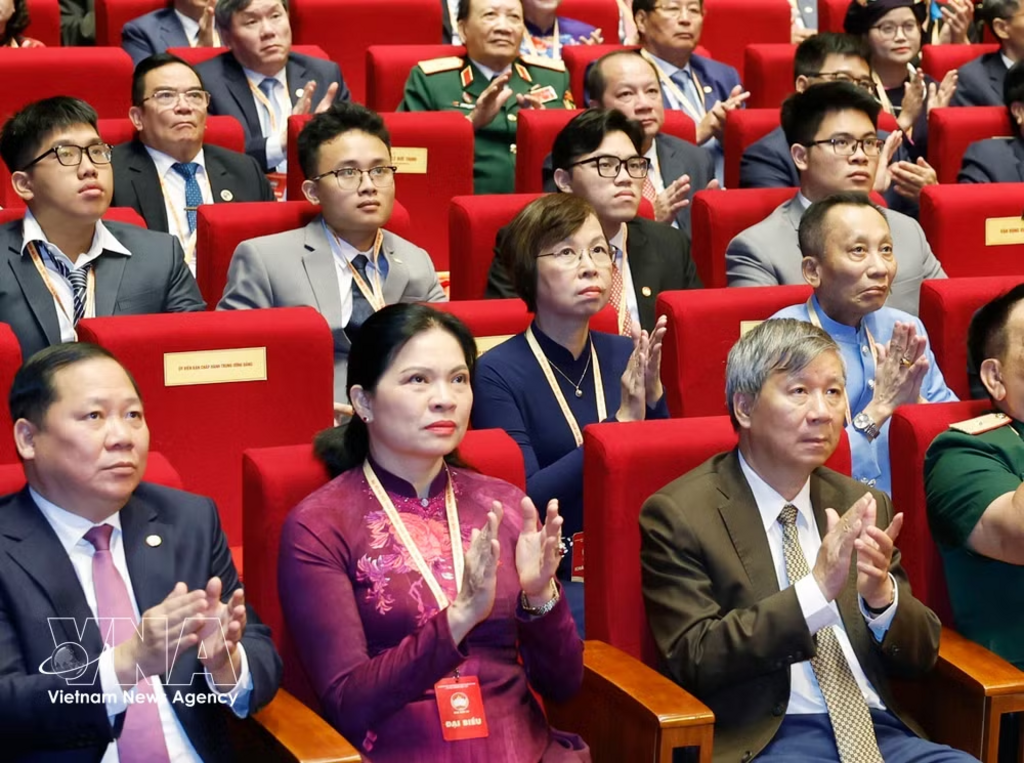 |
| Delegates at the congress__Photo: VNA |
The VFF’s role was especially evident in strengthening lawmaking and institutional reform, and forging increasingly substantive and effective cooperation with the NA Standing Committee to uphold democracy, reinforce great national unity and improve institutional effectiveness, she added.
To further improve coordination, she proposed the VFF and its member chapters keep promoting their role in legislation, particularly through social criticism of policies concerning the legitimate rights and interests of citizens and businesses.
The VFF must genuinely become the voice of the people, she stressed, describing it as a vital channel for building a democratic, fair, transparent and feasible legal system that can drive double-digit economic growth, raise living standards and safeguard national defence, security and foreign affairs.
Thanh also called for close alignment with the legislative orientation of the 16th NA, effective and on-schedule delivery of key lawmaking tasks, and active participation in the planned comprehensive review and amendment of the 2013 Constitution.
She urged the VFF to coordinate legal system reviews, gather public opinions and propose improvements to the lawmaking process, particularly in connection with amendments to the Law on Promulgation of Legal Documents expected to be submitted to the legislature this year.
Citing the Politburo’s Resolution 66-NQ/TW on the reform of law-making and enforcement and instructions from General Secretary and State President Lam, she underscored the need to shift from a mindset of “making laws for completeness” to “making laws for development,” and from “good laws on paper” to “good laws in practice,” with public and business satisfaction serving as the highest measure of legislative quality.
She also called on the VFF to modernise public outreach methods by combining traditional approaches with digital transformation, ensuring Party guidelines and State laws are widely understood and voluntarily followed by citizens and businesses.
Thanh further suggested continued improvements to coordination regulations between the NA Standing Committee and the Presidium of the VFF Central Committee, stronger cooperation on annual supervision agendas, tighter monitoring of post-supervision recommendations, and expanded digital transformation in voter engagement and public opinion gathering.
The NA will keep working closely with the VFF, listen sincerely to its recommendations and create favourable conditions for it to fulfill its mission, she said, adding that their stronger joint work would uphold democracy, reinforce national unity, inspire development aspirations and build a strong socialist rule-of-law state in Vietnam.- (VNA/VLLF)