 |
| Slogans for the national election day March 15 installed in major streets in Hanoi__Photo: thanhnien.vn |
The starting point of a new phase of institutional reform
In just a few days, voters nationwide will cast their ballots to select the most deserving representatives to the National Assembly and People’s Councils at all levels. Could you elaborate on the significance of the upcoming election of deputies to the National Assembly in the context of our country entering a new stage of development?
The election of deputies to the 16th National Assembly takes place at a pivotal moment in the country’s development trajectory. Following the major achievements of nearly four decades of doi moi (renewal), Vietnam is entering a new phase of development characterised by higher requirements in terms of growth quality, national competitiveness and the effectiveness of state governance.
The 14th National Party Congress has clearly set out the task of continuing to comprehensively improving the socialist rule-of-law State; building modern, transparent and sustainable development institutions; accelerating industrialisation and modernisation on the foundation of science and technology and innovation; promoting the digital economy and digital society; enhancing the quality of national governance; and proactively and actively pursuing comprehensive and deep international integration.
These objectives require a synchronised, stable and highly predictable legal system, as well as a mechanism for the assignment, coordination and control of state power that is both strict and effective. With its constitutional and legislative functions, shaping the institutional framework for development, deciding on matters of national importance, and exercising supreme oversight over the implementation of the Constitution and laws, the National Assembly holds a central position within the state power structure and plays a leading role in institutional reform.
It can be said that the quality of the National Assembly’s performance has a direct impact on the investment and business environment, on public and business confidence, on the effectiveness and efficiency of the state apparatus, and on the country’s standing in the international arena.
At the National Conference on Preparation for the Election held on November 15, 2025, Party General Secretary To Lam stressed the requirement that the election must be conducted in a democratic, lawful, safe and economical manner, and truly be a festival of the People. This requirement is not limited to organisational arrangements; it conveys a deeper message: the quality of democracy and representation must be ensured from the very stage of candidate selection, as this marks the starting point of the exercise of state power in the new term.
Therefore, the election of deputies to the 16th National Assembly is not merely a routine political event held every five years. It is a major national occasion through which the People directly entrust power and select those most worthy to represent more than 100 million citizens in deciding strategic issues for the country over the next five years.
The success of the election should not be measured solely by voter turnout or compliance with legal procedures, but also by the quality of the deputies elected, those who possess the requisite political integrity, intellect and aspiration for national development.
In other words, this election marks the beginning of a new phase of institutional reform. When organised in a democratic and transparent manner, and when the right individuals are selected in accordance with proper standards, the election will provide a solid political and legal foundation for building the 16th National Assembly into a body that is truly innovative, professional, decisive in action and dedicated to serving the People, thereby meeting the demands of national development in the new era.
Requirements for deputies of the 16th National Assembly
In your view, given the responsibilities entrusted to the 16th National Assembly, what requirements will be placed upon its deputies?
In the context of the country entering a new stage of development where each decision of the National Assembly not only addresses immediate issues but also shapes the nation’s long-term future, the requirements placed upon deputies of the 16th National Assembly will be higher not only in terms of formal standards but also in terms of quality and responsibility.
First and foremost, deputies must possess firm political integrity and a profound sense of their representative mission. National Assembly deputies are entrusted directly by the People to exercise state power at the highest level on their behalf. Each deputy must therefore remain absolutely loyal to the Fatherland, the People and the Constitution; place national interests above all else; and never allow themselves to be influenced by sectional or group interests. In the context of deep international integration and intensifying global competition, such political steadfastness becomes even more important, as the National Assembly is the institution responsible for safeguarding the country’s long-term strategic interests through laws and policies.
Second, deputies of the 16th National Assembly must have strong capacity for policy formulation and critical evaluation. Digital transformation, green transition, the circular economy, artificial intelligence, climate change and population ageing are issues that are both global in scope and highly relevant to Vietnam. Each law or resolution adopted today may produce effects that last for many years. This requires deputies not only to understand domestic realities but also to adopt a comparative perspective, draw on international practices, analyse multidimensional impacts and anticipate potential policy risks. In the new development stage, legislation must ensure political orientation while remaining transparent, stable, feasible and supportive of innovation. Deputies must therefore base their decisions on empirical data and approach their work with openness, reform-mindedness and creativity.
Third, professionalism and a strong sense of responsibility are essential qualities. The National Assembly is increasingly operating in a more professional manner, with a growing proportion of full-time deputies. This requires each deputy to devote greater time, effort and intellectual investment to parliamentary work. Thorough preparation before each session, the ability to engage in candid yet constructive debate, and persistent monitoring of the implementation of resolutions until tangible results are achieved are all essential. Oversight and questioning are not merely intended to highlight problems but to drive change and produce substantive improvements in governance and administration. Deputies must therefore follow through on commitments and recommendations made during oversight activities, ensuring that laws and resolutions are effectively implemented in practice. These are concrete expressions of professionalism and responsibility that every deputy must uphold in parliamentary work.
Fourth, deputies must demonstrate integrity and political courage. The National Assembly is the country’s highest democratic forum. Within that forum, the voices of deputies must faithfully reflect the will and aspirations of voters. Deputies must be willing to raise difficult issues, express their views in a constructive spirit and take responsibility for their decisions. The integrity and transparency of each deputy will strengthen public confidence in the country’s highest state power body.
National Assembly Chairman Tran Thanh Man has repeatedly emphasised that the National Assembly will continue to pursue stronger reforms in legislative thinking, elevate the quality of oversight, enhance professionalism and modernise its operations, taking substantive effectiveness and public trust as key benchmarks. This orientation serves not only as a guiding direction for the activities of the 16th National Assembly, but also as a standard of conduct for each deputy. Ultimately, the strength of the National Assembly lies in the collective combination of the integrity, intellect, responsibility and dedication to serving the People demonstrated by each deputy entrusted by voters.
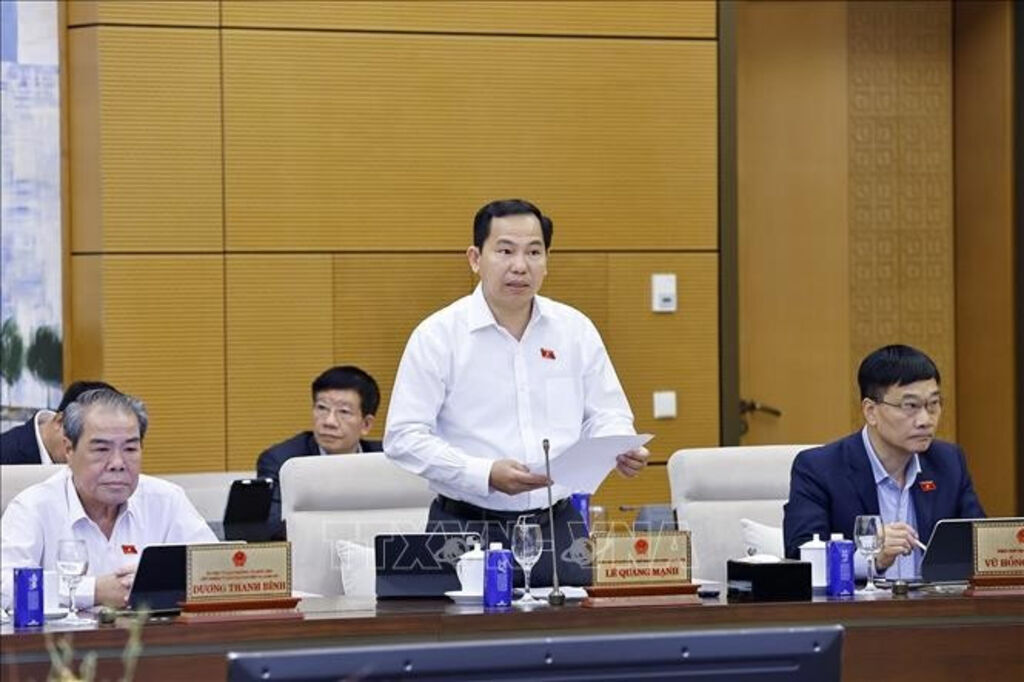 |
| Member of the Party Central Committee, Secretary General of the National Assembly and Chairman of the National Assembly Office Le Quang Manh__Photo: VNA |
Expectations for the 16th National Assembly
In your view, how will the results of the upcoming election on March 15 influence the role and standing of the National Assembly in the new term?
With the careful preparation undertaken by the entire political system in recent months and the strong support of the People, I am confident that the election will be successfully conducted. The success of the election will determine the quality and stature of the National Assembly throughout the new term.
First, an election conducted in a democratic, transparent and lawful manner and truly reflecting the will and aspirations of the People will provide a solid political and social foundation for the new National Assembly. Legitimacy, public consensus and the trust of voters constitute the most important “political capital” enabling the National Assembly to perform its role as the highest state power body. When deputies enter the parliamentary chamber with the confidence and trust of the electorate, every legislative decision and each important resolution will carry greater weight and enjoy stronger support during implementation.
Second, the success of the election will directly determine the quality of the National Assembly’s “input”. Each ballot cast by voters represents not only the selection of an individual candidate, but also a choice regarding the quality of the country’s highest state power body, the quality of its institutions, and the nation’s capacity for breakthrough development over the next five years.
What are your expectations for the 16th National Assembly?
I am confident that the 16th National Assembly will not only inherit the important achievements of previous terms, but will also leave a distinct mark in terms of quality, political resolve and strategic vision in a new stage of the country’s development. It must meet higher standards of effectiveness, professionalism and institutional leadership.
The 16th National Assembly should be a truly professional and modern body operating on a digital foundation, continuing to take the lead in reforming working methods, from the preparation of documents and data-based policy analysis to the organisation of debates, voting procedures and interaction with voters. Legislative activities must become increasingly scientific, open and transparent, with broad participation of citizens, businesses, intellectuals and experts. The National Assembly must genuinely become the centre of high-quality legislative activity, where every law adopted is carefully examined in terms of constitutionality, feasibility and long-term developmental impact.
At the same time, the National Assembly’s oversight activities must continue to be strengthened, becoming more substantive and more rigorous in ensuring accountability. This should be accompanied by effective mechanisms for monitoring and evaluating the implementation of commitments and recommendations made during oversight activities. When the National Assembly effectively exercises its supreme oversight role, administrative discipline will be reinforced, accountability of state agencies will be enhanced and public trust will be strengthened. In other words, effective oversight is one of the most important measures of the capacity to exercise the power by the State.
The relationship between deputies and voters must also be further strengthened and deepened. The National Assembly must be a forum where the People genuinely feel that their voices are heard and faithfully reflected. Deputies must bring the “breath of life” into every policy decision. When the National Assembly serves as a democratic, candid and responsible forum, social trust will be reinforced. This constitutes an invaluable “soft resource” for national development in a context where regional and global developments are becoming increasingly rapid, complex and unpredictable.
With the leadership of the Party, the consensus and supervision of the People, and the spirit of reform and openness demonstrated by deputies carefully and democratically elected, I firmly believe that the 16th National Assembly will fulfil its mission: to build a solid legal foundation for rapid and sustainable development; to continue affirming its role as the highest state power body in the socialist rule-of-law State of Vietnam; and to truly embody the will and aspirations of the nation for development in a new era.- (VLLF)