 |
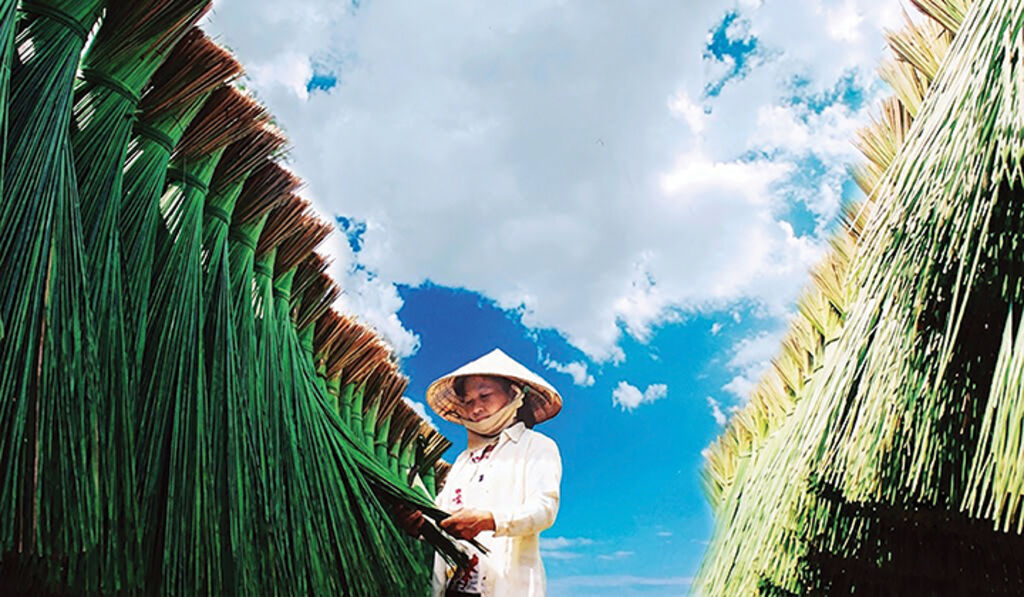
| Lecomte palm leaves being dried in the sun__Photo: https://baodongthap.vn |
The hat-weaving tradition of Chau Thanh dates back to the early settlement of southern Vietnam, when local people began turning wild plants from the Mekong Delta’s wetlands into everyday household items. What began as a household activity gradually developed into a local trade that continues to provide livelihoods for the community today.
In the past, the area now known as Chau Thanh commune in Dong Thap province (formerly part of Tien Giang province) bordered the vast wetlands of Dong Thap Muoi, or the Plain of Reeds, where grey sedge, water chestnut and shichito matgrass grew in abundance.
Early settlers used these plants to weave mats, bags, pillows, cushions and other household items. They also made hats to protect themselves from the sun and rain while working in the fields. Over time, hat-making developed into a specialised local craft.
A turning point came more than half a century ago when Pham Van Cam, better known as local resident Ba Cam, discovered lecomte palm leaves during a trip into the forest. Struck by their broad shape and attractive appearance, he collected some leaves, dried them in the sun, split them into thin strips and wove them into a hat.
The finished hat was sturdy, provided good protection from the sun and gave off a pleasant natural fragrance. Cam began making more hats for villagers to wear while working in the fields. The hats soon caught on, and orders began coming in throughout the year.
His experiment inspired local people to incorporate lecomte palm leaves into their existing grey sedge hat-making tradition. Hats could be woven entirely from either material or from a combination of the two, creating patterns of alternating colours.
The resulting products became known locally as nón bàng buông, a name derived from the Vietnamese words cỏ bàng (grey sedge) and lá buông (lecomte palm leaves). Over time, they became a signature product of the village.
The appeal of Chau Thanh hats lies partly in the natural materials used to make them. Grey sedge grows wild in saline and acidic soils, and its freshly harvested stems have a strong, earthy smell. Lecomte palm leaves, meanwhile, are light, durable and naturally fragrant. Their colour and texture make them well suited to hat-making.
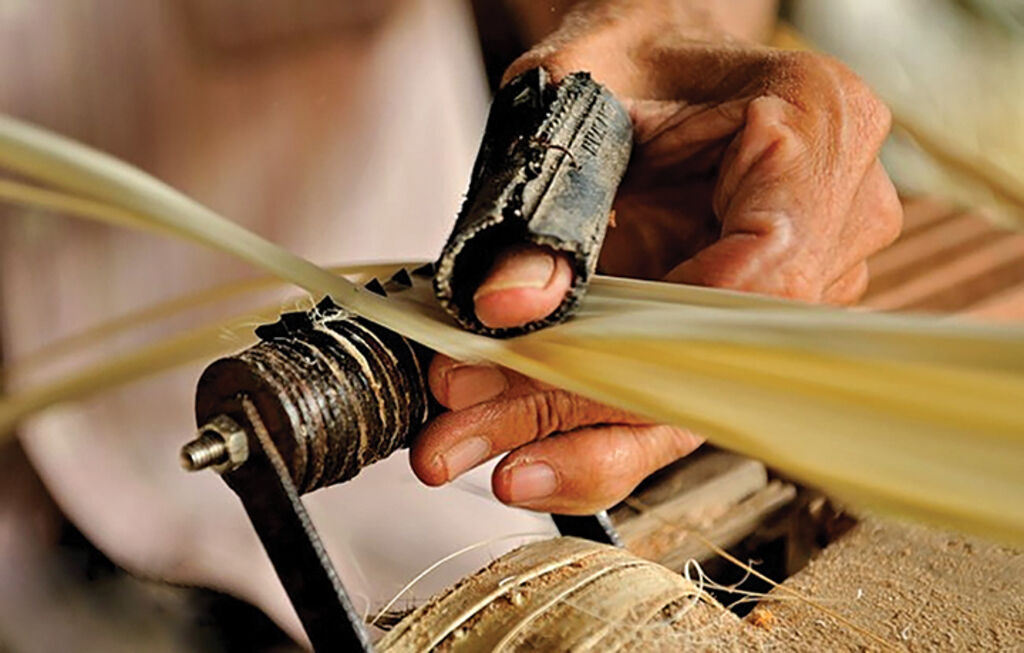 |
| Stripping lecomte palm leaves into thin strands__Photo: VNP/VNA |
Artisans sometimes add shichito matgrass to create contrasting colours and patterns. Whether used separately or together, these natural fibres produce lightweight, breathable hats that are comfortable to wear in hot weather.
Turning these raw materials into finished hats requires several stages of preparation and handwork. The process begins with stripping lecomte palm leaves into thin strands, which are then dried in the sun. Grey sedge is also sun-dried, usually for two or three days, before being pounded to soften and straighten the stems for weaving.
Once the materials are ready, artisans weave the strands tightly together to create an even surface without gaps. The edges are then trimmed and stitched before the hats are placed in heated moulds or shaping presses to give them their final shape.
The hats may then be coloured using techniques developed within the village. Workers immerse them in boiling dye solutions to ensure the colour spreads evenly through the fibres, then dry them in the sun to help set the colour.
Finally, the hats undergo further drying and treatment to prevent mould. Any loose fibres are briefly singed off, leaving the surface smooth and comfortable to wear.
Preserving the craft
Over the past half-century, Chau Thanh’s hat-making village has faced many challenges, including low earnings, unstable supplies of raw materials and competition from cheaper factory-made products. Despite these difficulties, the craft has survived thanks to efforts by local authorities and residents to preserve traditional skills and support production.
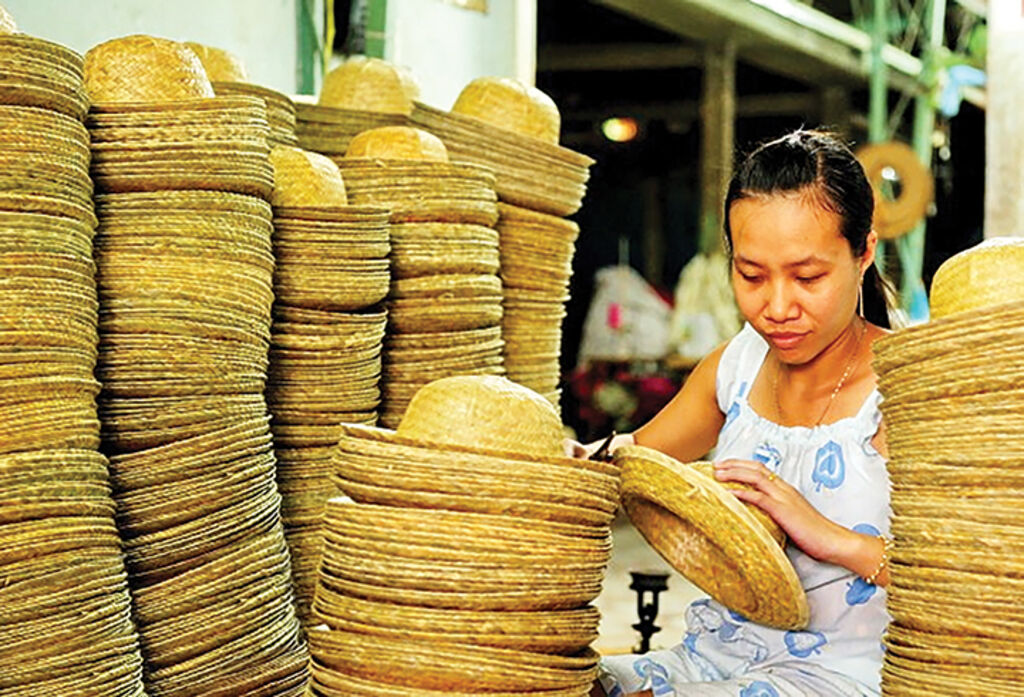 |
| Checking the quality of finished hats before they are put on the market__Photo: VNP/VNA |
Today, the village is home to around 70 veteran artisans, many with more than 50 years of experience. Besides continuing to make hats, they pass their skills on to younger generations. Hat-making also provides work and income for thousands of locals, particularly women and older people.
Efforts to preserve the craft have gone hand in hand with the search for new markets. The development of local cooperatives, production groups and businesses has helped hat-makers find buyers and expand their sales networks, with millions of hats reaching international markets each year.
To meet changing consumer preferences, producers have introduced new designs, combining traditional weaving techniques with decorative stitching to create a wider range of products.
The village is also promoting craft-based tourism, giving domestic and international visitors opportunities to watch artisans at work, learn about traditional hat-making and experience local culture.
From a practical item once made for farmers in the fields, Chau Thanh’s woven hats have become products sought by customers far beyond the Mekong Delta. Their journey reflects how a traditional craft can find new markets while remaining part of the community’s cultural heritage.- (VLLF)