 |
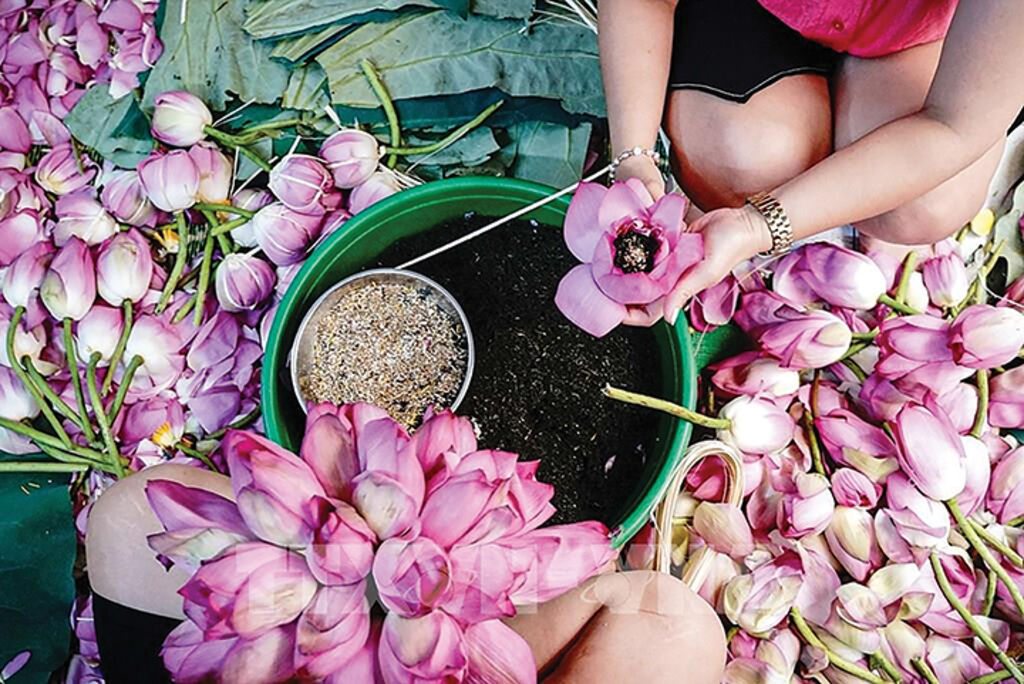
| Tea buds are placed in the centre of lotus flowers as part of the traditional lotus tea-scenting process__Photo: VNA |
For centuries, tea makers around West Lake in Hanoi, particularly in the Quang An and Quang Ba areas of present-day Tay Ho ward, have preserved the delicate craft of scenting premium green tea with Bach Diep lotus, a distinctive pink variety prized for its many petals and lingering fragrance. Passed down through generations, West Lake lotus-scented tea has become closely associated with the capital’s culinary culture and refined way of life.
The craft owes much of its distinctive character to the natural conditions of West Lake. The nutrient-rich mud beneath its waters provides favourable conditions for growing the famed Bach Diep lotus. When fully open, its pale pink blossoms can span the width of two palms, with ivory-white anthers at their centre releasing the sweet, lingering fragrance essential to traditional lotus-scented tea.
The lotus season typically runs from June to August. Each day before sunrise, often from around 4am, tea makers set out in small wooden boats to gather newly opened Bach Diep lotus flowers while they are still fresh and fragrant. Harvesting usually finishes by 6am, before the rising sun affects the delicate blossoms.
Once ashore, the flowers are quickly taken to a cool, shaded place, where artisans carefully separate the ivory-white anthers used to scent the tea. The job must be done promptly to preserve their freshness and distinctive fragrance.
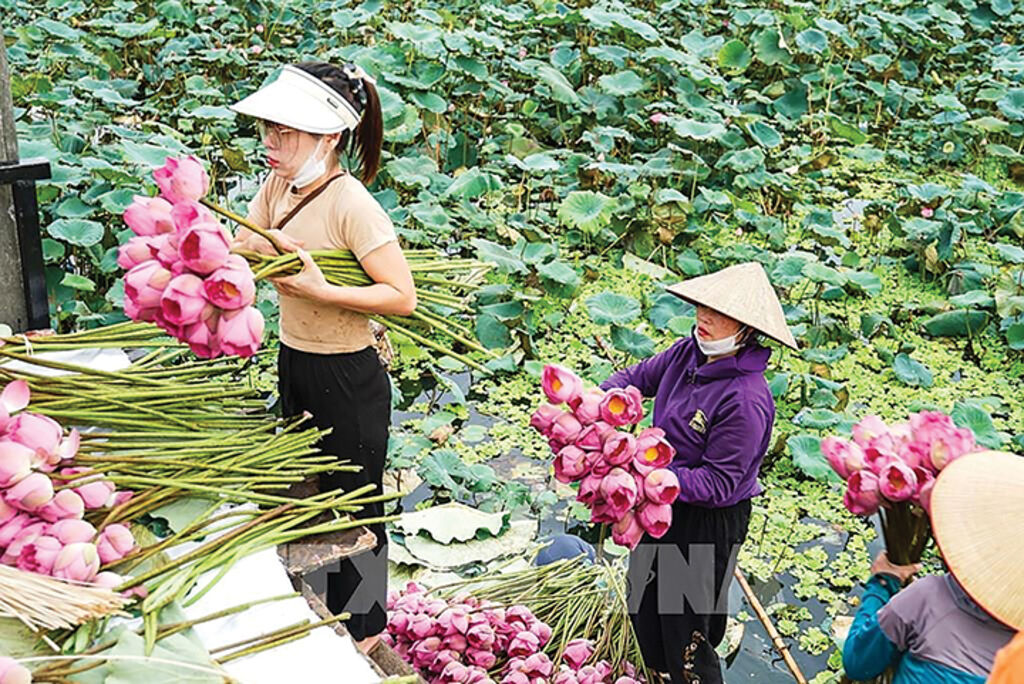 |
| Freshly opened lotus flowers collected at dawn for tea scenting__Photo: VNA |
The early-morning harvest marks only the beginning of a painstaking process. Tea makers generally use two methods to capture the fragrance of the lotus: fresh-blossom scenting and traditional dry scenting.
Fresh-blossom scenting is the simpler and less labour-intensive method. Artisans gently open the petals of a freshly picked lotus flower and place about 15 grams of high-grade green tea inside. The petals are then folded back and secured with a thin bamboo strip. The flower is wrapped in a lotus leaf, while its stem is kept in water overnight to maintain its freshness and allow the tea leaves to absorb the lotus fragrance.
To make the tea available beyond the short lotus season, some tea makers vacuum-pack the filled blossoms before deep-freezing them or use cold-drying technology. These methods help preserve the lotus aroma for up to a year.
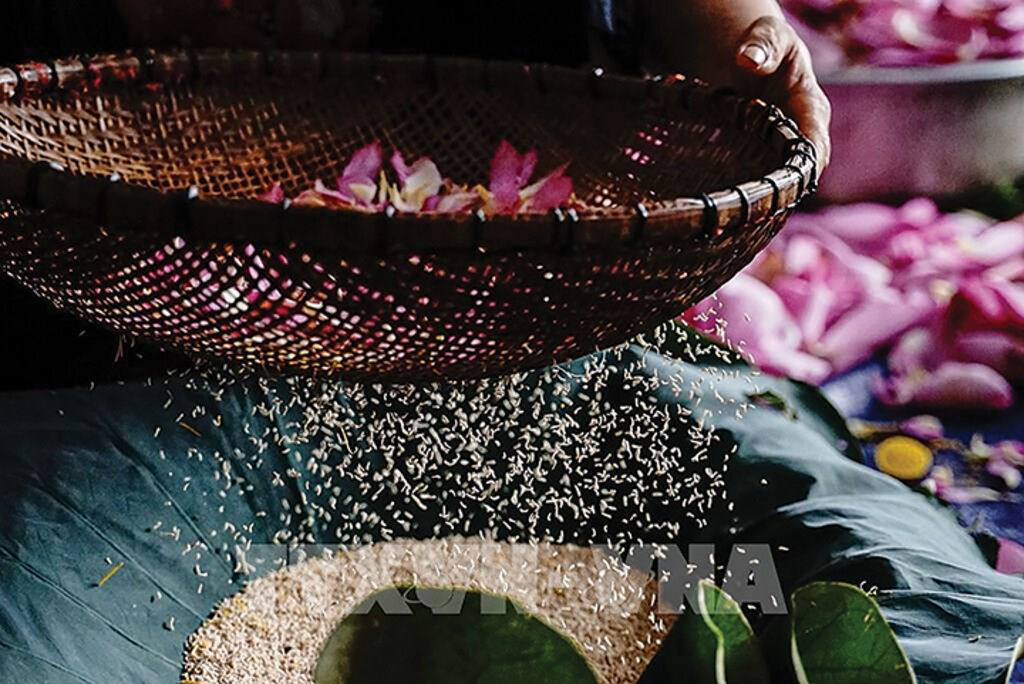 |
| Sifting lotus anthers to separate them from stamens, petals and other floral fragments__Photo: VNA |
Dry scenting, by contrast, is far more labour-intensive and requires considerable skills and patience. According to the traditional process, producing one kilogram of finished lotus-scented tea requires between 1,000 and 1,400 Bach Diep lotus flowers, which yield around 200 grams of fragrant anthers.
The process begins with carefully selected tea, typically premium tea buds from Thai Nguyen or mountain-grown tea from the former Ha Giang province (now Tuyen Quang). Artisans arrange alternating layers of tea and freshly separated lotus anthers in an earthenware pot, allowing the tea leaves to gradually absorb their fragrance.
The tea is left to absorb the lotus fragrance for two to three days at a temperature of around 25-28°C. During this period, the tea leaves gradually take in both the aroma and moisture from the fresh anthers. The tea must then be carefully dried before the next round of scenting begins.
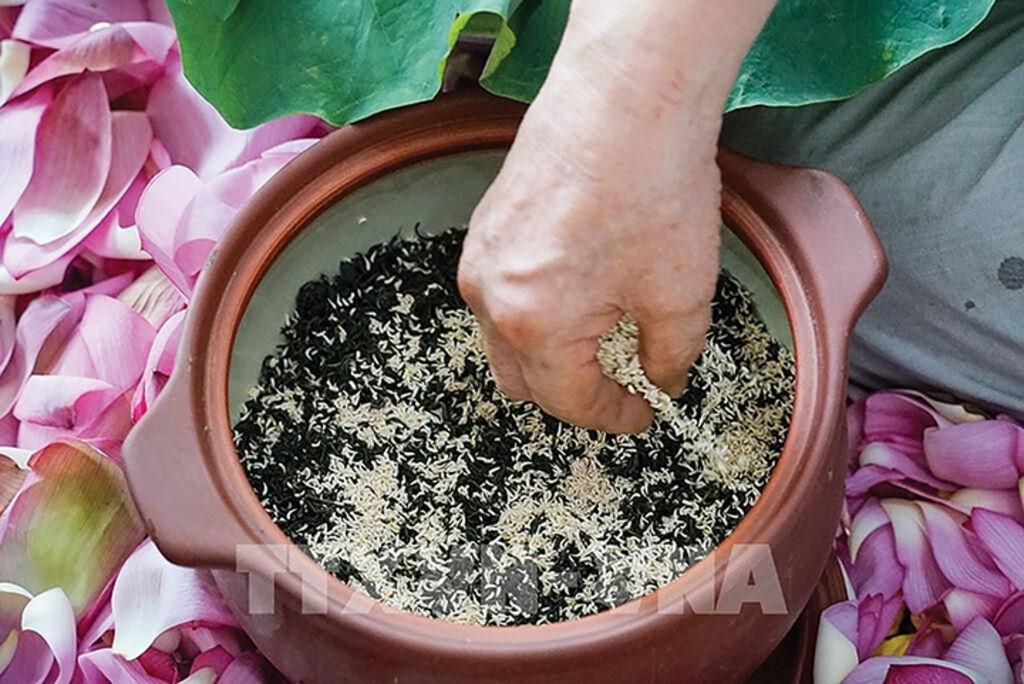 |
| A delicate layer of tea buds is spread out and lightly dusted with lotus anthers during the scenting process Photo: VNA |
Traditionally, Tay Ho tea makers use different methods to dry the tea while retaining as much of its delicate fragrance as possible. One method involves placing the tea on copper trays over glowing charcoal, a process that requires careful control of the heat to prevent the lotus aroma from fading.
Another method uses indirect heat. The tea is wrapped in tracing paper and placed around an aluminium container filled with hot water inside an insulated box wrapped in thick blankets. The gentle, even heat slowly removes moisture from the tea while helping preserve its fragrance. Today, some artisans also use electric drying cabinets for more precise temperature control.
After each drying, the tea is sifted to remove the used anthers before a fresh batch is added. This cycle of scenting and drying is repeated five to seven times. The result is tightly curled tea leaves infused with a deep, lingering lotus fragrance.
Despite its long history and cultural significance, the craft faces growing challenges. Urban development and environmental pressures have reduced lotus-growing areas around West Lake. At the same time, the time-consuming nature of traditional dry scenting means that fewer families are willing to pursue the painstaking process.
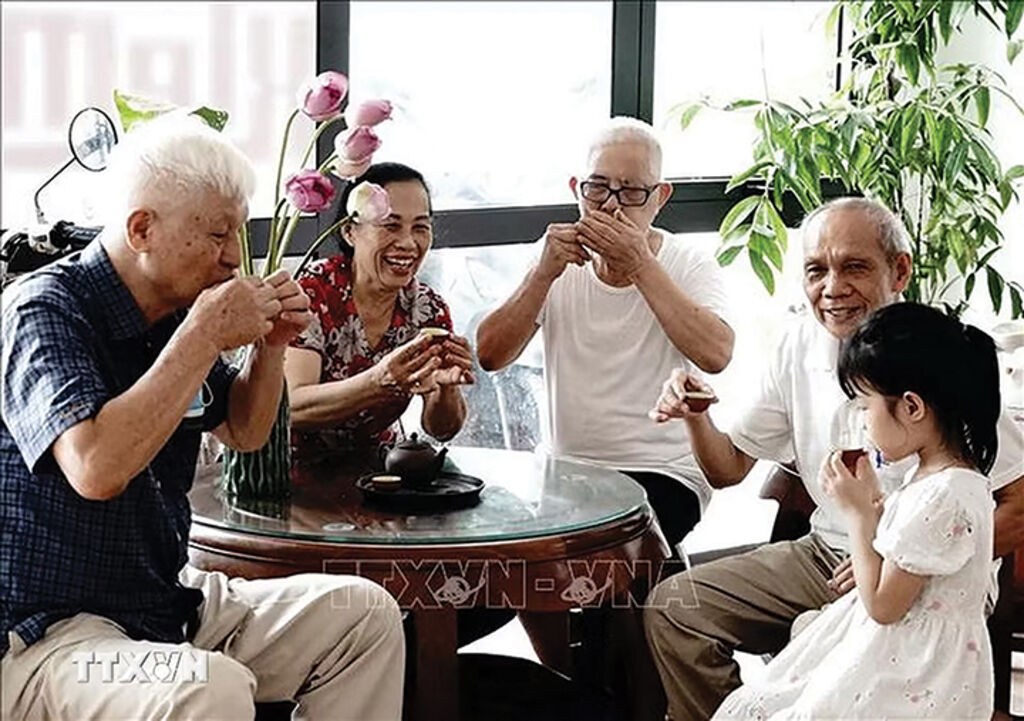 |
| Sipping lotus-scented tea, a cherished part of Hanoi’s culinary culture__Photo: VNA |
Efforts are under way to preserve both the Bach Diep lotus and the traditional tea-making craft. Hanoi authorities have launched initiatives to restore and protect lotus-growing areas, including a scheme to restore seven hectares of lotus in nearby ponds. Participating households receive high-quality seedlings, farming materials and technical guidance to support cultivation.
The craft has also gained official recognition. The Quang An lotus-scented tea-making craft has been inscribed on the national list of intangible cultural heritage, while Quang Ba has been recognised as a traditional lotus-scented tea-making village.
Alongside heritage conservation, local authorities are supporting product development under the One Commune, One Product programme and linking the craft with eco-tourism, cultural experiences and digital storytelling. These efforts aim not only to sustain lotus tea production but also to preserve the knowledge and skills associated with one of Hanoi’s distinctive culinary traditions.
As Hanoi continues to change, preserving West Lake lotus-scented tea is about more than safeguarding a speciality product. It is about keeping alive a centuries-old craft and the distinctive lotus fragrance that has long formed part of the capital’s cultural identity.- (VLLF)