 |
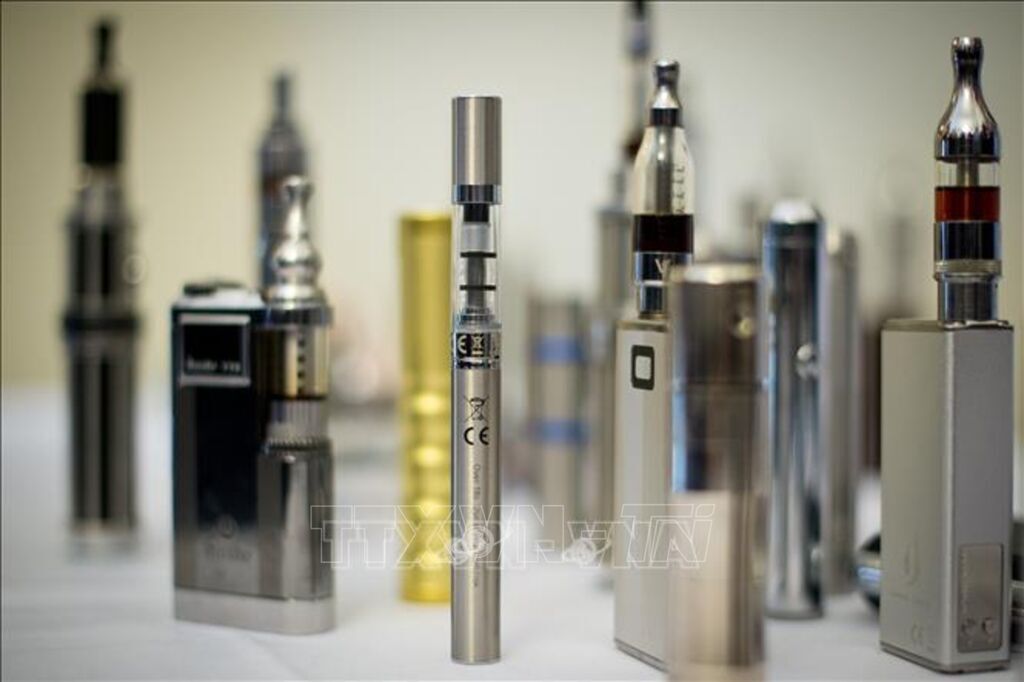
| Various e-cigarettes in many different colours and flavours__Photo: AFP/VNA |
The Ministry of Health (MOH) has asked the Government to consider adding to the draft Law Revising the Law on Tobacco Harm Prevention and Control a policy prohibiting people born on or after January 1, 2010, from purchasing and using tobacco.
The proposal comes after Vietnam banned e-cigarettes and heated tobacco products from the beginning of 2025, amid growing concern over their use among young people and the public health risks posed by new nicotine products. It is intended to reinforce that preventive approach by shielding adolescents from nicotine addiction before it takes hold, while reducing their risk of serious tobacco-related diseases later in life.
Developing a “smoke-free generation”
According to the MOH, the proposal is expected to gradually create a smoke-free generation in the country. If properly implemented, it would help reduce smoking rates, nicotine addiction among young people and exposure to second-hand smoke, while easing the burden of healthcare costs and productivity losses caused by tobacco-related diseases.
Vietnam currently has more than 15 million tobacco users, while over 103,000 people die from tobacco-related diseases each year. In 2022, tobacco caused an estimated VND 108 trillion, or about USD 4.1 billion, in economic losses, equivalent to 1.14 per cent of the country’s GDP.
However, for the policy to be feasible, it would have to secure consensus from the National Assembly, relevant ministries and sectors, and especially the public. Its implementation would also require coordinated measures to control tobacco sales to this group, including stronger communication targeting both sellers and buyers, verification of year of birth of buyers at points of sale, a reduction in retail outlets, and strict penalties for violations. Support policies for people seeking to quit tobacco use should also be maintained.
Health experts say children and adolescents are particularly vulnerable to nicotine addiction because the brain, especially the prefrontal cortex, continues to develop until around the age of 25. They are also targeted by the tobacco industry through disguised advertising on social media, event sponsorship, attractive packaging and celebrity marketing.
Globally, the “smoke-free generation” model has been adopted by many countries as a way to protect children before tobacco addiction begins, by gradually phasing out future generations’ access to tobacco products.
Rather than targeting current adult smokers, the policy focuses on stopping future generations from becoming addicted in the first place and supporting the long-term denormalisation of smoking in society.
Tougher rules for tobacco products and retail sales
In addition to the proposed generational tobacco ban, the draft also seeks to bring into law Vietnam’s existing ban on e-cigarettes and heated tobacco products.
The ban has been applied since January 1, 2025, under the National Assembly’s resolution that prohibits the production, trading, import, storage, transportation and use of e-cigarettes and heated tobacco products.
In line with this policy, the draft would ban the production, trading, transportation, advertising, financing and use of e-cigarettes, heated tobacco products and other new types of tobacco products. Wholesalers and retailers would also be prohibited from displaying tobacco products in any form.
The proposed rules reflect growing global concern over the way tobacco and nicotine products are marketed to young people. The theme of World No Tobacco Day 2026 is: “Unmasking the appeal: countering nicotine and tobacco addiction”, highlighting the risks of marketing strategies that lure young people into using nicotine-containing products by presenting them as “modern”, “less harmful” and “fashionable”. Disguised promotion in digital spaces and on social media, as well as through financing and celebrity marketing, is increasing the risk of nicotine addiction in the community.
According to experts, tobacco and nicotine products are harmful to health in any form and create burdens of disease, economic loss and social harm. Tobacco causes many dangerous diseases, including cancer, cardiovascular disease, stroke, chronic obstructive pulmonary disease and other health problems. Its smoke affects not only users but also people who are nearby, especially women and children.
The draft is scheduled to be submitted to the National Assembly for passage in October.- (VLLF)