 |
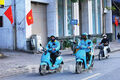
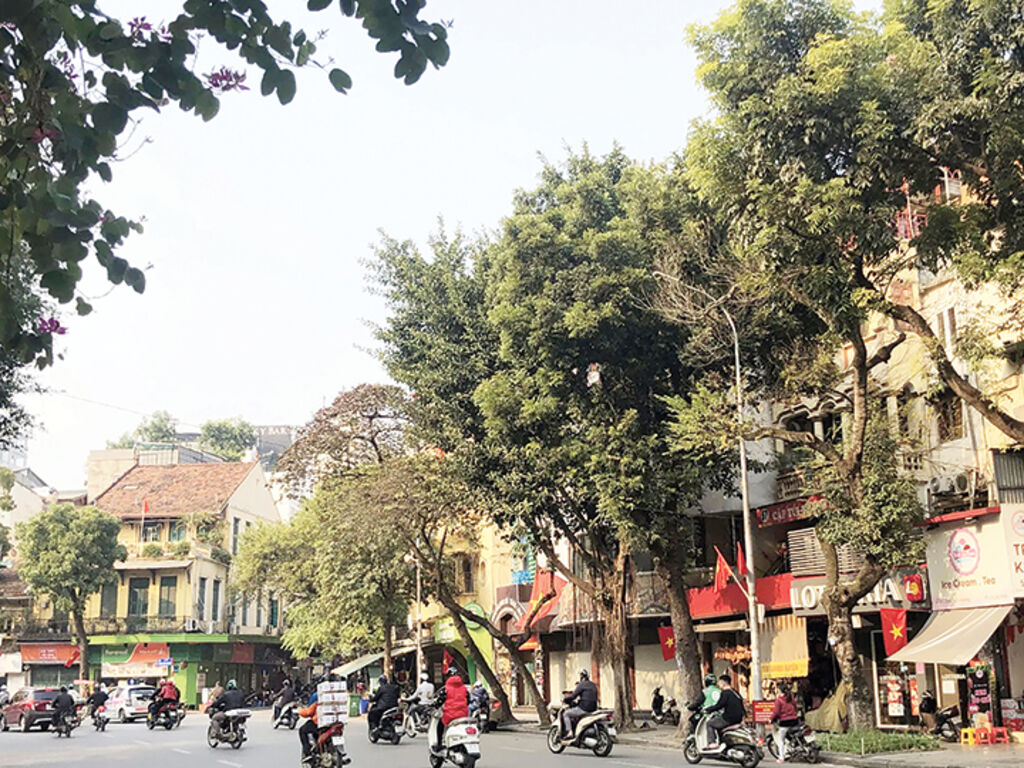
| Dinh Tien Hoang street, part of Hanoi's pilot low-emmission zone since July 2026__Photo: https://vovlive.vn |
A framework for low-emission zones
The Government on September 22 submitted draft amendments to the Law on Environmental Protection to the National Assembly Standing Committee. One of the salient proposals is the provision on low-emission zones, which are defined as designated areas where measures to reduce emissions, primarily from vehicles, are applied to improve air quality and protect public health.
The draft, expected to be passed by the National Assembly at its upcoming October session, sets out five principles for establishing and managing low-emission zones. Specifically, the establishment of low-emission zones must meet requirements on protection of air quality and public health; consistency with urban planning; account of traffic arrangements and public transport capacity; following of a public, feasible timetable that limits disruptions to daily life, production and business; and prioritisation of the control of high-emitting vehicles and those powered by fossil fuels.
Those requirements go beyond drawing a boundary on a map. Restricting vehicles on one set of streets could divert them to neighbouring roads. Residents travelling to work or school, and businesses making deliveries, would need other ways to reach the area. Authorities would therefore have to consider both the likely effect on pollution and the transport options available before introducing controls.
The timetable matters too. Public notice would give residents and businesses time to prepare, while a phased rollout could allow a city to assess initial measures before tightening them. This is particularly relevant to motorcycles, which remain a means of daily travel and income for many urban residents.
Under the draft, the Government is assigned to set the criteria for identifying low-emission zones and specify the measures that could apply in each zone. It would also develop policies to help people stop using fossil-fuel vehicles, expand public transport and encourage vehicles that use renewable energy or consume less fuel.
The proposed admendments neither impose a blanket ban on petrol or diesel vehicles, nor specify which types of vehicles must stop operating. Local controls would depend on detailed rules, pollution levels, transport infrastructure and the circumstances of each city. A low-emission zone could therefore involve different measures introduced in stages.
Hanoi is already testing the approach under the Law on the Capital, which provides low-emission zones. Its pilot runs from July 1 to the end of 2026 in two parts of Hoan Kiem ward. One surrounds Hoan Kiem Lake and is bounded by 11 streets, including Trang Tien, Hang Khay, Le Thai To, Hang Dao and Ly Thai To. The other covers part of the Old Quarter, within streets including Hang Dau, Phung Hung, Trang Thi, Tran Quang Khai and Tran Nhat Duat.
For now, Hanoi has not banned petrol-powered motorcycles in the pilot areas. It is encouraging app-based motorcycle taxi services to limit operations there. Residents are also being urged to reduce their use of motorcycles manufactured or imported before 2008 and mopeds manufactured or imported before 2016, and to consider cleaner vehicles or public transport.
The pilot offers a chance to assess how the measures affect travel and business activities in two busy parts of the capital. It may also reveal where transport alternatives need to improve before tighter controls are introduced.
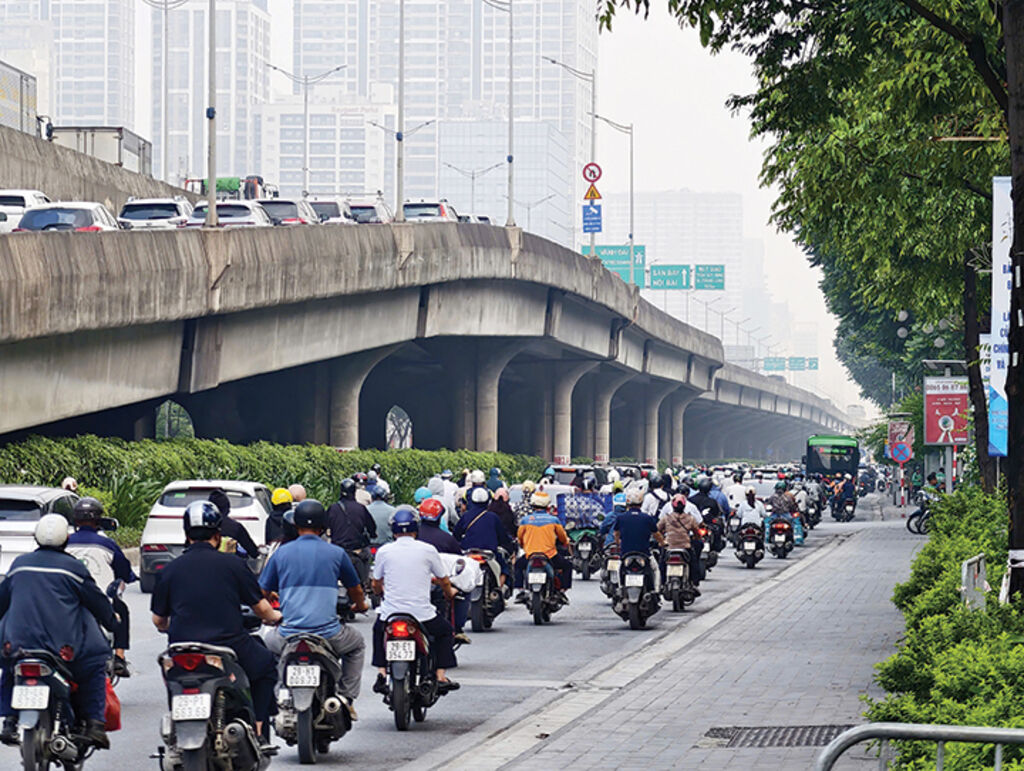 |
| Heavy motorcycle traffic on Khuat Duy Tien street in Hanoi__Photo: Trung Nguyen/VNA |
Motorcycle emissions inspection
Low-emission zones are one part of the emerging system. Prime Minister Decision 13/2026/QD-TTg sets a separate national timetable for inspecting emissions from motorcycles and mopeds running on the road.
Inspections will begin in Hanoi and Ho Chi Minh City on July 1, 2027. The other cities - Hai Phong, Da Nang, Hue and Can Tho - will follow one year later, i.e., July 1, 2028. Inspections will extend to the remaining provinces and cities on July 1, 2030, or earlier if technical and relevant conditions of those provinces and cities permit.
Emissions limits vary by vehicle type and date of manufacture or import. Motorcycles manufactured or imported before 2008 initially fall under Level 1. Those manufactured or imported from 2008 through 2016 fall under Level 2; those from 2017 through June 30, 2026, under Level 3; and those on or after July 1, 2026, under Level 4. Mopeds follow a separate schedule.
A further requirement takes effect on January 1, 2028. From that date, motorcycles and mopeds operating in Hanoi and Ho Chi Minh City must meet at least Level 2, including older vehicles initially assigned Level 1. Vehicles entering low-emission zones in Hanoi must meet the requirements set by the municipal People’s Council, which may be stricter.
Inspections could help authorities identify high-emitting vehicles rather than relying solely on their age or fuel type. That information could, in turn, help cities decide which vehicles to prioritise within low-emission zones. Decision 13 sets the testing timetable and emissions levels; the proposal on establishment of low-emission zones would guide where and how area-specific controls are introduced.
Hanoi has begun preparing for the inspection rollout. In a recent official letter, the municipal People’s Committee asked its Department of Construction to plan enough testing facilities to meet local demand. It also requested proposals to help low-income residents replace older vehicles that fail to meet emissions limits and to make the first inspection free. Those support measures have yet to be finalised.
The proposed legal framework and the inspection timetable could give cities more precise ways to tackle vehicle pollution. Their effectiveness will depend on accessible testing, clear local rules and viable transport alternatives for people whose vehicles are affected. Pilot inspections and preparations therefor in Hanoi and Ho Chi Minh City will provide an early test of how those elements work together.-