 |
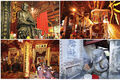
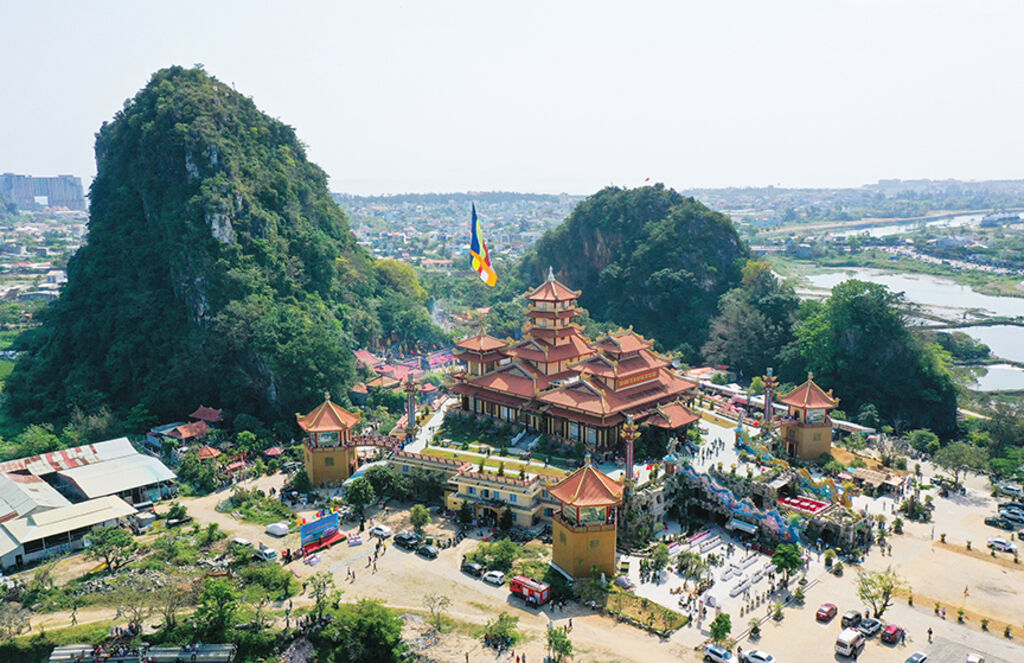
| Quan The Am Pagoda__Photo: Tran Le Lam/VNA |
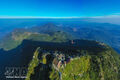
Located about 10 kilometres southeast of the centre of Da Nang city, the scenic site of Ngu Hanh Son covers two square kilometres and consists of five karst mountains.
According to historical documents, the name Ngu Hanh Son was given by King Minh Mang in the 18th year of his reign (1837). The king also named the five karst mountains according to their natural formation, geographical position and the philosophy of yin and yang and the five elements: Kim Son (metal mountain); Moc Son (wood mountain); Thuy Son (water mountain); Hoa Son (fire mountain); and Tho Son (earth mountain). Collectively, the mountains became known as Ngu Hanh Son. Each mountain is distinguished by a unique stone colour: Thuy Son has pink stone, Moc Son white, Hoa Son red, Kim Son ink-wash grey, and Tho Son brown.
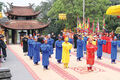
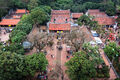
Ngu Hanh Son once served as a centre of Buddhism and is now home to a number of pagodas of varying sizes. Among them, Tam Thai pagoda and Linh Ung pagoda were granted the title of “National Pagoda” by King Minh Mang in 1825.
The scenic site possesses a distinctive beauty, defined by the harmonious interplay between its natural landscape and spiritual-cultural life. Pagodas and caves are seamlessly intertwined as inseparable elements, creating a unique spiritual space in the heart of a modern city.
The Ngu Hanh Son complex was officially recognised as a national special relic in 2019 under Prime Minister Decision 1820/QD-TTg.
Formation of geological structure
According to geologists, Ngu Hanh Son was originally made up of small islands in the East Sea. These islands were gradually connected to the mainland after the Quang Nam plain was formed through the uplift of the Truong Son range and alluvial deposits from Thu Bon river and its tributaries. Today, the coastline has receded about 800 metres from the mountain complex, creating a scenic site with a distinctive and fascinating landscape.
The five mountains bear the typical characteristics of karst formations in Vietnam. In the tropical climate, with abundant sunshine and rainfall, limestone has gradually dissolved over time, forming mysterious landscapes, especially inside the caves.
Journey through the five mountains
Thuy Son
Standing 106 metres above sea level and covering nearly seven hectares, Thuy Son is regarded as the largest, tallest and most beautiful mountain in the Ngu Hanh Son scenic site.
Ancient records show that Thuy Son was the mountain most frequently visited by King Minh Mang. He visited the mountains three times in 1825, 1827 and 1837. The two mountain pathways still in use today were commissioned by the king during his first visit.
Thuy Son is divided into three peaks of Thuong Thai, Trung Thai and Ha Thai.
Thuong Thai, the highest peak of Thuy Son, is situated to the northwest and is home to Tam Thai pagoda, Tu Tam pagoda, Tam Ton pagoda, Huyen Khong cave, Vong Giang Dai (river-viewing pavilion), and other sites. Huyen Khong cave is the most famous cave that opens to the sky and features a domed ceiling with five openings that allow natural light to stream inside.
Trung Thai peak contains the greatest concentration of caves, including Van Thong and ancient Cham caves. Stalactites and rock formations create extraordinary forms and mysterious colours.
Ha Thai peak, the lowest summit of Thuy Son, houses Linh Ung pagoda, the oldest of the three Linh Ung pagodas in Da Nang city. Ha Thai peak also offers other notable attractions, such as Tang Chon cave and Vong Hai Dai (sea-viewing pavilion).
At the foot of the mountain lies the famous Non Nuoc stone-carving village, which was founded more than 400 years ago. Under the skillful hands of artisans, blocks of marble are transformed into works of artistic and spiritual value, exported around the world.
Moc Son
Running parallel to Thuy Son, Moc Son possesses a quieter and more modest beauty. The mountain is mainly made of white marble and, when viewed from afar, looks like a giant jade block.
What makes Moc Son famous is a huge white stone slab shaped like Avalokitesvara Bodhisattva sitting in meditation between heaven and earth. Local people believe that when the morning light shines on the rock, it gives off a mild halo effect, symbolising peace and enlightenment.
Hoa Son
Hoa Son is twin mountains, Am (Yin) Hoa Son and Duong (Yang) Hoa Son, connected by a winding stone path. Duong Hoa Son has many small caves and pagodas hidden in the cliffs. Am Hoa Son, meanwhile, is quieter and less visited, giving it a mysterious and solemn atmosphere.
Legend has it that inside Hoa Son there was once a cave where monks practised meditation amid the scent of incense.
Kim Son
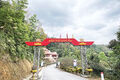
True to its name, Kim Son has grey stone with a silvery sheen that sparkles in the sunlight. This mountain carries many stories associated with Buddhism, and the Quan The Am (Avalokitesvara Bodhisattva) pagoda, a famous sacred pagoda built in the 1950s.
Inside Kim Son is the Quan Am cave, a natural wonder often described as a “living statue” within the earth. The natural rock formations in the cave resemble Avalokitesvara Bodhisattva seated on a lotus pedestal.
Tho Son
The last mountain, Tho Son, lies to the northwest of the scenic site. It is an earth mountain, the lowest but also the longest of the five, resembling a dragon stretching across the sand.
According to local people, this was once a place of retreat for many hermits and monks in ancient times. Inside the mountain are several small caves and traces of old pagodas.
Cultural and spiritual value of Ngu Hanh Son
The Ngu Hanh Son complex is a convergence point of rich cultural and historical layers. Researchers have discovered traces of the ancient Sa Huynh culture, dating from around 1000 BCE to the end of the second century CE and regarded as one of the cradles of civilisation in Vietnam. The site also bears strong influences from the ancient Champa civilisation, exemplified by the statue of Thien Y A Na, a revered goddess worshipped by the Cham people, in Hoa Nghiem cave, Thuy Son.
Through successive historical periods, the area developed into an important Buddhist centre in southern Vietnam under the Nguyen lords. From the 17th century to the 19th century, Ngu Hanh Son was regarded as a major Buddhist centre of central Vietnam, with a network of 14 pagodas, large and small, many of which still exist today.
The spiritual significance of Ngu Hanh Son is most clearly reflected in the harmonious fusion of natural scenery and sacred religious space. Many natural caves within the mountains have been transformed into places of worship dedicated to the Buddha, Avalokitesvara Bodhisattva, and various deities, creating an atmosphere of exceptional sanctity.
In addition, the system of ma nhai (stone inscriptions carved into cliff faces), dating back to the Nguyen dynasty, together with royal calligraphy and annual Buddhist festivals, has reinforced the site’s cultural and spiritual heritage value.
In November 2022, the ma nhai at Ngu Hanh Son was officially recognised by the Memory of the World Committee for Asia and the Pacific as a documentary heritage collection under the Memory of the World Programme for Asia and the Pacific.
The ma nhai system at the scenic site comprises 78 inscriptions written in Han-Nom script (Chinese-Southern characters) and carved into the cliffs and caves. Featuring distinctive forms and a wide range of literary genres, these inscriptions were created by Nguyen dynasty kings and mandarins, eminent Buddhist monks and scholars, spanning a period from the first half of the 17th century to the 20th century.
For these reasons, Ngu Hanh Son is not only a renowned scenic destination but also regarded as a sacred land, a place where visitors come to pay homage, meditate and experience tranquillity amid nature.- (VLLF)