 |
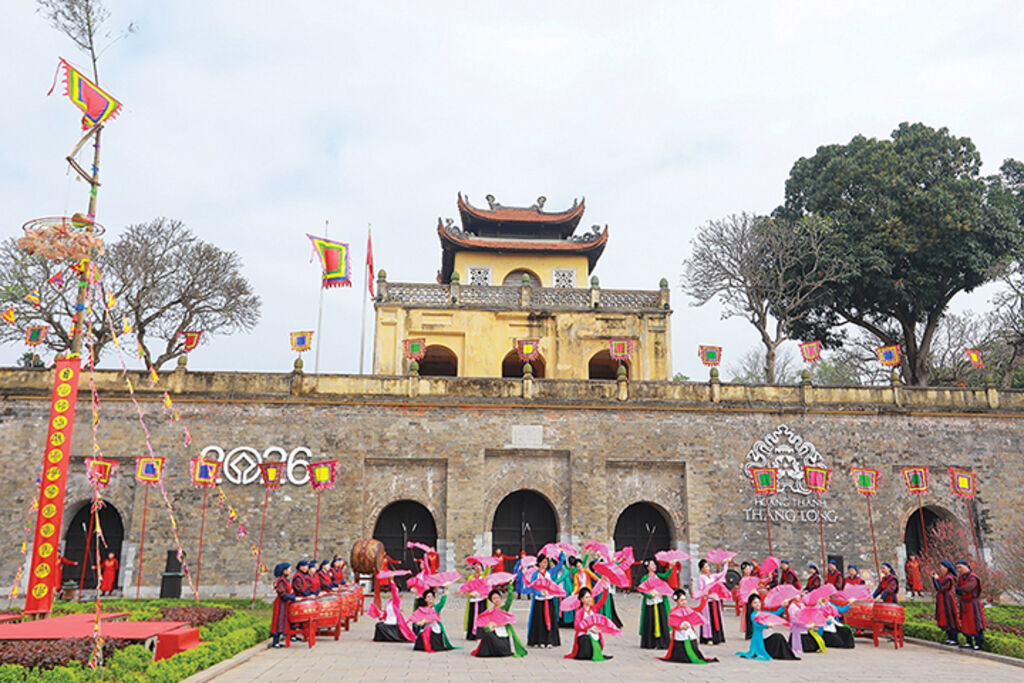
| The “Seeing Out the Old and Welcoming the New” ritual is performed at the Thang Long Imperial Citadel in Hanoi during the 2026 Lunar New Year__Photo: Khanh Hoa/VNA |
Promulgated together with Decision 1306/QD-TTg, the strategy unveils extensive prospects for collaboration and investment for international observers, investors and tourists. Vietnam encourages global corporations and enterprises to host and sponsor major cultural events nationwide. It gives green light to design, fashion, digital arts and other creative sectors to expand their engagement with international partners, paving the way for Vietnam to become a global event hub that provides a dynamic cultural exchange environment and immersive cultural experiences.
Strategic roadmap for cultural power
The strategy’s vision requires a two-phase roadmap that lays down specific quantitative targets through 2030 and setting long-term benchmarks for 2045. The primary objective by 2030 is to expand international cultural cooperation with foreign countries and territories, cultural bodies and cultural industries worldwide with better efficiency, thereby generating fresh momentums for the cultural sector and cultural industry, particularly the fields with advantages such as cinematography, performing arts, cultural tourism and heritage.
Until 2030, the strategy targets to win at least five prestigious international awards in culture and arts, especially music, cinematography and literature. It also aims to regularly host five international art festivals imbued with identities of culturally rich localities.
Another target is to secure international recognition or inscription for at least five more heritage sites or cultural titles from the United Nations Educational, Scientific and Cultural Organization (UNESCO) and other specialised international organisations. The strategy seeks to develop at least 10 cultural-heritage tourism destinations into nationally branded attractions with global competitiveness and international recognition, while establishing one to three new Vietnam Cultural Centres in strategic overseas locations.
By 2045, Vietnam will become one of the region’s leading centres for culture and creativity; create a breakthrough in harnessing cultural soft power on the solid foundation of a digital economy and a digital society. It seeks to affirm its stature as a nation with rich cultural traditions as well as capacity and credibility for hosting major regional and international events and playing a proactive role in shaping global cultural trends in the new era.
Specific long-term targets include winning at least 15 prestigious international awards in culture, arts and cultural industries and successfully hosting at least one world-class event such as a World EXPO, specialised EXPO or global cultural or sporting event.
To promote its cultural diplomacy, the nation plans to additionally establish at least five Vietnam Culture Centres in foreign countries that are comprehensive strategic partners, in line with the Party’s and the State’s top foreign affairs policies.
The country targets securing international recognition or inscription for 15 additional heritage sites or cultural titles from UNESCO and other specialised international organisations. It strives to be ranked among the top three countries in the Association of the Southeast Asian Nations (ASEAN) and the world’s top 30 in the Global Soft Power Index.
Unlocking Vietnam’s cultural soft power
Framed with around six key groups of solutions, the implementation of the strategy will prioritise four primary pillars of action: improving institutions and legal framework; accelerating the application of science and technology and digital transformation; developing high-quality human resources; and diversifying communication channels for national cultural brands worldwide.
Improving institutions and legal framework
To achieve this objective, the strategy outlines the need to fully and consistently institutionalise, and ensure the effective implementation of, the Party’s guidelines on culture diplomacy.
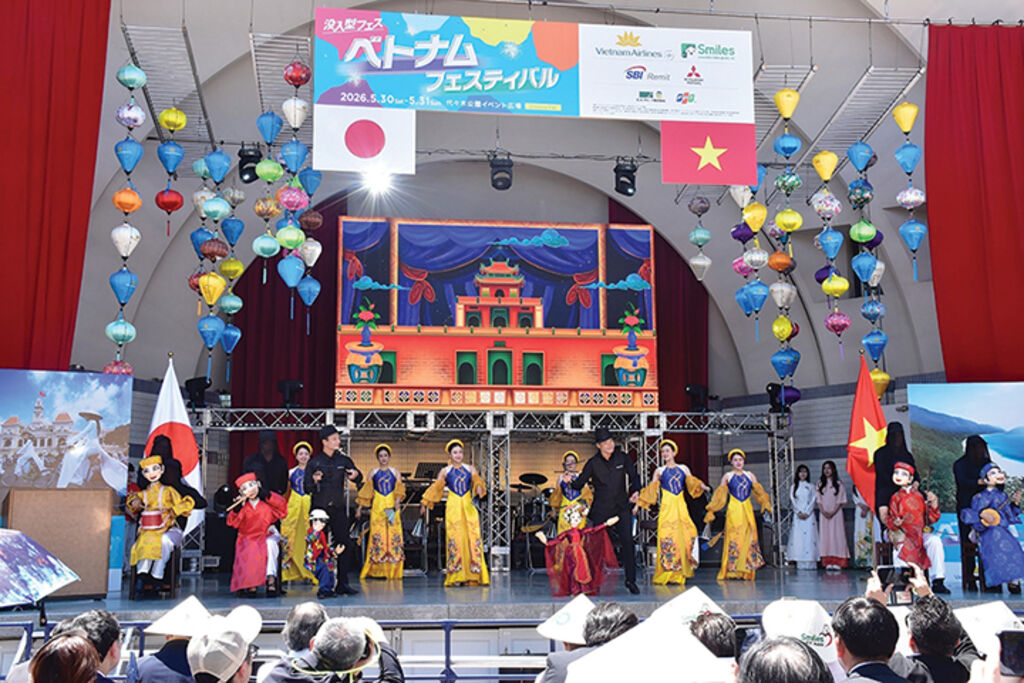 |
| Artists from the Thang Long Water Puppet Theatre perform at the opening ceremony of the 2026 Vietnam Festival in Japan__Photo: Khanh Hoa/VNA |
Specifically, the nation will proactively conclude treaties and agreements while actively engaging in multilateral and regional cultural mechanisms. Vietnam will also bolster its capacity to fulfill its international commitments, especially those concerning copyright and related rights under new-generation free trade agreements (FTAs) to which it is a contracting party.
Alongside diplomatic efforts, the nation will adopt special mechanisms and policies to support the export of “Made in Vietnam” cultural products and services, with priority given to digital cultural products to boost their economic value, together with incentives for both domestic and foreign content creators to promote Vietnam’s cultural values.
In addition, the strategy will introduce preferential tax, credit and land use policies to foster public-private partnerships in cultural diplomacy and encourage organisations and individuals to showcase Vietnamese culture globally, particularly in strategic and remote locations.
In particular, breakthrough policies will be formulated to encourage sole proprietorships to sponsor and host major international cultural and artistic events, thereby contributing to the governance and official patronage of world-class events.
An effective mechanism for close coordination between cultural diplomacy, external culture, and external information will be formulated, alongside the organisation of the integrated promotional event model “Vietnam Culture - Trade - Tourism - Investment” from central to local levels to introduce national brands in a more efficient manner.
Finally, the Ministry of Science and Technology will coordinate with related ministries and agencies in strictly enforcing the protection of copyright, trademarks and geographical indications for Vietnam’s key cultural products in international markets.
Intensifying the application of science and technology and digital transformation
Under the strategy, artificial intelligence (AI) and big data will play a pivotal role in modernising and elevating Vietnam’s cultural outreach worldwide. To leverage these technologies effectively, the Ministry of Culture, Sports and Tourism is tasked with taking the lead in developing a system of national databases on Vietnamese culture integrated into a shared multilingual digital content repository that houses e-publications, documentaries, images, articles and virtual exhibition materials. Scheduled to be completed in December 2027, this comprehensive digitisation of cultural resources will enable ministries, agencies, local authorities, businesses and Vietnamese overseas missions to easily access and efficiently utilise these assets for external relations.
Building upon this digital foundation, the strategy calls for investment in a multilingual digital media ecosystem powered by AI and virtual reality and augmented reality (VR/AR) to innovate ways of showcasing national heritage and tourism attractions globally. This includes building complete technical infrastructure for virtual exhibition platforms and online creative spaces. Moreover, diverse, engaging, regularly updated and highly interactive digital contents should be developed. In tandem with technical development, strong emphasis will be placed on fostering a healthy online user culture and enhancing digital literacy for the general public.
To safeguard this digital environment, coordinated educational, technical and legal measures will be deployed to identify and manage harmful or illegal cross-border online cultural contents. In particular, the Ministry of Culture, Sports and Tourism and the Ministry of Public Security will collaborate to build a “cultural immune system” to protect younger generations in cyberspace.
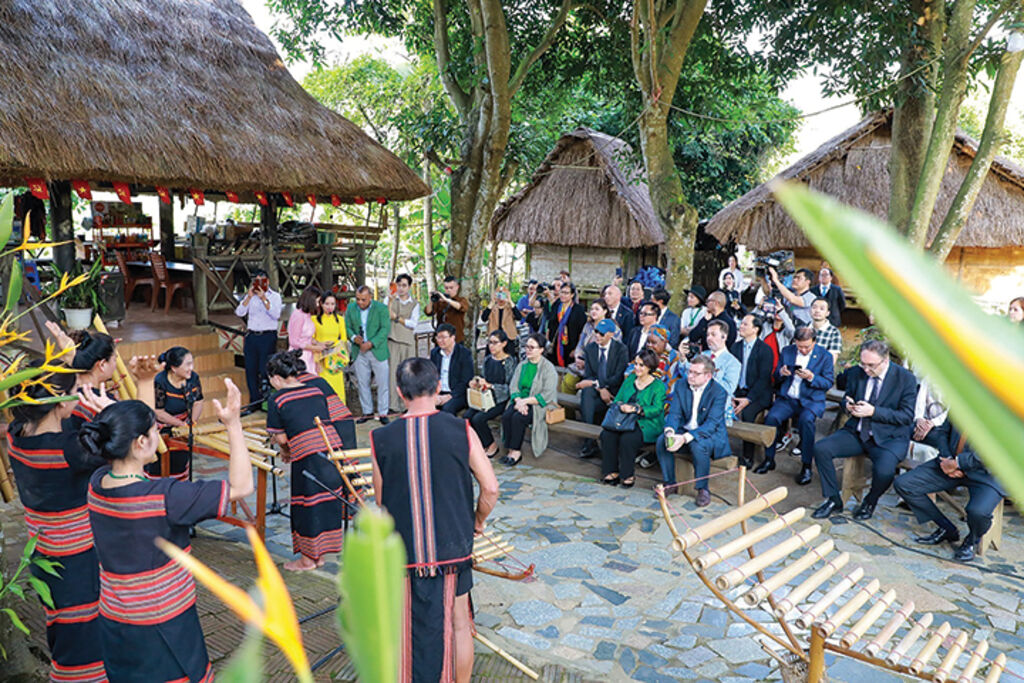 |
| Ambassadors, chargés d’affaires, heads of diplomatic missions, and representatives of international agencies and organisations take part in an activity at the Vietnam National Village for Ethnic Culture and Tourism in Hanoi __Photo: Khanh Hoa/VNA |
Finally, the strategy envisions enhancing the teaching and learning of Vietnamese language through multi-platform digital education ecosystems and open digital learning resources. Complementing this drive is the development of a multilingual knowledge portal for Vietnam studies, which will provide open digital materials on history, culture and arts for overseas Vietnamese and foreign nationals.
Developing high-quality human resources engaged in cultural diplomacy
The strategy considers developing a highly skilled cultural diplomacy workforce engaged in digital cultural governance, both at home and abroad, as one of its key tasks and solutions.
It assigns officials at Vietnamese overseas missions to undertake cultural affairs on a concurrent basis and in compliance with the Party’s and the State’s policy of further reorganising the apparatus for more efficient and effective operation without forming new units or increasing the number of civil servants seconded abroad.
It also envisions the appointment of cultural counsellors or cultural attaches at Vietnamese missions in comprehensive strategic partner countries by 2030.
The strategy mandates proactive planning, training and upskilling of cultural diplomacy personnel at both central and local levels who possess a deep understanding of Vietnam’s culture and broad knowledge of world cultures. They will be equipped with expertise in negotiations, international law and intellectual property as well as skills in event organisation, multimedia communications, digital cultural governance and the use of advanced technologies such as AI, big data and VR/AR. Qualified officials will be assigned to hold positions in regional and international cultural organisations.
The strategy emphasises providing updated knowledge about Vietnam’s history and culture together with training in communications and promotional skills for students, postgraduate researchers, workers and experts before they go abroad to study or work.
It also outlines the need to promote aesthetic education, foster political stance and nurture pride in the nation’s cultural heritage among the youth. Its objective is to cultivate a generation of global citizens who can navigate the challenges of international integration and globalisation.
Diversifying communication channels for national cultural brands worldwide
The strategy emphasises modernising mindset and diversifying methods of promoting and conducting communications on Vietnam’s national cultural brands globally.
It appeals for improving the quality of cultural diplomacy and external cultural activities while innovating their content and format during overseas working visits by senior Vietnamese Party and State leaders as well as visits to Vietnam by foreign leaders.
It seeks to renew and enhance the efficiency of the organisation of Vietnam Culture Weeks/Culture Days overseas through stronger cooperation and joint art performances with host countries, broader audience outreach and increased media coverage of cultural events. As per the strategy, Vietnam will increase its presence at major international cultural and artistic events, including international exhibitions, and prestigious and long-established film festivals, art exhibitions and international book fairs.
The strategy also targets the promotion of Vietnamese culture and the nation’s image through themed cultural events held alongside major international economic and political gatherings.
It plans to intensify cultural and sports diplomacy by hosting, proactively organising and participating in major international sport tournaments, regional and continental multi-sport events.
In the meantime, Vietnam’s distinctive traditional sports and arts will be introduced to global audiences through cultural exchanges, festivals, trade fairs and exhibitions.
Leading media agencies will assume the prime charge of organising large-scale media campaigns about Vietnamese culture across the globe and collaborate with international content creators via multilingual mobile applications and digital platforms to deliver the nation’s rich cultural features to the international community.
With the strategy, Vietnam is set to proactively and dynamically deepen its international cultural integration, elevating the reach of its cultural heritage across the globe. The country regards culture as a driver of sustainable development, a bond of peace and a bridge enabling the nation to make worthy contributions to the diversity of human civilisation.- (VLLF)