 |
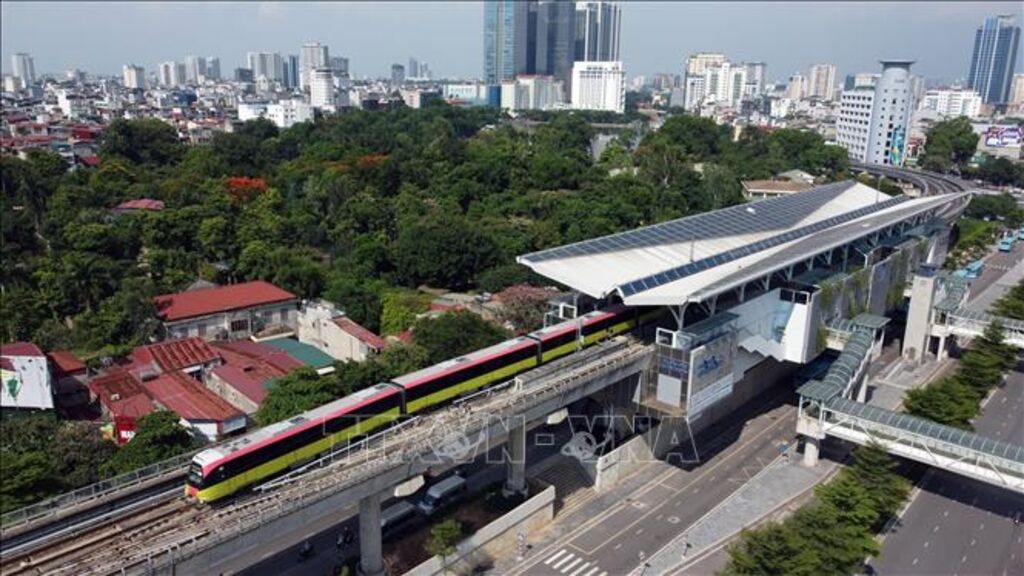
| The elevated section of the Nhon-Hanoi Station metro line __Photo: VNA |
In a draft Law on Key Industries, the Ministry of Industry and Trade (MOIT) proposes authorising the Prime Minister to decide on the application of a localisation mechanism to a number of national key projects, including high-speed railways, national railways and urban railways.
Under the draft, tender packages could be divided into smaller components to allow Vietnamese enterprises to play a larger role in major projects. Domestic investors or contractors could also be appointed to carry out selected components. Lists of products and services subject to localisation requirements would be issued, together with financial mechanisms to secure funding for implementation.
To qualify for this mechanism, enterprises would have to demonstrate independent capacity in certain core stages, such as production, maintenance, servicing or repair of key equipment.
Enterprises would also be encouraged to take on jobs involving high added value, including EPC contracting, design, project preparation consultancy, project management, system integration, facility operation, and production of supporting industry products.
The proposed localisation mechanism would apply not only to the railway sector, but also to a wide range of key projects considered vital to socio-economic development, national defence and security. These include wind, solar and thermal power, small modular reactors, green hydrogen production, electronics, semiconductors, high technology, oil and gas extraction and processing, strategic minerals, and environmental protection and climate response projects.
The draft law also allows domestic order placement or contractor appointment for certain key industrial products and services. Eligible cases include products appearing for the first time on the Vietnamese market, products developed from scientific and technological research outcomes, and products serving national defence, security, energy and environmental protection.
MOIT said that although the development of foundational, priority, spearhead and supporting industries has received attention from the Party and the State, Vietnam currently has no separate regulations on the localisation mechanism for national key projects. The participation of domestic enterprises in large-scale works still depends mainly on their competitiveness in individual tender packages or on broader policies promoting investment, research and development, and technology transfer.
Once approved, the proposed mechanism is expected to create stable markets for domestic industrial products, encourage enterprises to invest in technology, research and innovation, and strengthen the country’s industrial self-reliance.- (VLLF)