 |
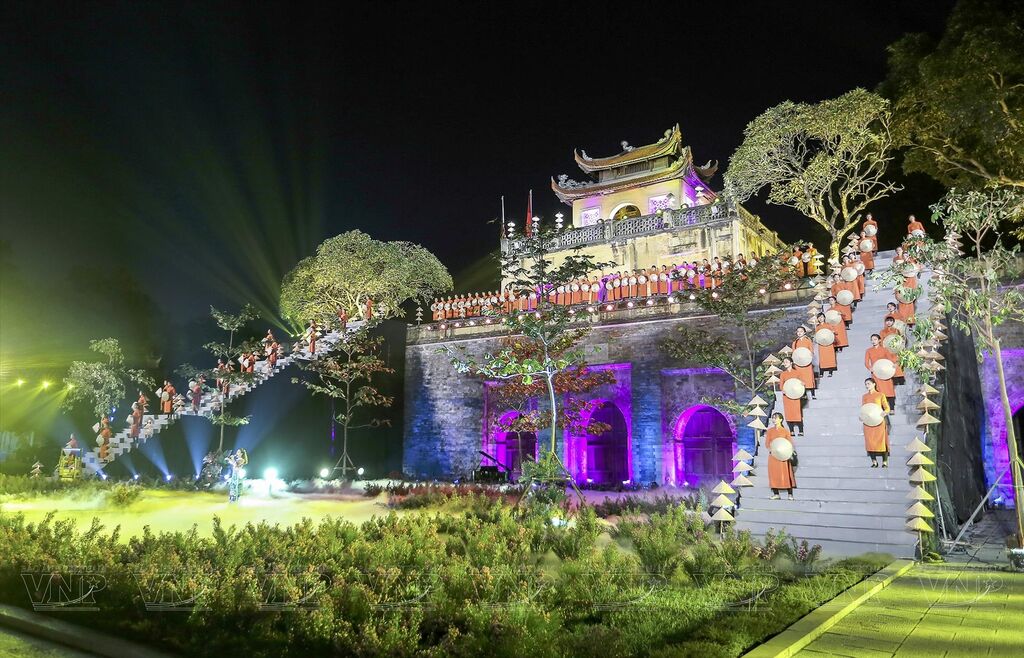
| An Ao Dai performance at the Thang Long Imperial Citadel World Heritage Site__Photo: Khanh Long/VNP |
To be selected for the pilot development into a cultural heritage city, a locality must meet specific criteria. It needs to have established architectural complexes in urban or rural areas, or industrial structures of typical value. The locality must encompass historical and cultural spaces characterising one or several developmental periods, and have interrelated groups of construction works with homogenous architectural and landscape features, or outstanding cultural, scientific, and historical value. Furthermore, its natural landscapes and ecological environment must be closely linked with tangible and intangible cultural spaces, creating value for historical sites and scenic spots. The locality is also required to possess experience in sustainable heritage management and conservation.
Localities participating in the pilot scheme will enjoy specific mechanisms regarding land use, preferential land rental rates, and the retention of revenue from heritage services for reinvestment. Specifically, provincial-level People’s Councils are empowered to decide on land-use quotas outside those allocated under the national land use master plan, exclusively for investment projects in the heritage sector and cultural industry. These additional quotas will be updated in the land use master plans and plans of the subsequent period, thereby creating flexibility in allocating land funds for cultural projects.
Provincial-level People’s Councils are also authorised to determine preferential land rental rates for each specific space, with a maximum reduction of up to 50 per cent compared to current regulations for tourism and service investment projects, public investment-private management projects, or public-private partnerships (PPPs) within monument and scenic areas.
Localities also have the autonomy to set rental rates for premises for service provision at relics under their management, serving as a basis for organising biddings or auctions. The local budget of the pilot heritage city will retain all revenues from land-use levies, land rentals and premise rentals for service provision at relics to reinvest in urban infrastructure and the preservation and restoration of relics.
Regarding heritage service charges, localities are permitted to retain 50 per cent of revenues collected for cultural heritage services for use as recurrent expenditures and for reinvestment in heritage activities. When public assets on land managed by central agencies within the locality are sold (excluding those for national defence and security purposes), the locality will receive 50 per cent of the land use levies to invest in the socio-economic infrastructure development.
Notably, these special revenues may not be used for determining additional allocations from the central budget to the local budget, ensuring that localities can enjoy all benefits of these incentive policies.
There remain differing opinions on clarifying the legal status of this model to distinguish it from a “city with heritage”. The draft decree also needs to be closely aligned with current urban and rural master plans, incorporating additional criteria on community livelihoods and public participation to ensure the sustainability of the project.- (VLLF)